30 Best Open Source Cursor Alternatives
A curated collection of the 30 best open source and self-hosted alternatives to Cursor in 2026.
Looking for a free, privacy-friendly, or self-hosted replacement for Cursor in 2026? The top open-source alternative is Zed — High-performance, multiplayer code editor.
Other highly rated open-source Cursor alternatives include Cline, Aider and Kilo.

High-performance, multiplayer code editor
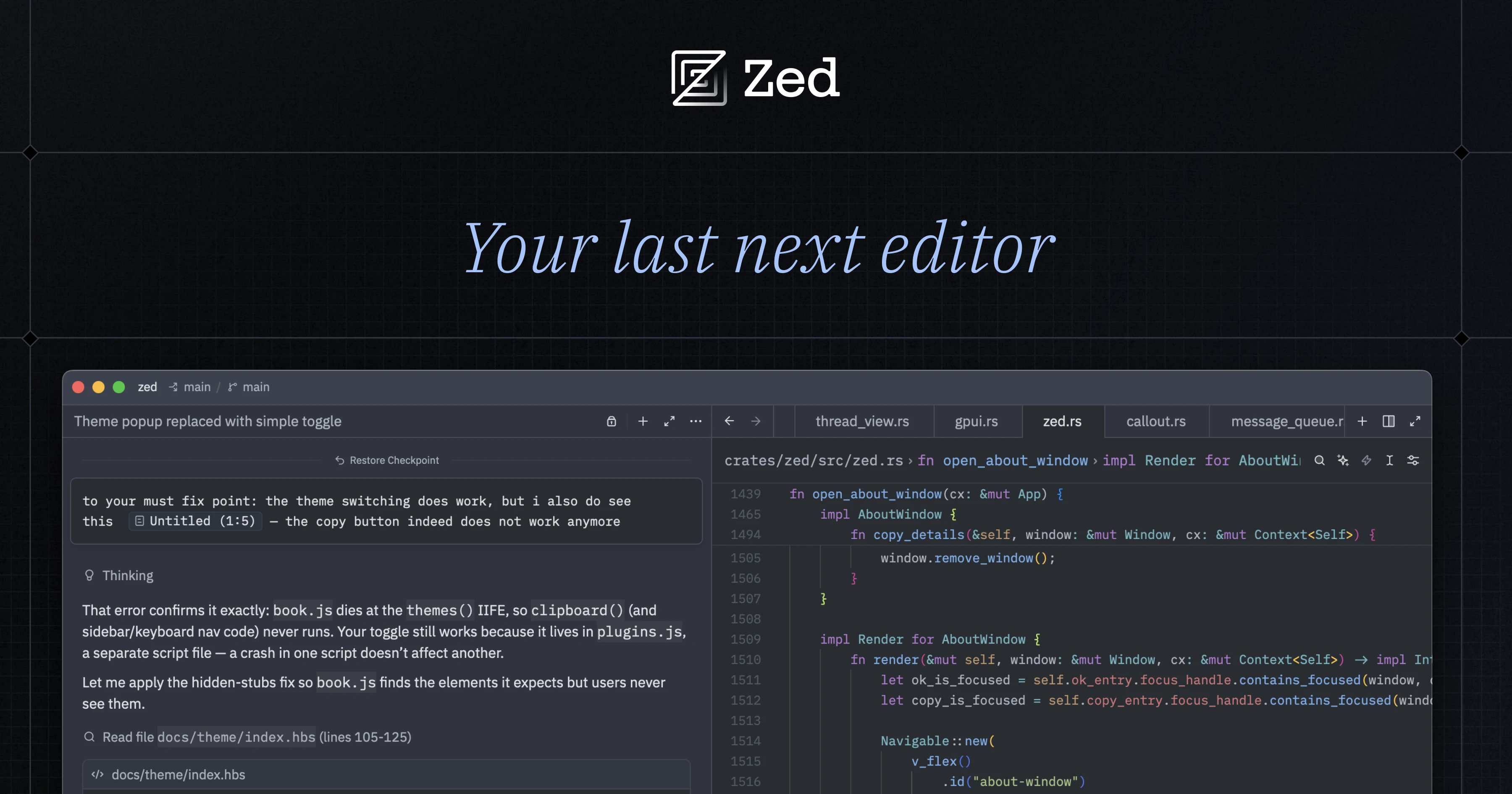
Zed is a high-performance, multiplayer code editor crafted for speed and collaboration with humans and AI. Built from scratch in Rust to efficiently leverage multiple CPU cores and your GPU, Zed delivers native-speed performance for editing, navigating code, and running tools. - Blazing Fast: Written in Rust to maximize CPU/GPU utilization and deliver native-speed performance. - Multiplayer Collaboration: Code together in real-time with teammates, chat, and screen sharing. - AI Agent Support: Run agents in parallel for intelligent code editing, navigation, and tool execution. - Cross-Platform: Available for macOS, Linux, and Windows. - Minimalist Design: Focused on speed and efficiency without unnecessary bloat. - Extensions Ecosystem: Extend functionality with a growing library of extensions. - Built-in AI Tools: Native support for AI-powered coding assistance and automation. Zed is open-source and self-hostable, with the core editor and collaboration features available for deployment. The Rust-based architecture ensures high performance and scalability. For teams, Zed offers business plans with advanced collaboration and AI features.

Open-source AI coding agent for developers
Cline is an open-source AI coding agent designed to help developers understand, refactor, and automate codebases directly within their IDE, terminal, or SDK. It supports Plan and Act modes for strategic execution, integrates with MCP for tool access, and works with any model—Claude, GPT, Gemini, or local models like Ollama. - Cross-Platform Edits: Coordinated multi-file changes with linter-aware fixes, diffs, and one-click undo. - Terminal Execution: Runs bash commands and reacts to output in real-time, handling long-running processes like dev servers and tests. - Plan & Act Modes: Toggle Plan mode to align on strategy, then Act to execute with approval or autopilot. - Custom Rules & Skills: Define .clinerules to teach the agent your coding standards, architecture, and deployment conventions. - Model Flexibility: Use any model—Claude, GPT, Gemini, local Ollama/LM Studio, or OpenAI-compatible endpoints. Bring your own keys or weights. - MCP Integration: Extend functionality with the Model Context Protocol (MCP) for tool access and custom workflows. - IDE & CLI Support: Works in VS Code, JetBrains, Cursor, Windsurf, and via CLI for scripts, cron jobs, and CI pipelines. - Enterprise Ready: Trusted by global enterprises like Samsung, Salesforce, Oracle, Amazon, and Microsoft. Cline is open-source (Apache 2.0) and can be self-hosted. It supports local model integration (e.g., Ollama, LM Studio) and is compatible with any OpenAI-compatible endpoint. The CLI and SDK allow embedding Cline in custom workflows or products.
AI pair programming in your terminal
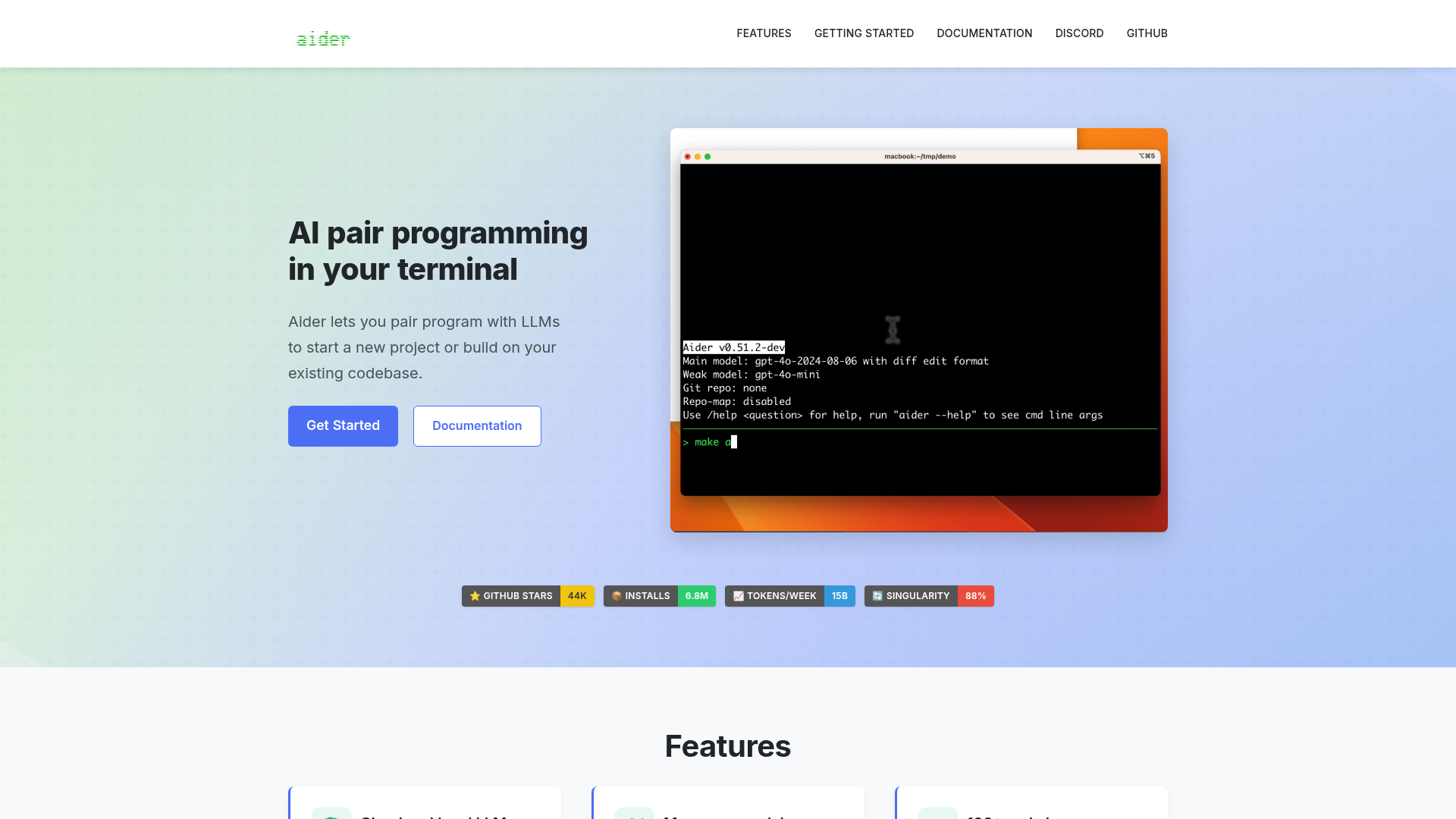
Aider is an AI pair programming tool that lets you collaborate with large language models (LLMs) directly in your terminal. Whether you're starting a new project or enhancing an existing codebase, Aider helps you write, edit, and debug code efficiently. - Cloud and local LLMs: Works with models like Claude 3.7 Sonnet, DeepSeek R1, OpenAI o1, and local models. - Codebase mapping: Creates a map of your entire codebase for better context in larger projects. - 100+ programming languages: Supports Python, JavaScript, Rust, Ruby, Go, C++, PHP, HTML, CSS, and more. - Git integration: Automatically commits changes with sensible messages and allows easy diffing and undoing of AI changes. - IDE integration: Use Aider within your favorite editor to request changes via comments. - Images & web pages: Add visual context, screenshots, or reference docs to the chat. - Voice-to-code: Speak your requests to implement new features, test cases, or bug fixes. - Linting & testing: Automatically lints and tests code, fixing issues detected by linters and test suites. - Web chat interface: Streamlines copy/pasting code with browser-based LLMs. Aider is a self-hosted, open-source tool that runs locally in your terminal. It connects to cloud-based LLMs or local models, making it flexible for different workflows. No server setup is required beyond installing the tool and configuring your preferred LLM API keys.
Open source AI coding agent with 500+ models, bring-your-own-key support, and specialized modes for writing, debugging, and planning code across IDEs and CLI.
Open source AI coding agent with 500+ models, bring-your-own-key support, and specialized modes for writing, debugging, and planning code across IDEs and CLI.

Open-source self-hosted AI coding assistant
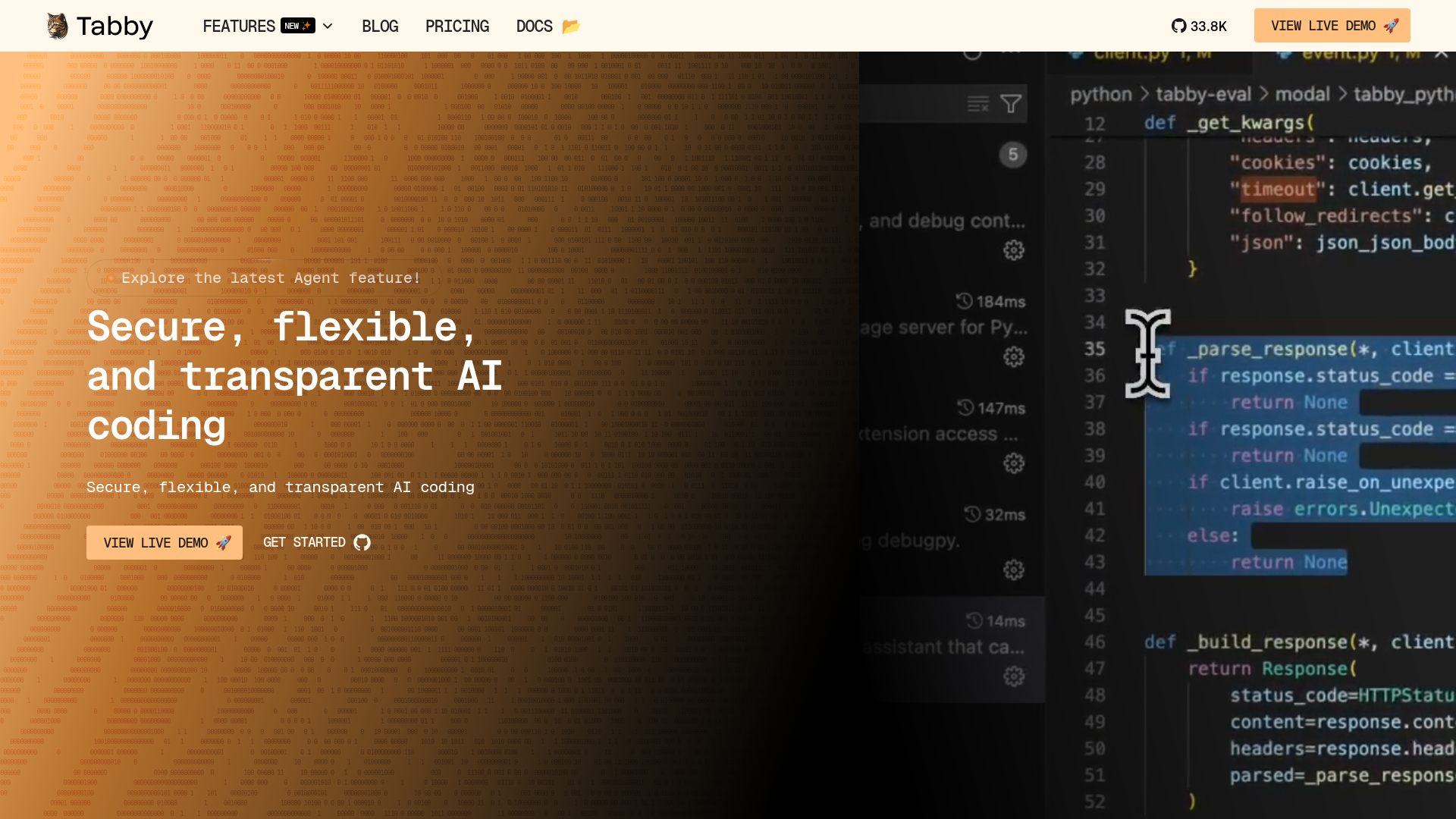
Tabby is an open-source AI coding assistant designed to help developers code faster and smarter. It provides secure, flexible, and transparent AI-powered coding assistance with features like code completion, inline chat, and an answer engine—all while ensuring data privacy through self-hosting. - Code Completion: AI-powered suggestions that predict and complete your next coding move. - Inline Chat: Real-time AI chat directly within your code editor for instant assistance. - Answer Engine: Get instant coding answers without leaving your IDE. - Data Connectors: Connect data sources to enable smarter AI assistance tailored to your projects. - Agent (Pochi): A full-stack AI teammate that plans, executes, and checks tasks like a human developer. - Self-Hosting: Deploy Tabby on your own infrastructure for full control over data and privacy. - Multi-Model Support: Compatible with various AI models for flexibility in model choice. - IDE Integration: Works seamlessly with popular IDEs like VS Code, JetBrains, and more. Tabby is open-source and can be self-hosted on your own servers or cloud infrastructure. It supports deployment via Docker, Kubernetes, and direct installation. The platform is designed for scalability, security, and customization, making it suitable for teams and enterprises that prioritize data privacy and control. Documentation and setup guides are available for easy deployment and management.

Native macOS code editor built in Swift
CodeEdit is a lightweight, natively-built code editor designed exclusively for macOS. Developed entirely in Swift, it leverages the full power of Apple hardware for unmatched performance and reliability. - macOS Native: Built from the ground up for macOS using Swift, ensuring optimal performance and integration. - Lightweight Yet Powerful: Designed to be lean while offering limitless potential for customization and extensibility. - Open Source: Completely open source, allowing developers to contribute, modify, or extend functionality. - Extensible & Customizable: Tailor the editor to your workflow with a familiar and intuitive user interface. - Familiar UI: Designed for ease-of-use and productivity, ensuring a smooth user experience. - Better Tools: Includes tools to keep you connected to your code and improve your workflow efficiency. - Community-Driven: Actively shaped by its community, with contributions from developers worldwide. CodeEdit is a desktop application built for macOS and does not require self-hosting. The source code is available on GitHub for contributions and customization.
Self-hosted orchestrator for coding agents like Claude Code, Codex, and Cursor, controlled from phone, desktop, web, or CLI.
Self-hosted orchestrator for coding agents like Claude Code, Codex, and Cursor, controlled from phone, desktop, web, or CLI.
AI coding harness that runs inside your terminal, mixes LLMs per task, and uses multi-agent architecture to handle large codebases without bloating context.
AI coding harness that runs inside your terminal, mixes LLMs per task, and uses multi-agent architecture to handle large codebases without bloating context.

Dev environment for AI agents with isolated workspaces
Jean is an opinionated AI agent workspace designed to streamline AI-assisted development workflows. It provides a cohesive environment with Git worktrees, chat sessions, terminals, and integrations with GitHub & Linear, all in one place. - Isolated Workspaces: Run AI agents in parallel using git worktrees for independent task execution without chaos. - Linked Projects: Connect multiple repositories to create a unified knowledge base for AI agents across related codebases. - Magic Git Commands: Simplify repetitive Git operations with guided AI workflows and automation. - Magic Prompts: Customizable AI instructions for tailored agent behavior and workflows. - Server & Web Access: Deploy on a dedicated server or enable web access in the desktop app for remote collaboration. - Native & Browser Clients: Connect via native app or browser with token-protected HTTP/WebSocket access. - Multi-Platform Support: Available for macOS, Windows, Linux (x64/ARM) with AppImage, DEB, RPM, DMG, and EXE formats. - Integration Support: Works with popular AI models including Claude, Codex, OpenCode, Cursor, Pi, Command Code, Grok, and Kimi Code. Jean is open source and free forever. It can be self-hosted using jean-server on a dedicated Linux host or enabled via web access in the desktop app. The server runs on port 3456 by default with token-protected access. Tailscale is recommended for private mesh networking instead of exposing public ports.

Open-source spec-driven AI development platform
OmoiOS transforms plain-English feature specifications into autonomous agent pipelines that execute overnight, delivering tested pull requests ready for review. Built for developers who want AI to handle the heavy lifting while maintaining full control and traceability. - Spec-to-Code Pipeline: Convert plain-English specs into requirements, design, and implementation plans with full traceability - Autonomous Overnight Execution: Agents work while you sleep, executing isolated sandboxes with dependency-aware sequencing - Self-Healing Execution: Automatic test failure detection, diagnosis, and retry without manual intervention - Full Lineage Tracking: Every code change links back to its originating requirement for transparent review - Multi-Agent Orchestration: Parallel agent execution with dependency management for scalable throughput - Model Agnostic: Bring Your Own Key (BYOK) support for Anthropic, OpenAI, and other providers - Self-Hostable: Deploy on your infrastructure with full control over data and execution - GitHub Integration: Seamless integration with GitHub repositories for PR generation and review - Spec Contract Enforcement: Requirements, constraints, and acceptance criteria enforced at every step OmoiOS is open-source (Apache 2.0 licensed) and designed for self-hosting. The platform runs as a cloud service for autonomous execution but can be deployed on your own infrastructure. Supports Docker-based deployment with configuration for model providers, repositories, and execution environments. Documentation includes setup guides, configuration examples, and API references for integration with existing development workflows. Tech Stack: Python, FastAPI, Docker, GitHub API Self-Hosting Requirements: Docker, GitHub account, Anthropic/OpenAI API keys (optional for BYOK), PostgreSQL database

AI-powered developer platform for code hosting and collaboration
GitHub is the leading platform for software development, offering version control, project management, and collaboration tools. Built for developers, teams, and enterprises, it combines Git hosting with AI-powered features like GitHub Copilot for code generation and advanced security tools to streamline development workflows. - AI-Powered Development: GitHub Copilot for AI-assisted code writing and refactoring - Code Hosting & Version Control: Git repository management with pull requests and branching - Automated Workflows: GitHub Actions for CI/CD and workflow automation - Code Security: Advanced Security features for vulnerability detection and secret protection - Dev Environments: Codespaces for instant cloud-based development environments - Project Management: Issues, project boards, and tracking for agile workflows - Collaboration Tools: Team-based code reviews, discussions, and documentation - Enterprise Solutions: Scalable platform with premium support and security features GitHub is a cloud-based platform with no self-hosting option. It provides enterprise-grade security, compliance certifications (including SOC 2, ISO 27001), and GDPR compliance. The platform is built and maintained by GitHub, Inc. (a Microsoft subsidiary) with data centers globally.

AI-powered terminal coding agent
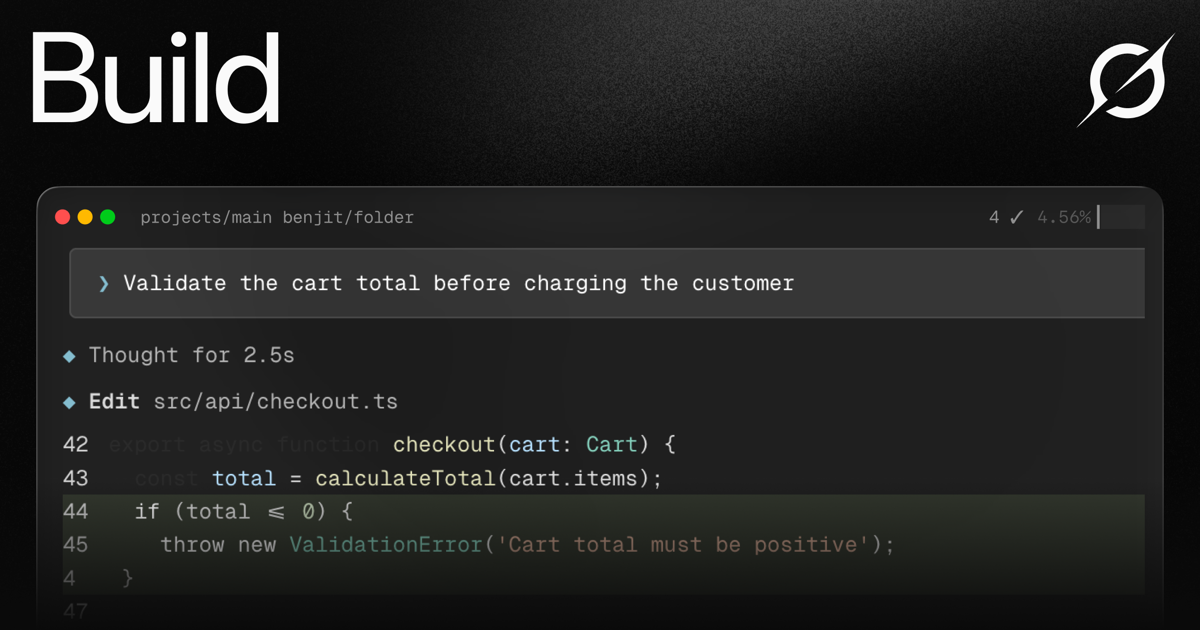
Grok Build is a powerful terminal-native coding agent designed to streamline complex software development workflows. Powered by Grok 4.6, it combines advanced AI capabilities with a developer-first interface to handle planning, coding, testing, and deployment seamlessly. - Plan Mode: Architect complex projects with structured plans that require approval before execution, with clean diff visualization - Subagents: Parallel AI agents for research, testing, and code review that work simultaneously in separate worktrees - Skills System: Convert workflows into reusable slash commands with AGENTS.md, plugins, hooks, and MCP servers - Terminal-First UI: Clean, keyboard-driven interface with minimal chrome and expressive visuals - Deep Reasoning: Step-by-step thinking for complex problems with live streaming execution - Multi-file Edits: Refactor across files using search-and-replace with context-aware changes - Git Integration: Full Git workflow support including staging, committing, pushing, and branch management - Code Search: Fast grep and navigation across large codebases - MCP Integration: Connect to Linear, Sentry, Grafana, and other tools via Model Context Protocol servers - Headless Mode: Script Grok Build in CI/CD pipelines for automated workflows Grok Build is available as a CLI tool that can be installed with a single command. The open-source components allow for self-hosting and customization, though the primary Grok 4.6 model requires access to XAI's infrastructure. The system is designed to work with any codebase and programming language, making it highly adaptable to existing development environments.

Local-first workspace for parallel coding agents
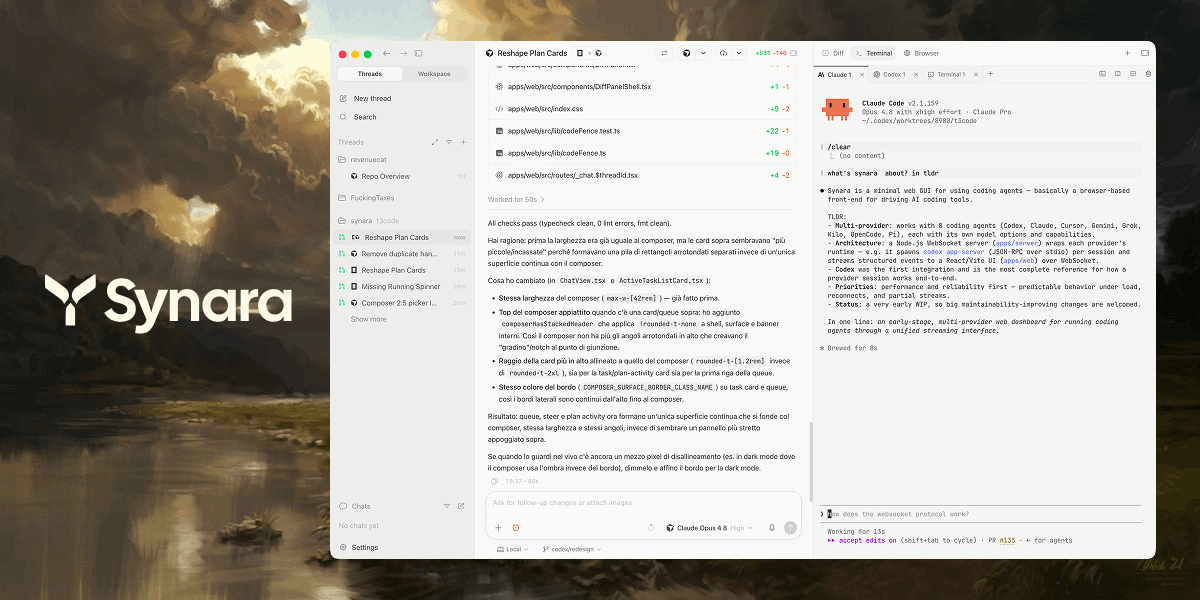
Synara is a free, open-source, local-first workspace designed to streamline agentic coding workflows. It provides a unified command center for running multiple coding agents in parallel while maintaining task isolation, Git worktrees, and pull-request delivery. - Parallel Agent Execution: Run multiple coding agents (Claude Code, Codex, Cursor, OpenCode, Antigravity, Grok Build, Kilo Code, Pi, Factory Droid) simultaneously in isolated environments. - Git Worktree Integration: Each task operates in a separate Git worktree, preventing conflicts and ensuring clean branch management. - Terminal & Process Management: Built-in terminals for running development servers, test watchers, and custom commands alongside agent tasks. - Browser Verification: Inspect rendered results, capture console output, and verify behavior directly within the workspace. - Task Ownership & Handoffs: Explicit task ownership with the ability to hand off work between different providers while preserving context. - Pull Request Delivery: Review diffs, run checks, commit changes, and open pull requests without leaving the workspace. - Project Context Preservation: Maintains repository-specific tasks, provider sessions, and activity state for seamless context switching. - Local-First Architecture: Operates entirely on your local machine, ensuring privacy and offline capability. Synara is self-hosted and runs entirely on your local machine. It is open-source (MIT License) and available for Linux. The project is actively maintained on GitHub.

Open-source AI command center for your company
Kortix is the open-source AI command center for your company, providing a complete AI workforce platform where every agent, skill, and memory is a file in a single versioned repository you own. - Single Git Repo Company: Agents, skills, memory, connectors, and triggers are all text files in one repo you control. Use grep, diff, and version control for full transparency. - 3,000+ App Integrations: Connect Slack, Teams, Notion, GitHub, Linear, Stripe, and more via MCP, OpenAPI, Postman, GraphQL, or raw HTTP. - Any Model, Your Keys: Run any LLM (Claude, OpenAI, Gemini, OpenRouter) with your own API keys—no vendor lock-in. - Fine-Grained Permissions: Rule each tool call (allow, ask, block) down to specific arguments for security. - Multi-Interface Access: Interact via Web, CLI, Slack, MS Teams, Email, or Mobile. - Self-Hostable: Deploy on-prem, VPC, or managed cloud for full data control. Kortix is open-source (GitHub) and designed for self-hosting. The platform runs as a single binary with a web interface and supports Docker deployments. Configuration is YAML-based (kortix.yaml) for defining agents, skills, memory, and connectors. Credentials are brokered server-side and never enter the machine image, ensuring security. The system is built for scalability and integrates with existing DevOps workflows.

Agent Development Environment for coding agents
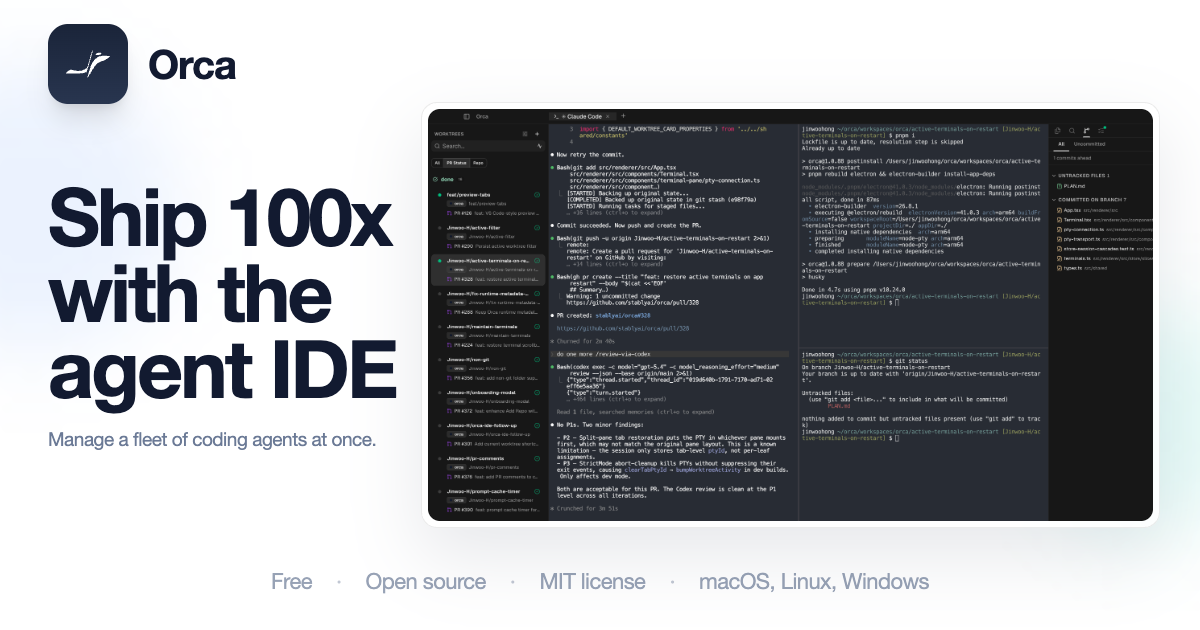
Orca is the Agent Development Environment (ADE) designed to supercharge your coding workflow with AI agents. Run tools like Claude Code, Codex, and Cursor CLI simultaneously in isolated environments, enabling parallel task execution and faster development cycles. - Parallel Agent Execution: Run multiple coding agents (Claude Code, Codex, OpenCode, etc.) side by side in isolated worktrees for concurrent task handling. - Isolated Workspaces: Each agent operates in a separate environment, preventing conflicts and ensuring clean execution. - Built-in Terminal & Editor: Ghostty-inspired terminals and an integrated file editor streamline the development process. - Git Integration: Seamless Git tracking keeps every branch moving efficiently. - Cross-Platform Support: Available on macOS, Windows, Linux, iOS, and Android. - Observability Dashboard: Monitor agent performance, task status, and resource usage in real-time. - Mobile Companion: iOS and Android apps for on-the-go development and monitoring. - Enterprise Features: Advanced orchestration, security, and scalability options for teams. Orca is open-source and can be self-hosted for complete control over your development environment. The project is actively maintained with frequent updates and a strong community backing. For enterprise needs, Orca offers additional features and support. Backed by Y Combinator, Orca is trusted by developers for its performance, flexibility, and innovative approach to AI-powered development.

Open-source control plane for coding agents
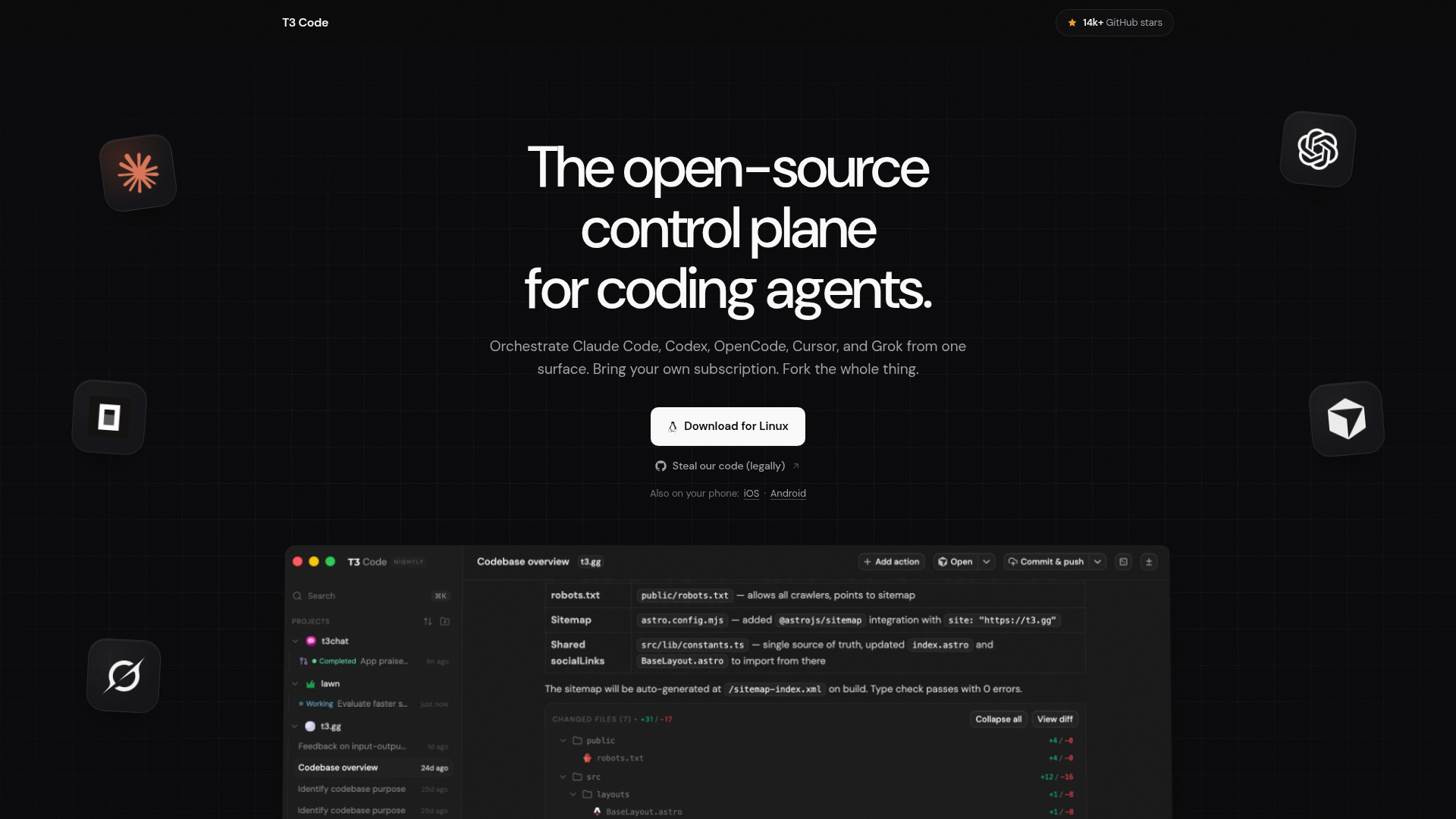
T3 Code is an open-source control plane designed to orchestrate multiple AI coding agents—such as Claude Code, OpenCode, Cursor, and Grok—from a single unified workspace. Bring your own subscriptions and fork the entire project to customize it for your needs. - Multi-Agent Orchestration: Manage Claude Code, OpenCode, Cursor, and Grok from one interface. - Bring Your Own Subscription: Use your existing AI model subscriptions without restrictions. - Forkable & Customizable: Open-source codebase allows for full customization and forking. - Cross-Platform Support: Available on Linux, iOS, and Android. - Performance Optimized: Designed for efficiency and responsiveness. - Community-Driven: Built with feedback from over 100,000 developers. T3 Code is open-source and can be self-hosted. The project is available on GitHub and supports Linux, iOS, and Android platforms. Users can download the app or build from source for full control over their setup.

AI-powered autonomous software engineering agent
SWE-agent is an autonomous AI agent designed to assist with software engineering tasks by leveraging language models to interact with tools and repositories. - Autonomous Issue Resolution: Uses language models (e.g., GPT-4o, Claude Sonnet 4) to autonomously fix issues in GitHub repositories. - Tool Integration: Supports custom tools and configurations for extended functionality. - Batch Processing: Enables running multiple instances for batch processing of tasks. - Trajectory Inspection: Provides tools to inspect and analyze agent trajectories and outputs. - Flexible Deployment: Can be installed from source, in browser (Codespaces), or via Docker. - Configuration Management: Supports detailed configuration files for models, tools, environments, and demonstrations. - Tutorials & Guides: Includes comprehensive tutorials for getting started, command-line basics, and advanced usage. - API Reference: Full documentation for run, instance, agent, and environment configurations. - Open Source: Available under the MIT License on GitHub. - Self-Hosted: Can be deployed locally or in cloud environments (e.g., Codespaces, Docker). - Model Support: Compatible with various language models, including GPT-4o and Claude Sonnet 4. - Dependencies: Requires Python and Docker for local deployment.

Orchestrate any coding agent in one workspace
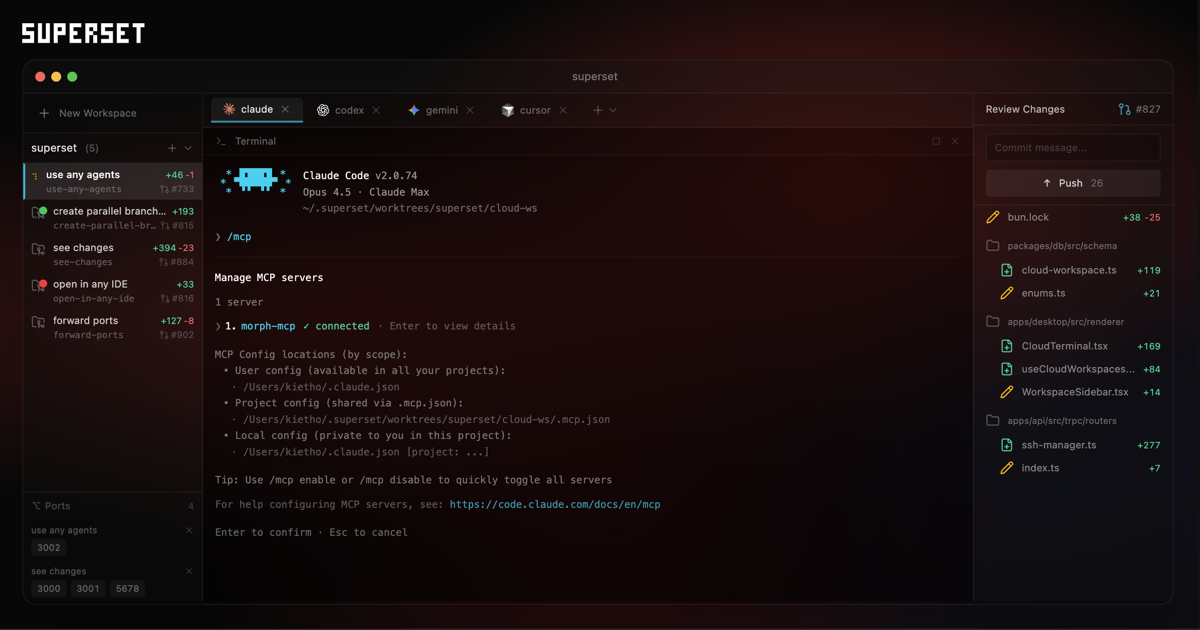
Superset is a unified workspace designed to orchestrate multiple coding agents like Claude Code, Codex, OpenCode, and others. It enables developers to run tasks in parallel, isolate changes in clean branches, and review all work in one place. - Unified Workspace: Bring together Claude Code, Codex, OpenCode, and other coding agents in a single interface. - Parallel Execution: Run multiple agents simultaneously for different tasks, scaling from two to 100+ agents. - Isolated Workspaces: Each task gets its own isolated workspace and clean branch to prevent conflicts. - Real-Time Monitoring: Track agent progress, status, and results at a glance with a centralized dashboard. - Agent Independence: Switch between agents (Claude, Codex, OpenCode, etc.) without changing your workflow. - Automations: Schedule recurring tasks like triage, changelog updates, and dependency upgrades. - Remote Access: Connect to remote machines (e.g., GPU boxes) and manage workspaces across different environments. - Review & Merge: Review changes, provide feedback, and merge work directly from the interface. Superset is open-source and can be self-hosted. The project is actively maintained on GitHub with detailed documentation for setup and configuration.

AI coding agent that ships reviewable PRs
Roomote is an AI-powered coding agent designed to act as your engineering teammate. It runs in your actual dev environment, verifies its work, reviews code with a different model, and submits PRs with live previews for approval. This enables faster development with unlimited parallel tasks while maintaining full control over your workflow. - Model-Agnostic: Bring your own model (BYOK) and mix providers for intelligence, price, or throughput optimization. - Automated Workflows: Handles inbound issues and proactively finds improvements without manual prompting. - Live Previews: Runs your actual app before marking work complete and provides reviewable URLs. - Built-in Review Loops: Reviews its own changes, catches issues early, and fixes problems before human intervention. - Multi-Platform Integration: Works seamlessly with Slack, Teams, Discord, Telegram, and mobile devices. - Single-Tenant Architecture: Always isolated deployments whether cloud or self-hosted. - Source-Available: Full transparency with readable, modifiable code. - Built-in Analytics: Tracks inference costs, team productivity, and performance metrics. - Multi-Repo Support: Compatible with GitHub, GitLab, Azure DevOps, Gitea, and Bitbucket. Roomote offers two deployment options: Cloud Hosting: - Live deployment in 2 minutes - Isolated sandboxes managed by Roomote - Free 7-day trial available - Pricing starts at $49/month for up to 10 users Self-Hosting: - Docker-based deployment on your infrastructure - Full control over data and hosting - No license required for teams under 10 users - Up and running in 10 minutes Both options maintain single-tenant isolation and model flexibility.

Minimal terminal-based AI coding agent
Pi is a minimal agent harness designed for developers who want to adapt AI workflows to their own processes rather than the other way around. It runs in the terminal and offers powerful customization through extensions, skills, prompt templates, and themes. - Minimal & Customizable: Skip bloated features like sub-agents and plan mode. Build exactly what you need. - Multi-Model Support: Switch between 15+ providers (Anthropic, OpenAI, Google, Ollama, etc.) mid-session with /model or Ctrl+L. - Tree-Structured History: Sessions are stored as trees. Navigate to any prior point with /tree, export to HTML, or share via GitHub gist. - Context Engineering: Load project-specific instructions via AGENTS.md, SYSTEM.md, and skills. Customize compaction strategies. - Four Operational Modes: Interactive, print/JSON, RPC, and SDK for programmatic usage. - Extensible Architecture: Add custom providers, models, and UI tweaks via extensions. Bundle as Pi packages and share via npm or git. - Token Efficiency: Minimal system prompt ensures efficient token usage. Pi is open source and can be self-hosted. Installation options include: bash curl -fsSL https://pi.dev/install.sh | sh powershell -c "irm https://pi.dev/install.ps1 | iex" npm install -g --ignore-scripts @earendil-works/pi-coding-agent pnpm add -g --ignore-scripts @earendil-works/pi-coding-agent bun add -g --ignore-scripts @earendil-works/pi-coding-agent Pi supports custom installations and can be extended with third-party packages like @termdraw/pi for enhanced TUI capabilities.

Open-source AI coding assistant alternative
OpenWork is an open-source AI coding assistant designed to integrate seamlessly into your development workflow. Built as an alternative to proprietary AI coding tools, it provides code generation, review, and automation features powered by open models. - AI-Powered Code Generation: Generate, refactor, and optimize code using local or remote AI models - Code Review Automation: Automated code analysis and suggestions for improvements - Workflow Integration: Works with your existing tools and IDEs - Self-Hostable: Full control over your data and infrastructure - Multi-Model Support: Compatible with various AI models including open alternatives - Developer-First Design: Built by developers for developers with a focus on practical use cases OpenWork is designed for self-hosting with comprehensive documentation available for deployment. It supports containerized setups and can be integrated with popular development environments. The project is actively maintained with regular updates and community contributions.

Open platform for cloud coding agents
OpenHands is the open-source, model-agnostic platform for cloud coding agents. It enables engineers to automate real engineering work securely and transparently, providing full control over the agentic software development lifecycle (SDLC). - Model-Agnostic: Works with any AI model or agent framework - Agent Canvas: Visual interface for customizing and automating agent workflows - Cloud & Local Deployment: Run agents in the cloud or on-premise - SDK & Plugins: Extensible SDK with MCP servers, skills, and plugins - Security & Transparency: Built-in audit trails and secure execution environments - Enterprise Control Plane: Centralized management for large-scale deployments - Skill Management: Enable/disable default skills and add custom ones - Repository Context: Deep integration with GitHub and other version control systems OpenHands is fully open-source (Apache 2.0) and can be self-hosted. The platform supports both cloud and local deployment options, with enterprise features available for larger organizations. Documentation and setup guides are provided for all deployment scenarios.

Open source AI coding agent for developers
OpenCode is an open-source AI coding agent designed to help developers write, debug, and manage code efficiently. It integrates seamlessly with your terminal, IDE, or desktop app, providing real-time assistance powered by advanced AI models. - Multi-Model Support: Connect to any AI model from providers like Claude, GPT, or Gemini, or use local models. - LSP Integration: Automatically loads the right Language Server Protocols (LSPs) for the LLM to enhance coding accuracy. - Multi-Session Workflows: Run multiple agents in parallel on the same project for complex tasks. - Shareable Sessions: Generate shareable links for debugging or reference, ideal for team collaboration. - Editor Agnostic: Available as a terminal interface, desktop app (macOS, Windows, Linux), and IDE extensions. - Privacy-First Design: Does not store your code or context data, ensuring compliance with sensitive environments. - GitHub Copilot Integration: Log in with GitHub to use your existing Copilot account. - OpenAI Integration: Use your ChatGPT Plus or Pro account directly within OpenCode. - Zen Models: Access handpicked, benchmarked models optimized specifically for coding agents. OpenCode is open-source and can be self-hosted for full control over your data and infrastructure. It supports integration with 75+ LLM providers through Models.dev, including local model deployment. The desktop app is available for macOS, Windows, and Linux, while the terminal interface and IDE extensions provide flexibility across development environments.

Visual AI app builder for product teams
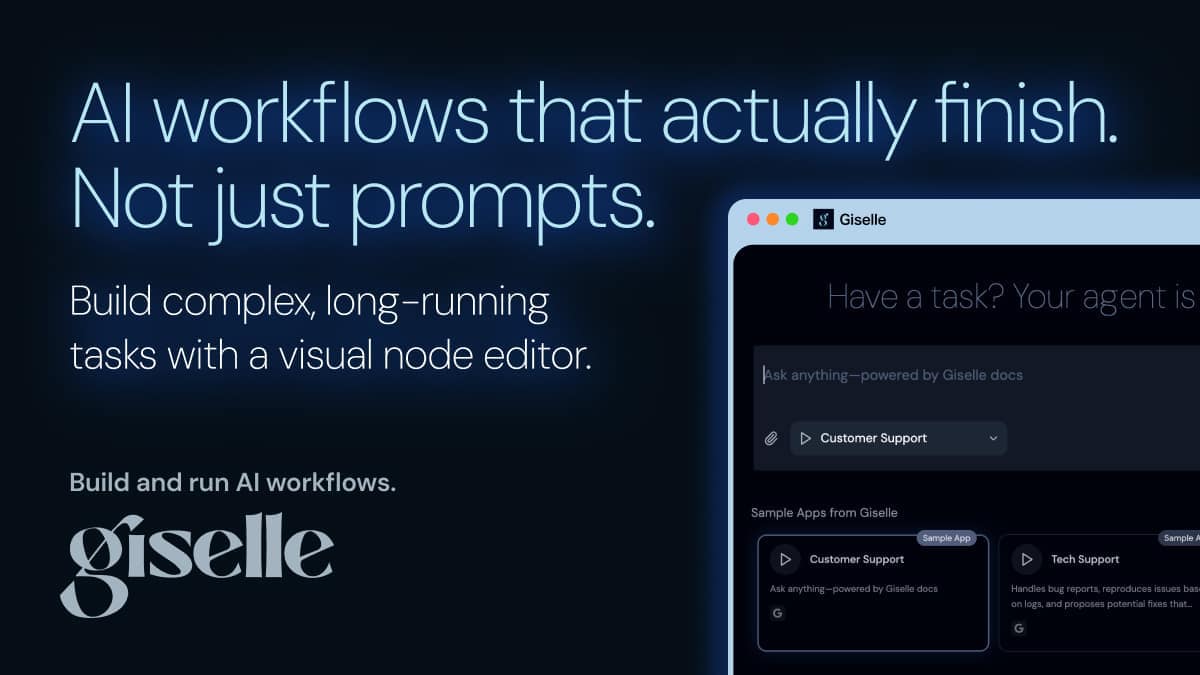
Giselle is an AI-native app builder designed to supercharge product teams by automating repetitive tasks and enabling rapid iteration. With a visual agent builder, multi-model composition, and seamless integrations, teams can deploy AI workflows in minutes—from deep research and PRD generation to automated code reviews and documentation updates. - Visual Agent Builder: Design and deploy AI agents visually with drag-and-drop, no coding or prompt engineering required. - Multi-Model Composition: Auto-select and chain top AI models for optimal performance across tasks. - Knowledge Store: Access external data sources (GitHub, databases, docs) to provide agents with full context. - End-to-End Automation: Automate research, PR reviews, documentation updates, and more from a single platform. - AI-First Architecture: Connect to any foundation model and adapt seamlessly as new models emerge. - Security & Compliance: ISO/IEC 27001 compliant by default with SOC 2 certification in progress. - GitHub AI Operations: Automate issues, PRs, and deployments with AI-powered workflows. Giselle is a cloud-based platform with no self-hosting option currently available. The service is built for AI-native teams and integrates with tools like GitHub, PostgreSQL, Slack, and Google Drive. The architecture supports multi-model AI workflows and is designed for scalability and security.

AI website editor for existing sites
Frontman is an AI-powered website editor designed to streamline website updates for WordPress, Next.js, Astro, and Vite projects. It allows users to click on any element of their live site, describe desired changes, and receive reviewable code edits in seconds. - Visual Editing: Click any element on your live website to make changes directly. - Multi-Framework Support: Works with WordPress, Next.js, Astro, and Vite sites. - Reviewable Changes: Generates clean, reviewable code diffs for developers. - No Admin Panel Hassle: Update WordPress posts, pages, blocks, menus, and settings without navigating through wp-admin. - Team Collaboration: Enables marketers and designers to request changes and hand off reviewable updates to developers. - Context-Aware AI: Uses live page context, computed styles, and source mappings to ensure accurate changes. - Self-Hosted or Hosted: Offers both hosted and self-hosted server options for flexibility. - Task History: Persists task history for tracking and reference. Frontman operates with a combination of browser tools for live page inspection, local integrations for CMS or filesystem operations, and a hosted or self-hosted server to orchestrate the AI agent and persist task history. The system sends relevant context to your selected LLM provider to produce accurate, reviewable updates. Self-hosting is supported for users who prefer full control over their data and infrastructure.

Open-source agentic development environment
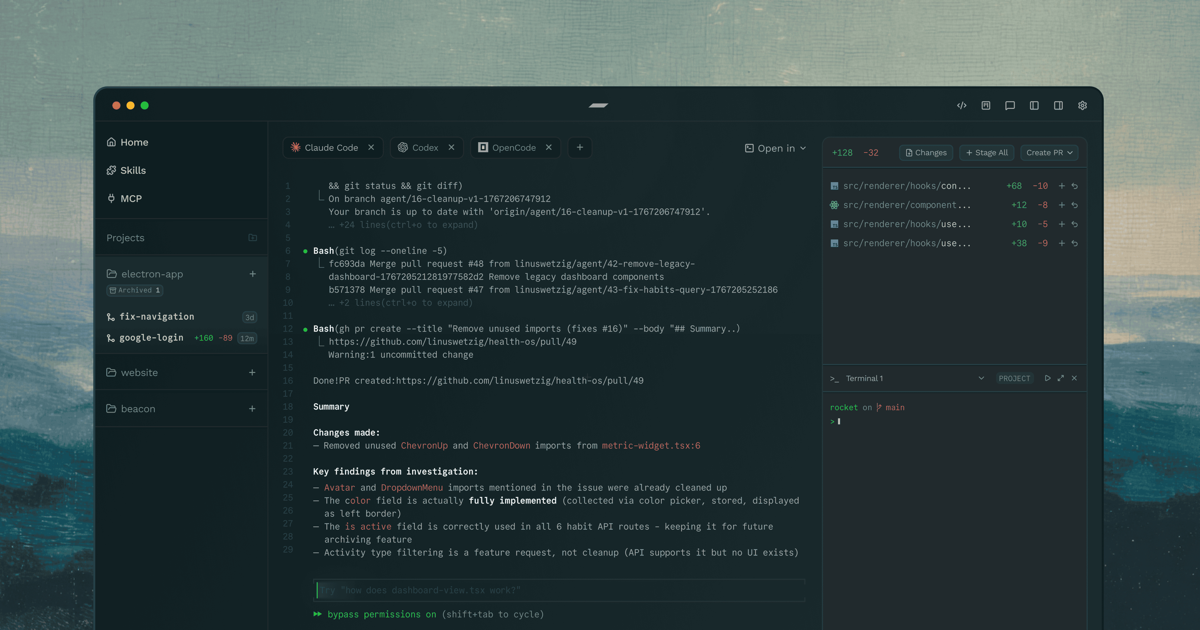
Emdash is a free, open-source agentic development environment designed to streamline coding workflows. It allows developers to run coding agents such as Claude Code and Codex in parallel, schedule recurring tasks, and review changes—all within a unified interface. - Parallel Agent Execution: Run multiple coding agents simultaneously in isolated workspaces with Git worktrees. - Task Scheduling: Automate bug sweeps, release prep, reviews, and checks with recurring agent runs. - In-App Browser: Preview applications directly within the environment. - Review and Ship: Inspect diffs, commit changes, push updates, and open pull requests without switching tools. - Remote Development: Connect over SSH to dev servers, cloud VMs, or GPU boxes for remote agent execution. - Workspace Provisioning: Set up and tear down isolated environments on demand for each task. - Agent Flexibility: Works with 25+ coding agents, including Codex, Cursor, Claude Code, Amp, and Antigravity. - Library Integration: Save prompts, install skills, and sync MCP servers for reusable agent resources. Emdash is open-source and can be self-hosted on macOS, Windows, and Linux. It supports remote development via SSH and integrates with various tools for seamless workflow automation.

Collaborative workspace for human and AI agent teams

Buzz is a collaborative workspace designed for human and AI agent teams to work together seamlessly. It consolidates communication, project management, and development tools into a single shared space. - Unified Collaboration: Chat with teammates and specialized agents in shared rooms, keeping context, decisions, and next steps in one place. - Agent Integration: Invite and manage AI agents tailored to your workflows, enabling them to collaborate with your team’s agents. - Project Management: Turn discussions into plans, code, reviews, and PRs without switching between tools. - Open Source: Fully open source project with community-driven development. - Enterprise Ready: Waitlist available for an enterprise version with company-wide access and advanced agent management. Buzz is an open source project available on GitHub. It can be self-hosted for full control over data and infrastructure. The project is built by Block and supports GDPR compliance.

Cloud computer for building and automating your life

Zo Computer is a cloud-based personal workspace that combines storage, compute, networking, and AI-powered tools into a single platform. Designed for builders, operators, and creators, Zo provides a unified environment to organize files, automate workflows, build websites, and interact with AI agents across multiple channels. - Personal Cloud Workspace: Centralized storage, compute, and networking with built-in services - AI Agents & Automation: Deploy and manage AI agents for tasks like file organization, competitive analysis, and content generation - Integrated File Management: Organize files into smart folders (Documents, Images, Media, Data, Web) with AI assistance - Built-in Hosting: Deploy websites and applications directly from your Zo Space - Multi-Channel Access: Interact with Zo via text, Slack, email, Discord, Telegram, and MCP - Terminal & Browser: Built-in terminal and browser for development and research - Customizable Skills: Extend functionality with custom skills and integrations - 3D Voxel World: Launch into a playable voxel environment for creative projects Zo Computer is a proprietary platform with a public GitHub repository for client applications. The core system runs in the cloud with client applications available for desktop (DEB package) and web. While the platform itself is not self-hostable, users can deploy their own websites and applications within their Zo Space. The system emphasizes privacy with local processing capabilities and EU-friendly data handling practices.

AI coding analytics for developers
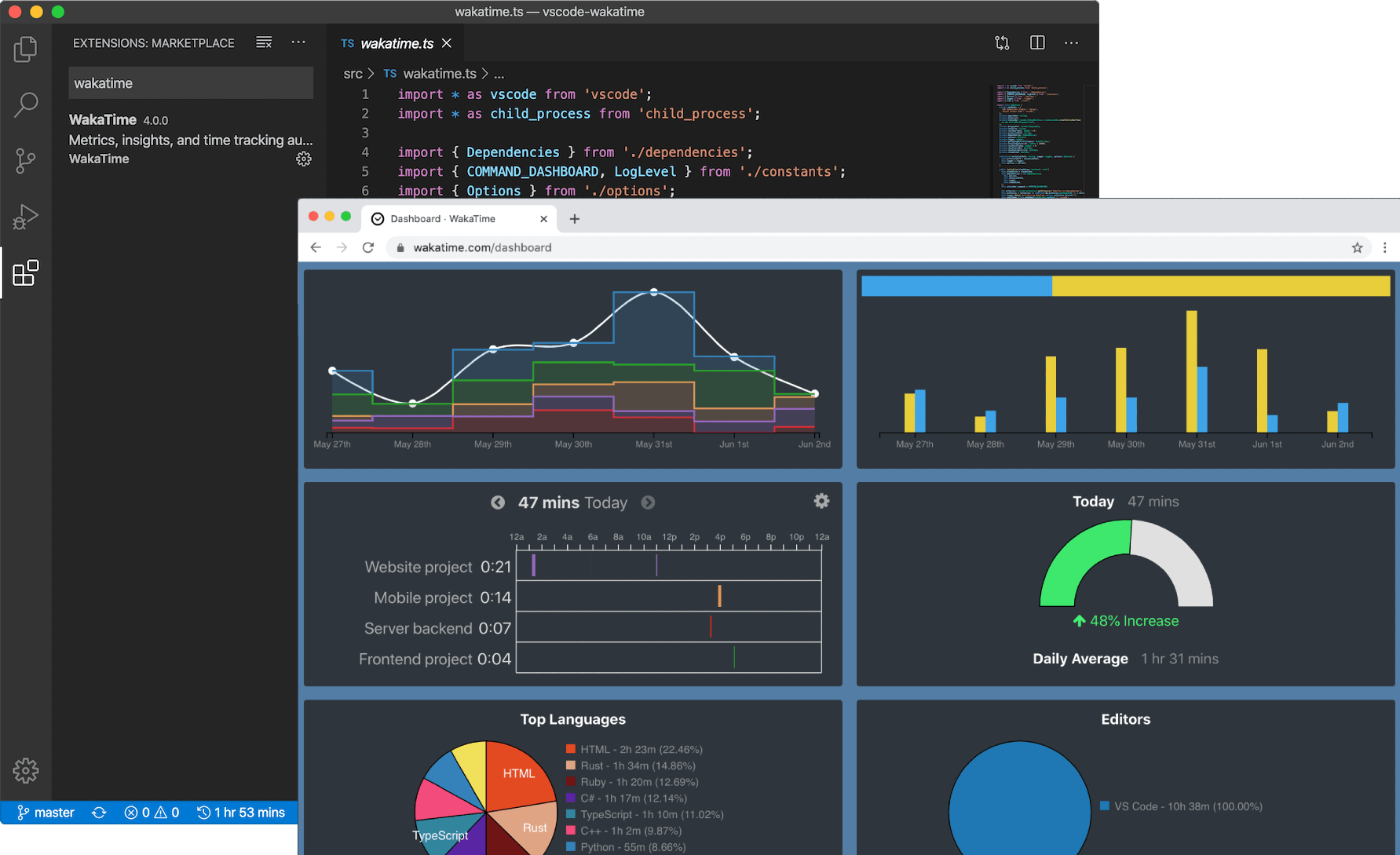
WakaTime provides AI-powered coding analytics to help developers, teams, and organizations measure and optimize AI tool usage. - AI Cost Tracking: Monitor AI spend across models with per-developer breakdowns to stay on budget - AI Adoption Metrics: Track which AI models developers use and the ratio of AI-generated vs human-written code - AI Effectiveness Analysis: Measure how often AI-generated code is modified to prove real productivity gains - Model Efficiency Comparison: Compare tokens per line and prompt length across models to balance quality and cost - Per-Model Breakdown: Detailed insights into lines changed, tokens spent, and estimated costs by model (Claude Code, Cursor, Copilot, etc.) - Prompt Length Analysis: Understand developer interaction patterns with AI tools through input context measurement - 100+ Editor/IDE Support: Works with popular tools including VS Code, IntelliJ, Neovim, Chrome, Firefox, and terminal-based AI assistants - Team & Company Dashboards: Visualize adoption trends and ROI across engineering teams WakaTime offers both cloud and self-hosted options. The open-source wakatime-cli can be self-hosted for complete data control. The platform is GDPR compliant and prioritizes developer privacy with local data processing before optional cloud sync.

Turn prompts into specs and build with AI agents
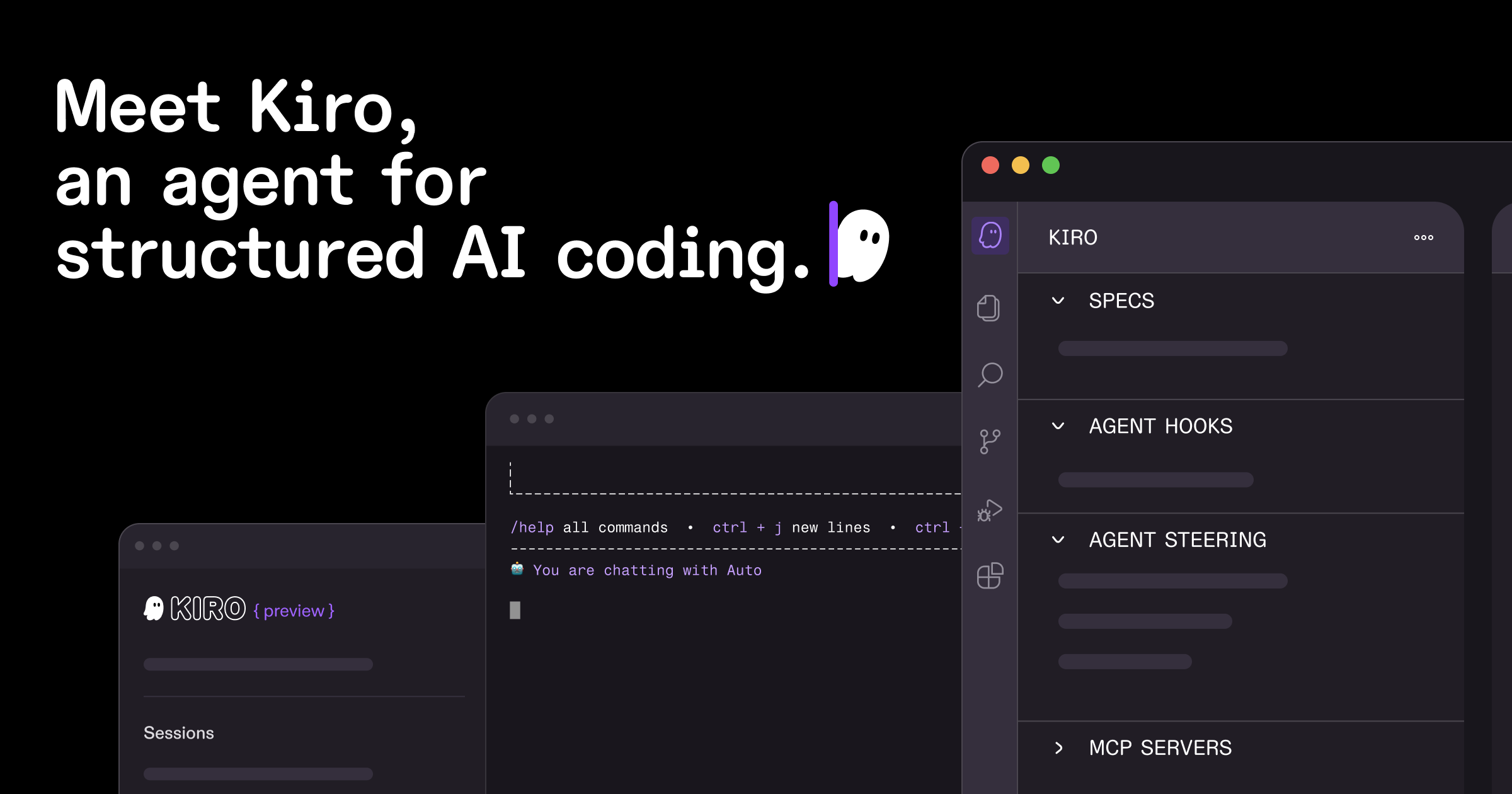
Kiro is a next-generation development platform that moves beyond simple AI coding to agentic engineering. It empowers developers and teams to do their best work by transforming natural language prompts into executable specifications, validating code correctness to catch bugs that unit tests miss, and enabling parallel agent-based development across large codebases. - Prompt-to-Spec Conversion: Transform natural language prompts into executable specifications that guide development - Advanced Code Validation: Identify bugs and issues that traditional unit tests might miss through intelligent validation - Parallel Agent Development: Build across large codebases using multiple AI agents working simultaneously - Learning Agents: Agents that improve and learn from every development session, becoming more effective over time - Cloud and Local Sessions: Support for both cloud-based and local development environments - IDE Integration: Seamless integration with popular IDEs for frictionless development workflows - CLI Tools: Powerful command-line interface for advanced users and automation - Enterprise Features: Advanced security, compliance, and scalability options for business environments Kiro offers both cloud-based and self-hosted deployment options. The platform is designed to work with modern development stacks and integrates with existing CI/CD pipelines. For self-hosting, Kiro provides comprehensive documentation and support for containerized deployments, making it suitable for organizations with strict data governance requirements.
About Cursor
Cursor
Cursor is an AI-powered coding agent designed to make developers extraordinarily productive. Built for ambitious software projects, Cursor accelerates development by autonomously handling tasks, allowing you to focus on strategic decisions while agents build, test, and iterate.
Key Features of Cursor
- Autonomous Agents: Hand off coding tasks to Cursor's agents, which work independently to build, test, and demo features end-to-end.
- Multi-Tool Integration: Run agents in your terminal, collaborate in Slack, and review PRs in GitHub for seamless workflow integration.
- Mission Control: A grid view of all open windows as scaled previews, enabling quick navigation and task management.
- Cloud Agents: Always-on agents that run on schedules or triggers to maintain, fix, and update your software continuously.
- Grok Integration: Access advanced AI models like Grok 4.6 for high-performance coding assistance and problem-solving.
- CLI Support: Command-line interface for running agents and automating tasks directly from your terminal.
- Automations: Set up repetitive workflows to build, maintain, and fix software automatically.
- Real-Time Collaboration: Collaborate with team members in Slack while agents assist with coding tasks.
Tech / Self-Hosting
Cursor is a proprietary desktop application with cloud-based agent capabilities. It does not require self-hosting and is available as a downloadable application for Linux, macOS, and Windows. The platform leverages advanced AI models for coding assistance and is designed for seamless integration into existing development workflows.