24 Best Open Source Retool Alternatives
A curated collection of the 24 best open source and self-hosted alternatives to Retool in 2026.
Looking for a free, privacy-friendly, or self-hosted replacement for Retool in 2026? The top open-source alternative is Dify — Build and deploy agentic workflows with AI.
Other highly rated open-source Retool alternatives include NocoDB, Appwrite and ToolJet.

Build and deploy agentic workflows with AI
Dify is the platform for production-ready agentic workflows. Build agents, knowledge pipelines, models, and tools on one collaborative workspace, then deploy them on Cloud, in your VPC, or self-hosted. - Visual Workflow Builder: Drag-and-drop interface to design agentic workflows without coding. - Knowledge Pipeline: Prepare searchable knowledge bases for RAG applications. - Model & Tool Integration: Supports multiple AI models and third-party tools. - Multi-Deployment Options: Deploy on Dify Cloud, private VPC, or self-hosted via Docker. - Enterprise-Grade Security: Role-based access control, audit logs, and compliance features. - Marketplace: Explore pre-built tools, models, and integrations. - Scalability: Move from prototype to production without rebuilding your stack. Dify is open-source and self-hostable via Docker. The Community Edition allows full control over deployment, data, and infrastructure. Supports PostgreSQL, Redis, and other standard technologies for reliable operation.

Open source Airtable alternative
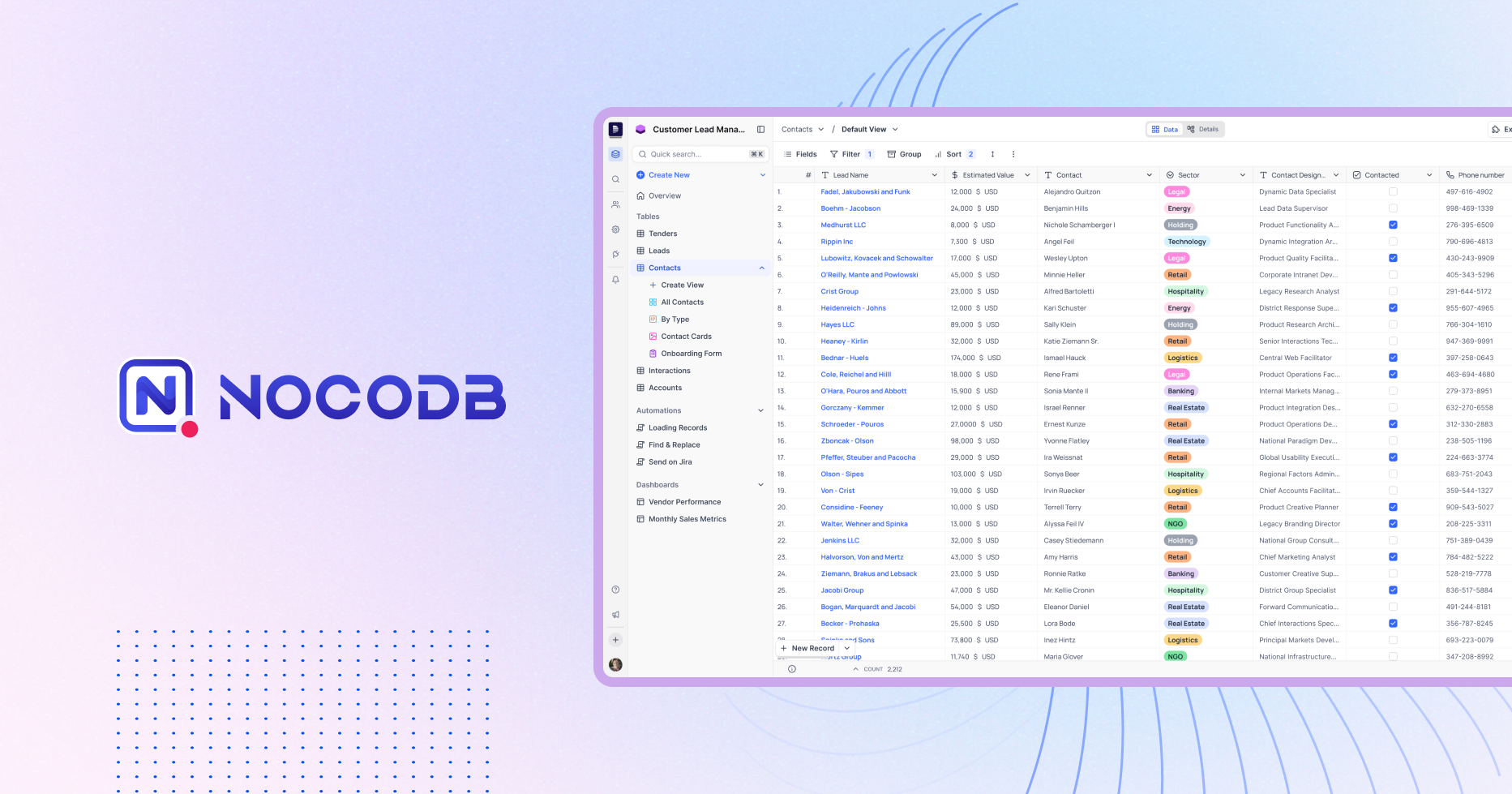
NocoDB transforms your existing databases (PostgreSQL, MySQL, SQL Server, SQLite) into a no-code spreadsheet interface. Whether you're building from scratch or migrating from Airtable, NocoDB provides interactive UIs like Grid, Kanban, Form, Gallery, and Calendar views alongside RESTful APIs and SQL access. - No-Code Database Management: Create and manage databases without writing code using an intuitive spreadsheet-like interface. - Multiple View Types: Access data through Grid, Kanban, Form, Gallery, and Calendar views to suit different workflows. - API & SQL Access: Generate RESTful APIs and SQL endpoints for seamless integration with other tools and applications. - Self-Hosting: Deploy NocoDB on your own infrastructure for full data control and privacy. - Scalability: Handle millions of rows efficiently with support for PostgreSQL, MySQL, SQL Server, and SQLite. - Airtable Import: Easily migrate existing Airtable bases to NocoDB with minimal effort. - Collaboration Tools: Share databases with team members and control access permissions. - Templates: Start quickly with pre-built templates for common use cases. NocoDB is open-source and can be self-hosted on any cloud provider or on-premise server. It supports Docker, Kubernetes, and direct installation on Linux/Windows/macOS. The platform is built with Node.js and TypeScript, ensuring compatibility with modern development environments. For cloud hosting, NocoDB offers managed solutions with enterprise-grade security and scalability.

Open-source backend server for web and mobile apps
Appwrite is an open-source backend server that simplifies the development of web and mobile applications. It provides a unified platform with built-in services for authentication, databases, file storage, serverless functions, real-time communication, messaging, and web hosting. - Auth: Secure user authentication with multi-factor authentication (MFA) and OAuth support - Databases: Scalable and robust database solutions with real-time capabilities - Storage: Advanced file storage with compression and encryption - Functions: Deploy and scale serverless functions effortlessly - Messaging: Full-featured messaging service for real-time communication - Realtime: Subscribe and react to events instantly - Sites: Host static sites, SSR, and CSR frontends with built-in deployment - Multi-framework support: Compatible with React, Next.js, Vue, Svelte, Astro, Flutter, and more - AI integration: Built-in support for AI agents and MCP tools - Cloud console: Centralized dashboard for monitoring and managing projects Appwrite is open-source (MIT license) and can be self-hosted on any infrastructure. It supports Docker for easy deployment and offers cloud hosting through Appwrite Cloud. The platform is optimized for performance and scalability, making it suitable for projects of all sizes from startups to enterprises. Pricing: Free tier available with paid plans for additional resources and enterprise features.

Build enterprise apps with AI-powered low-code
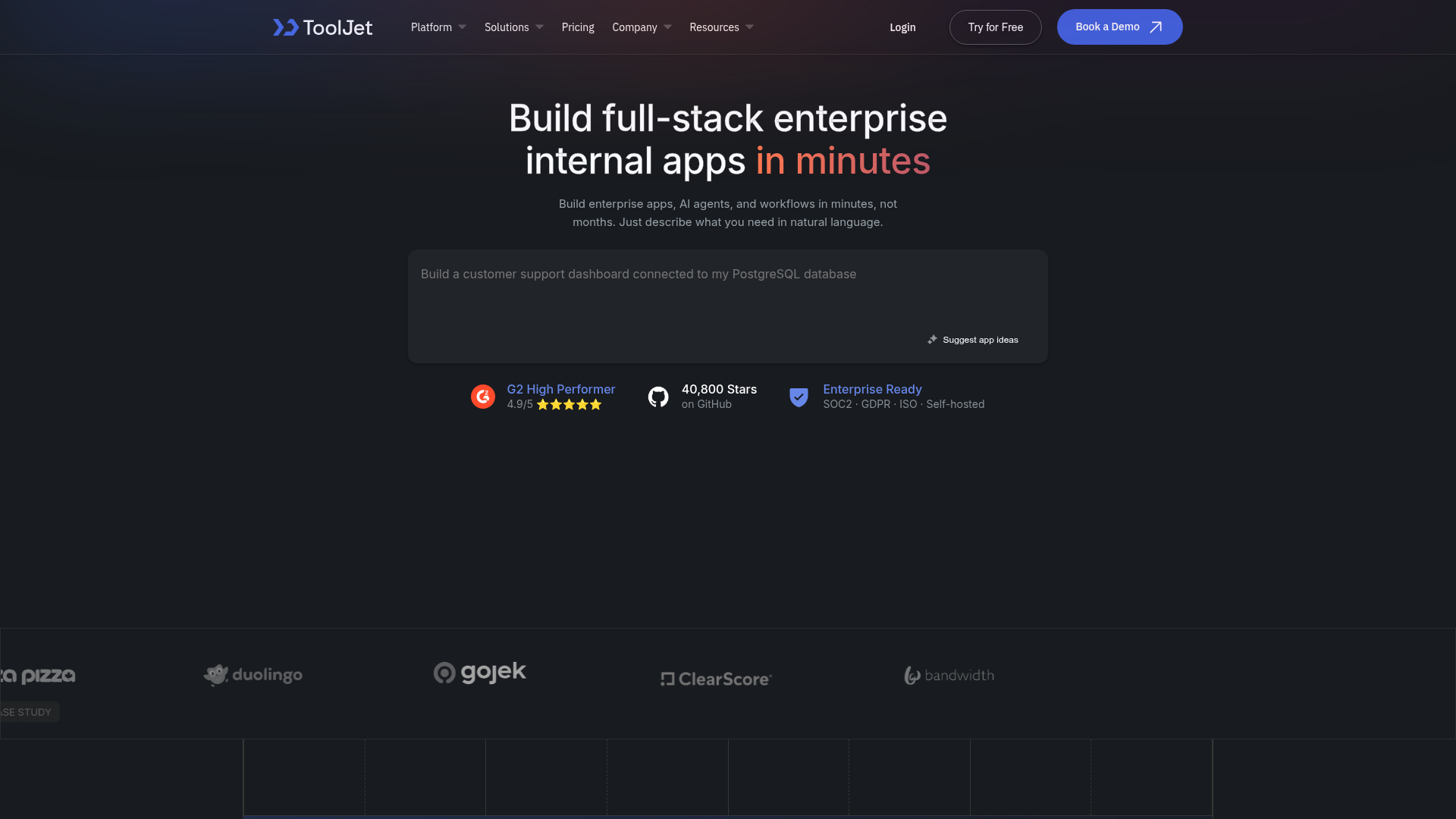
ToolJet is an AI-native low-code platform designed to help teams build secure, scalable internal tools, workflows, and AI agents in minutes rather than months. The platform combines drag-and-drop app building with enterprise-grade features, making it ideal for developers, IT leaders, and AI managers who need to rapidly deploy internal applications. - AI App Builder: Create stunning front-end interfaces without dedicated engineers using AI-powered design assistance. - Workflow Automation: Enterprise-grade workflow orchestration with reliability and scale for complex business processes. - ToolJet Database: Scalable in-built no-code database built on PostgreSQL for seamless data management. - Agent Builder: Automate manual business processes with AI agents, reducing engineering effort. - Integrations: Connect data from diverse sources with seamless API and third-party integrations. - Built-in Security: Enterprise-grade security features including SOC2, GDPR, and ISO compliance. - Authentication & Authorization: Control user permissions and access levels across applications with granular controls. - Development Lifecycle: Manage app development from concept to deployment with integrated tools. ToolJet is open-source and can be self-hosted on your own infrastructure. The platform supports deployment on Kubernetes, Docker, and cloud providers. It is built with Node.js, React, and PostgreSQL, making it highly customizable and extensible. Comprehensive documentation and community support are available for self-hosting configurations.

Open-source low-code app builder
Appsmith is an open-source low-code platform that enables developers and teams to build custom internal tools, dashboards, and admin panels rapidly. Instead of coding every UI component from scratch, Appsmith provides a visual drag-and-drop interface to connect to databases, APIs, and services, reducing development time by up to 90%. - Drag-and-drop UI builder: Create interfaces without writing frontend code. - Database & API integrations: Connect to PostgreSQL, MySQL, MongoDB, REST APIs, GraphQL, and more. - Pre-built widgets: Use tables, forms, charts, and buttons out of the box. - Self-hosting: Deploy on-premises or in your cloud for full data control. - Role-based access control: Securely manage user permissions and access. - Version control integration: Works with Git for collaborative development. - Extensible with plugins: Add custom JavaScript or React components. - Enterprise-ready: Supports SSO, audit logs, and compliance features. Appsmith is open-source and can be self-hosted on any infrastructure. It supports Docker, Kubernetes, and cloud deployments. The platform is built with Java and TypeScript, and the source code is available on GitHub.

Build internal tools 10x faster with AI agents
Build enterprise-grade internal tools and B2B applications 10x faster with Refine's AI agents. Experience the future of vibe coding and AI-led development by transforming your APIs into production-ready React applications. - AI-Powered Development: Leverage Refine's AI agents to generate precise, error-free code aligned with your data model through backend analysis and planning. - Vibe Coding & Spec-Driven Development: Flexible enough for rapid prototyping or precise, specification-driven development. - Bring Your Own Data: Connect to existing REST APIs or Supabase projects, or start vibe coding immediately and publish when ready. - Web IDE for Development: Develop and preview your app in a dedicated Web IDE, with options to vibe code or inspect the codebase. - Pure React Output: Receive your app with clean, black-box-free React code that you own and control. - Self-Hosting for Compliance: Publish on your own infrastructure to maintain security best practices and regulatory compliance without compromises. - Identity Provider Integration: Native support for Okta, Azure AD, Amazon Cognito, and Google Cloud Identity for seamless authentication. - Fine-Grained Access Control: Implement precise access management to meet enterprise security requirements. Refine is open-source and supports self-hosting for full control over infrastructure, security, and compliance. The platform is designed for enterprise environments, offering flexibility to deploy on your own servers while maintaining compatibility with existing identity and access management systems. Start for free | GitHub Repository
YAML-based orchestration platform with 1400+ plugins for running data pipelines, AI workflows, and infrastructure automation across teams at scale.
YAML-based orchestration platform with 1400+ plugins for running data pipelines, AI workflows, and infrastructure automation across teams at scale.

Low-code platform for internal tools and AI agents

Budibase is a low-code platform designed to help businesses build internal tools, automate workflows, and deploy AI agents quickly. It connects to databases, APIs, and business systems, enabling teams to streamline operations without extensive coding. - AI Agents: Deploy AI-powered assistants to handle employee queries and automate tasks across multiple channels. - Internal Apps: Create custom internal tools for teams to manage processes, track work, and improve productivity. - Automations: Automate approvals, routing, notifications, and operational workflows with minimal setup. - Data Integration: Connect to databases, spreadsheets, and business systems like Salesforce, GitHub, and Notion. - API Explorer: Build, test, and manage APIs directly within the platform. - Enterprise-Grade Security: Features like audit logs, role-based access control, and compliance with industry standards. - Self-Hosting: Deploy on-premises or in your preferred cloud environment for full data control. - Collaboration Tools: Share apps, automate workflows, and collaborate across teams with built-in tools. Budibase supports self-hosting on various platforms, including Docker, Kubernetes, and cloud providers. It is built with Node.js and offers flexibility for deployment in environments that prioritize data privacy and security. The platform is designed to be scalable, making it suitable for businesses of all sizes, from SMEs to large enterprises. For developers, Budibase provides an open-source core with extensive customization options, while enterprises can leverage advanced features and dedicated support.

Open-source AI + no-code business system builder
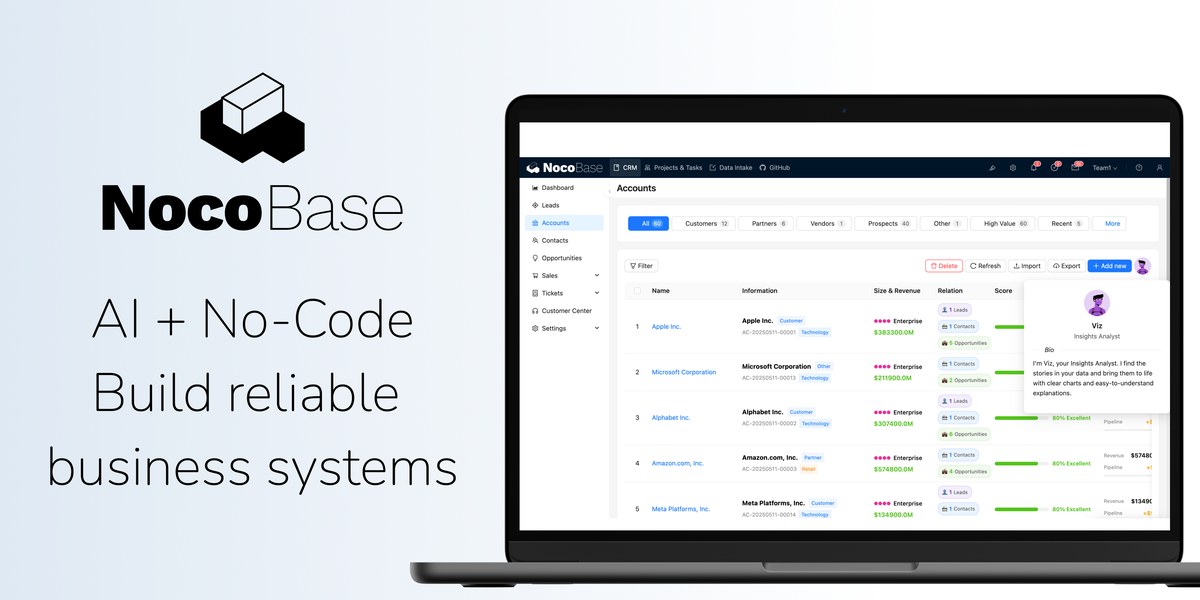
NocoBase is an open-source AI-driven no-code and low-code development platform designed for rapid business system deployment. Instead of building from scratch, AI works on top of production-proven infrastructure, combining speed with reliability through a WYSIWYG interface. - AI + No-Code Hybrid Approach: Build systems quickly with AI coding agents (Claude Code, Codex, Cursor) and refine using a visual no-code editor - AI Employees: Deploy AI-powered assistants to handle daily operations and workflows - Extensible Architecture: Modular design with blocks, actions, and data sources for customization - Permission Management: Granular access control and role-based permissions - Workflow Automation: Visual workflow builder for process automation - Multi-Source Data Integration: Connect to various databases and APIs - AI Blueprints: Pre-built templates for common business systems (CRM, HR, Project Management) - Self-Hosted Deployment: Full control over data with private, self-hosted instances - Multi-Language Support: Available in 10+ languages including English, Spanish, Portuguese, and Chinese NocoBase is built with Node.js and TypeScript, offering Docker containers for easy deployment. The platform supports PostgreSQL, MySQL, and SQLite databases. Self-hosting options include cloud providers, VPS, or on-premises servers. Comprehensive documentation and community support are available for setup and maintenance.

Code-first platform for internal software
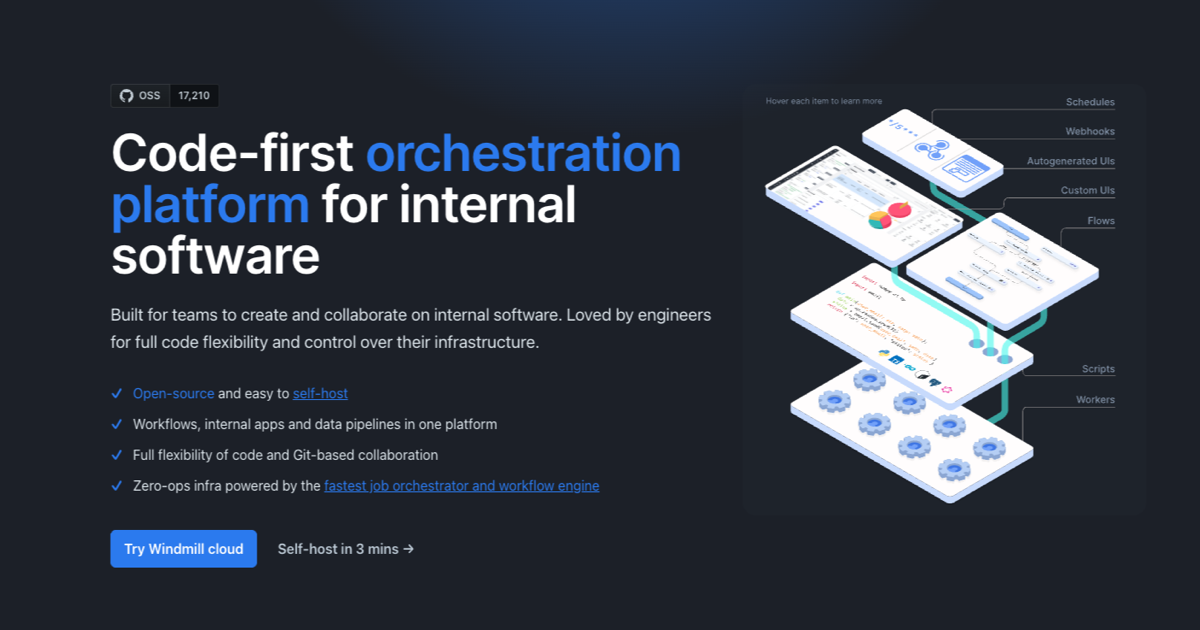
Windmill is a code-first orchestration platform designed for teams to create and collaborate on internal software. Built for engineers, it offers full code flexibility, Git-based collaboration, and zero-ops infrastructure powered by a high-performance job orchestrator. - Scripts: Write and run scripts in Python, TypeScript, Go, PHP, Bash, and SQL. - Workflows: Create dependency-based workflows (DAGs) for complex processes. - Internal Apps: Build custom UIs with a low-code drag-and-drop editor. - Auto-generated UIs: Automatically generate interfaces for scripts and flows based on parameters. - Scheduling: Run scripts and flows at specified frequencies. - Webhooks: Auto-generated webhooks for scripts and flows. - AI Agents: Integrate and orchestrate AI-powered agents. - Data Pipelines: Build and manage data pipelines alongside other internal tools. - Self-hosting: Deploy Windmill on your own infrastructure in minutes. - Enterprise Scalability: Trusted by 4,000+ organizations, including 300+ enterprise customers. Windmill is open-source and self-hostable, with support for Docker, Kubernetes, and cloud deployments. It is built for zero-ops infrastructure and offers benchmarks demonstrating its performance as the fastest job orchestrator and workflow engine. The platform is designed for teams requiring full control over their internal software stack.
Durable orchestration platform for managing AI agents, scheduling background tasks, and running mission-critical workflows.
Durable orchestration platform for managing AI agents, scheduling background tasks, and running mission-critical workflows.
Create data-driven websites and reports using SQL and Markdown, with automatic visualizations and interactive elements.
Create data-driven websites and reports using SQL and Markdown, with automatic visualizations and interactive elements.

Open source spreadsheet-like UI for PostgreSQL
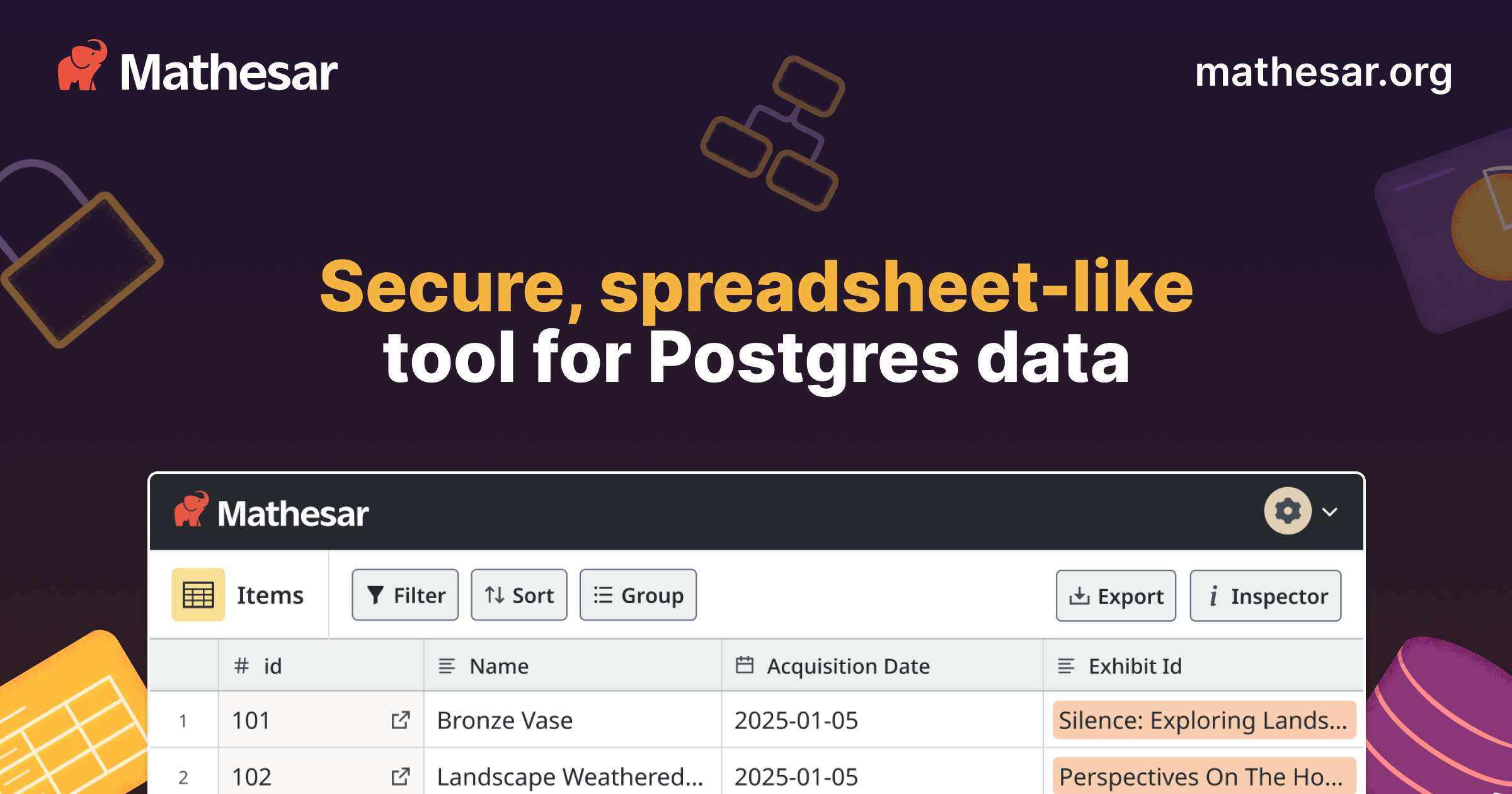
Mathesar is an intuitive, open-source tool that provides a spreadsheet-like interface to PostgreSQL databases. Designed for both database administrators and business users, it simplifies data management with direct integration into Postgres permissions, schemas, and tables. - Spreadsheet-like UI: Familiar interface for viewing, editing, and querying PostgreSQL data without requiring SQL knowledge. - Direct Postgres Integration: Works with existing Postgres permissions, schemas, and tables—no extra layers or abstractions. - Scalability: Built for production databases, scaling as easily as Postgres itself. - Easy Installation: Minimal setup required; installs in minutes with no code dependencies. - Self-Hosted: Deploy on your own infrastructure for full data control and privacy. - Robust Access Control: Leverages Postgres database permissions for secure access management. - Nonprofit-Backed: Maintained by a 501(c)(3) nonprofit, ensuring long-term open-source commitment. - Versatile Use Cases: Supports asset management, CRUD frontends, customer support, dashboards, grant tracking, and timesheet management. Mathesar is built on PostgreSQL and designed for self-hosting. It requires minimal additions to existing databases and can be deployed on your infrastructure in minutes. The tool is 100% open-source, eliminating vendor lock-in risks. For those preferring a managed solution, Mathesar Cloud is available as a free trial option.

Low-code backend for Firebase & Google Cloud
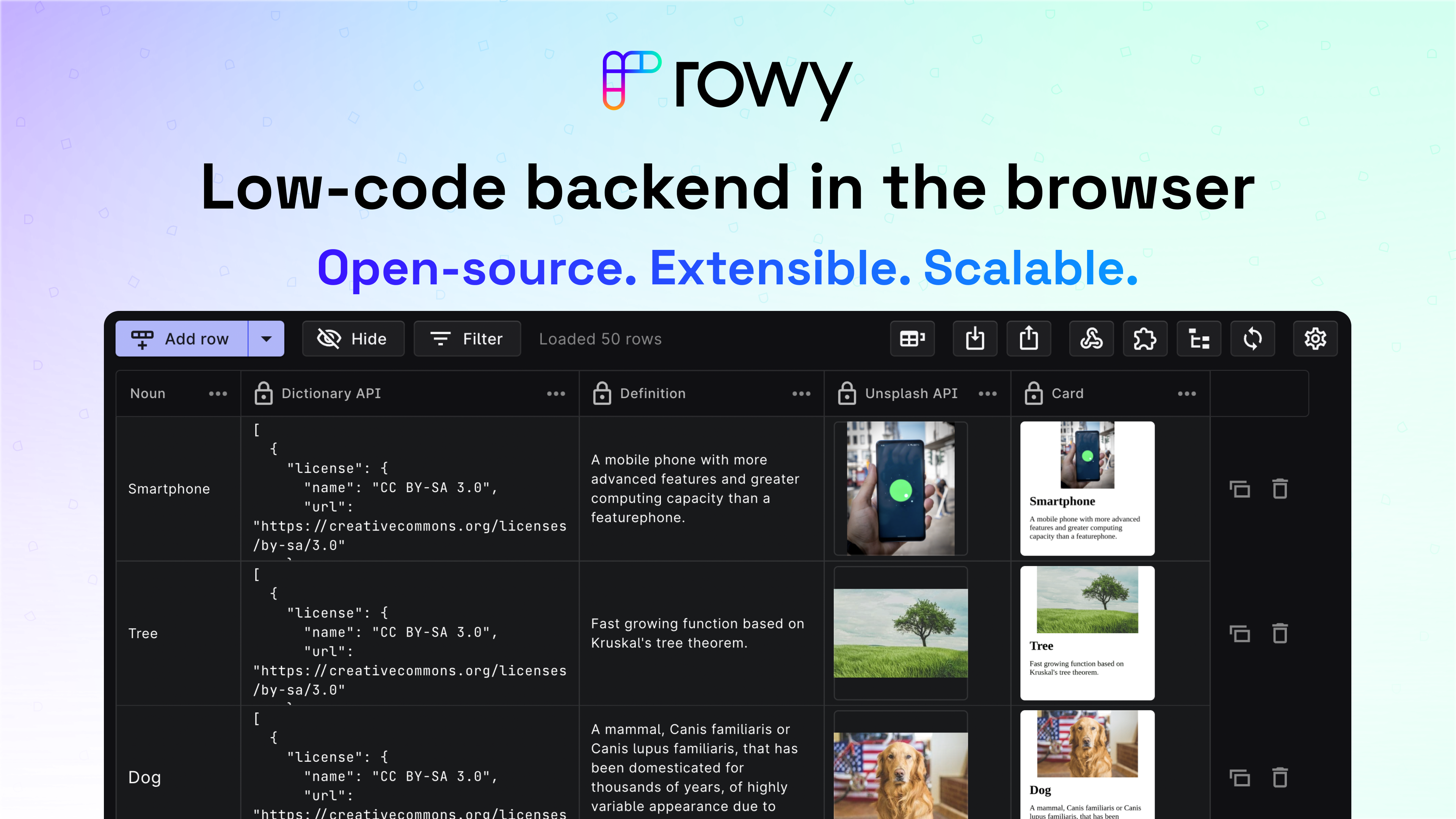
Rowy is a low-code backend platform designed to simplify database management and backend development on Firebase and Google Cloud. It provides an intuitive spreadsheet-like UI for managing Firestore data while enabling developers to write backend logic directly within the same interface. - Spreadsheet-like UI: Manage Firestore data in a familiar Airtable-like interface with over 30 field types. - Instant Admin Panels: Create custom admin dashboards without writing frontend code. - Backend Logic in Browser: Write and execute Cloud Functions directly from the Rowy interface. - Full Extensibility: Integrate any npm package or API without complex configuration. - Firebase Integration: Seamlessly manage Firebase Authentication and Firestore operations. - Scalable Architecture: Data remains on your Google Cloud project for full control and scalability. - Visual Workflow Builder: Design backend workflows visually with scheduled jobs and API endpoints. - Open Source: Free and open-source with community-driven development. Rowy is built on Firebase and Google Cloud technologies. While the core platform is cloud-hosted, the open-source nature allows for potential self-hosting options. The platform emphasizes data sovereignty by keeping all operations within your Google Cloud project, ensuring compliance with data residency requirements.

AI-native CRM/ERP framework with 80% done
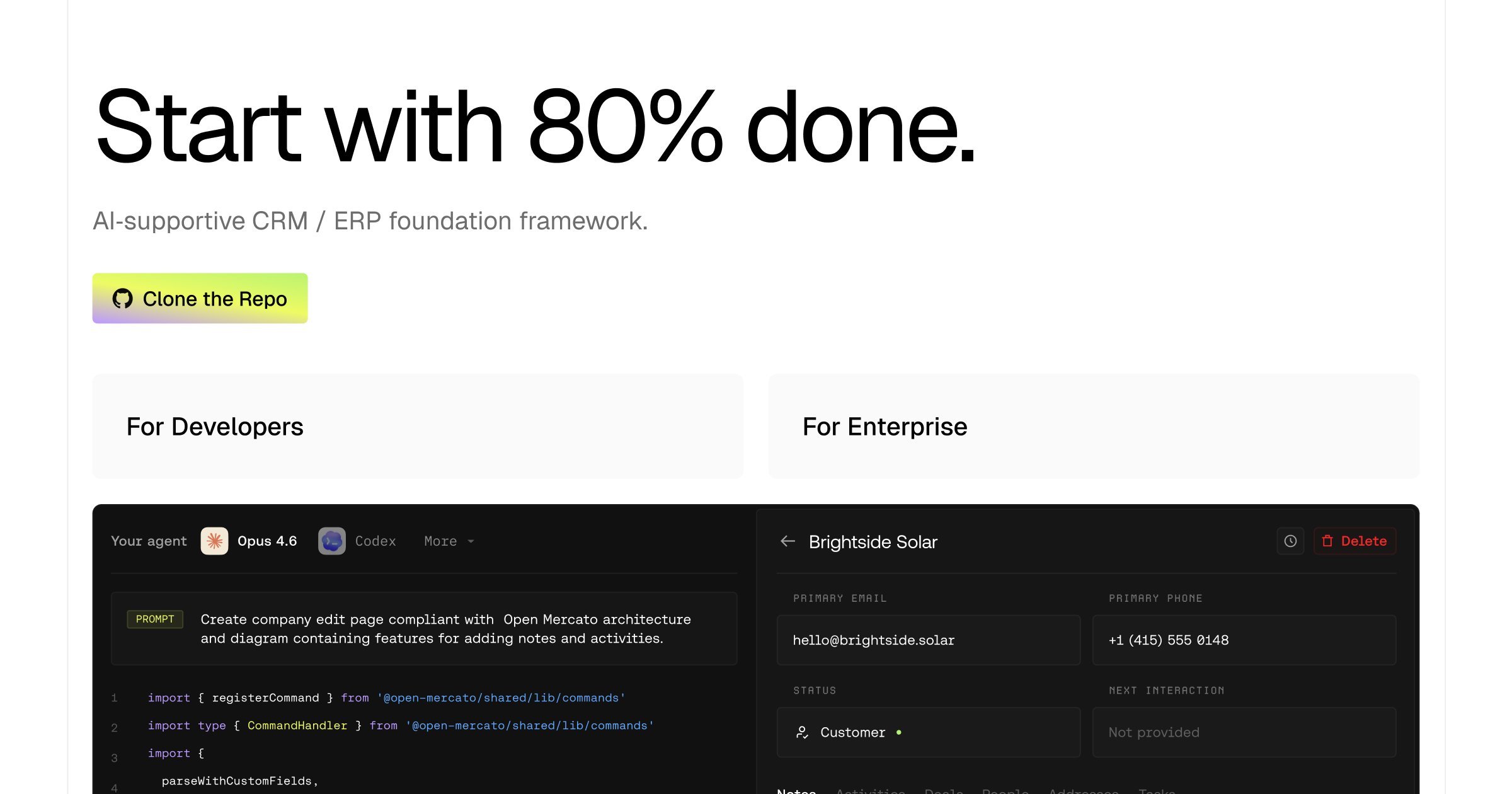
Open Mercato is an AI-native foundation framework that provides 80% of a CRM/ERP system out of the box. Built with modularity, extensibility, and AI integration in mind, it enables teams to deliver business software faster while maintaining full customization control. - AI-Engineering Foundation: Pre-configured conventions for multi-tenancy, RBAC, event flow, pricing, sales pipelines, and ERP processes - Modular Monolith Architecture: Versioned npm package with Overlay system (OCP) for safe customization without forking - AI Agent Orchestration: Production-ready AI agent workflows with audit trails and human-in-the-loop controls - Security & Infrastructure: Built-in Auth, RBAC, Multi-Tenancy, Audit & Undo, Custom Entities, and Encrypted Vault (AES-256) - Business Logic Modules: CRM, Orders & Shipping, Catalog & CPQ, Workflows, Self Service, and ERP - Performance Stack: Events, Search (Meilisearch), Cache (Redis), and AI Assistant (MCP) - Cloud Sandbox: Instant development environments with coding agents and live previews in 30 seconds - Enterprise Support: Certified partners, implementation services, and commercial support tiers - License: MIT (Open Source) - Stack: Next.js, TypeScript, PostgreSQL - Self-Hosting: Fully self-hostable with Docker support - Deployment: Cloud-agnostic with Kubernetes and traditional hosting options - AI Integration: Designed for AI agents with MCP (Model Context Protocol) support - Documentation: Comprehensive guides and video tutorials available - Community: Active development with regular updates and enterprise adoption

Private first self-hosted no-code database & BaaS
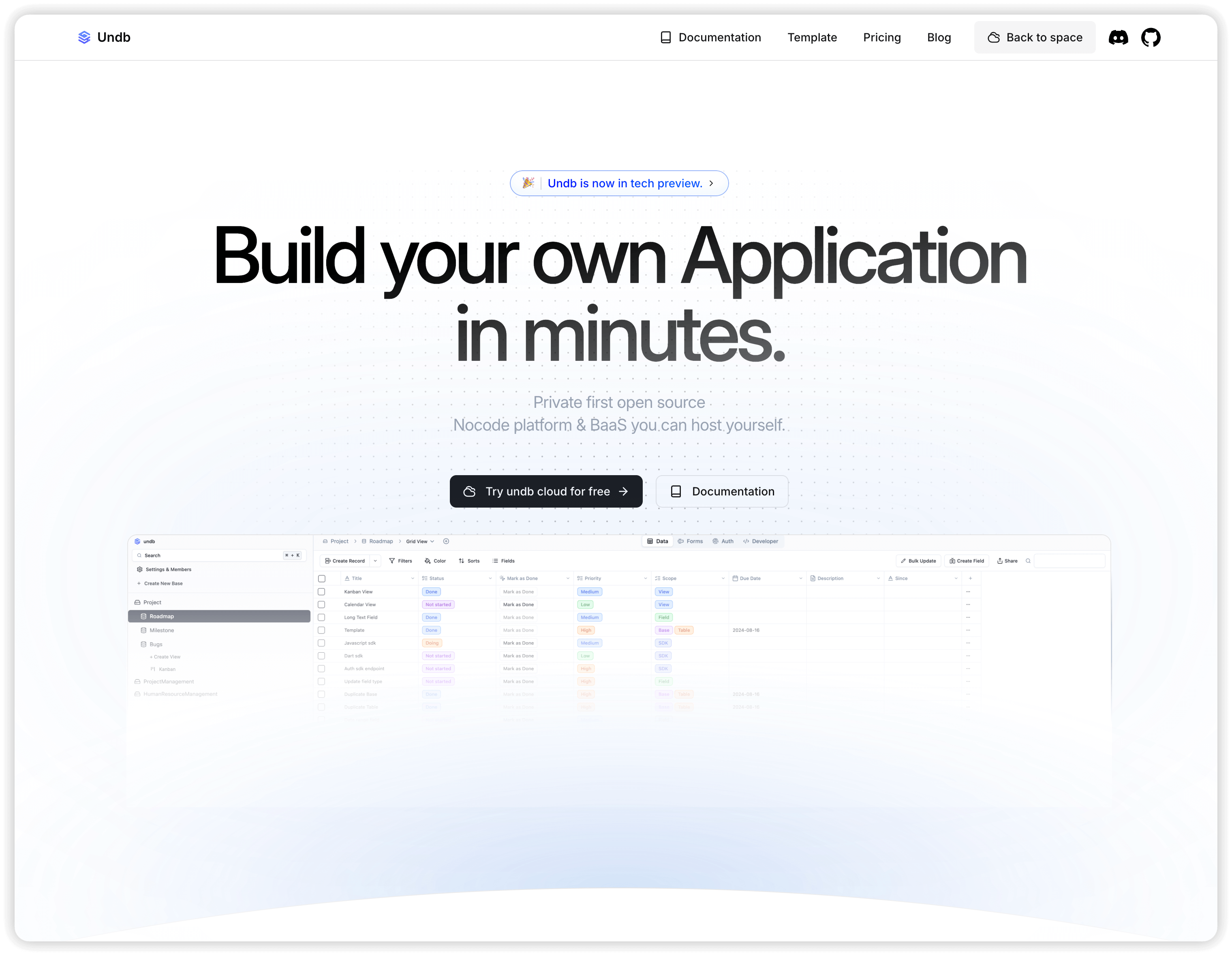
unDB is a privacy-first, self-hosted no-code database and backend-as-a-service (BaaS) designed to simplify application development. It enables users to create, manage, and scale databases and backend services without writing a single line of code, while maintaining full control over their data. - No-Code Database Management: Build and manage databases visually with an intuitive drag-and-drop interface. - Backend-as-a-Service (BaaS): Quickly set up APIs, authentication, and other backend services without backend development. - Self-Hosting: Deploy unDB on your own infrastructure for complete data privacy and control. - Privacy-First: Designed with data security and privacy at its core, ensuring sensitive information remains protected. - Open Source: Fully open-source under a permissive license, allowing for customization and community contributions. - Scalability: Supports scaling from small projects to enterprise-level applications. - Multi-User Collaboration: Enable team collaboration with role-based access control and shared workspaces. - Extensible: Integrate with existing tools and services via APIs and webhooks. unDB is built with modern web technologies and can be self-hosted on any infrastructure that supports Docker containers. The project is written primarily in TypeScript and Go, with a focus on performance, security, and ease of deployment. Detailed installation and configuration guides are available in the official documentation.

Open-source visual builder for web apps
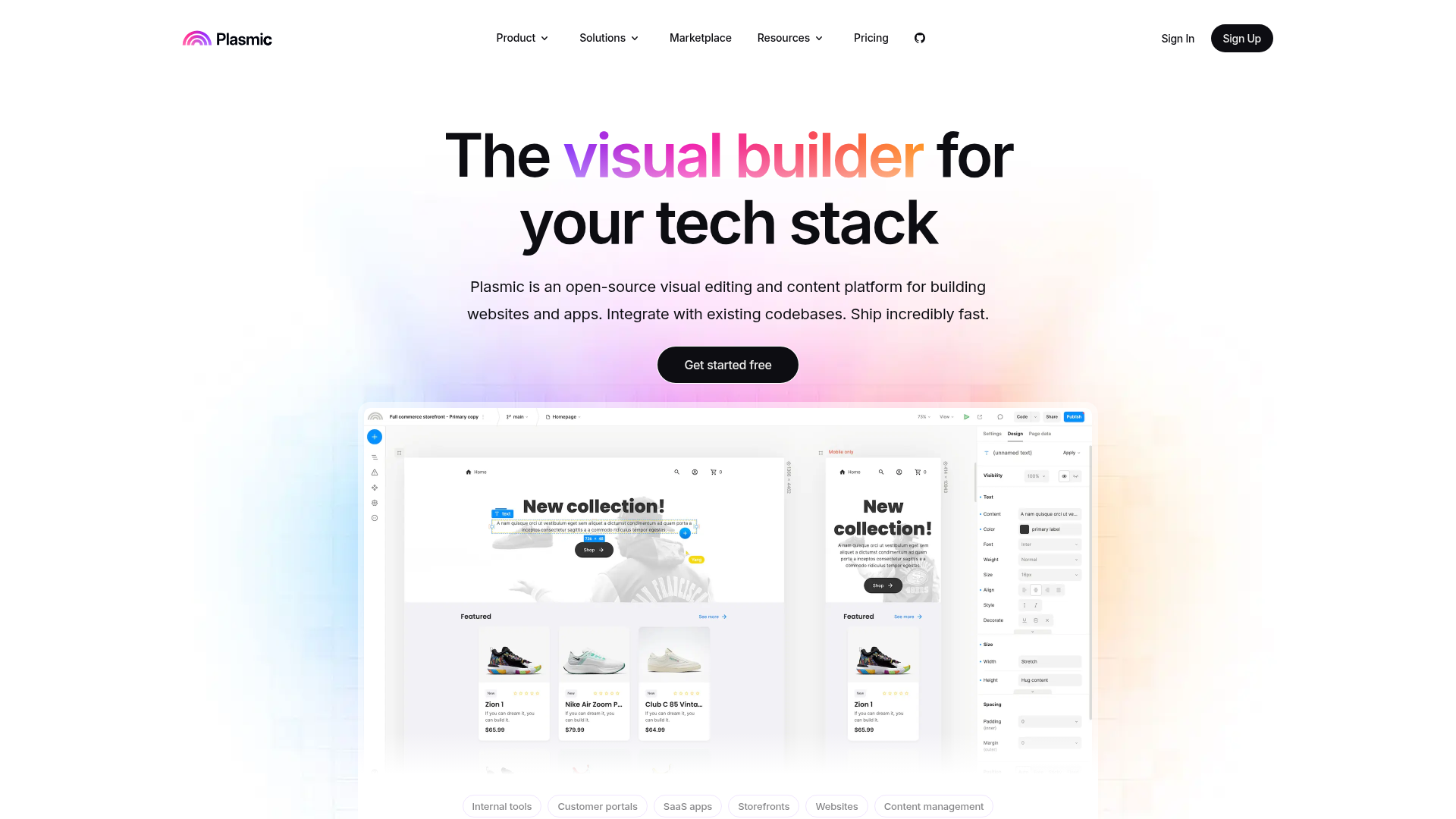
Plasmic is an open-source visual editing and content platform for building websites and apps. Integrate with existing codebases to ship incredibly fast. - Visual Builder: Drag-and-drop interface for creating custom UIs with responsive layouts and styling. - Code Integration: Connect to any codebase and register custom components for team use. - Data Connectors: Built-in integrations with Supabase, Contentful, Shopify, HTTP APIs, and GraphQL endpoints. - Figma Import: Convert Figma designs into React code using the Figma to code plugin. - Collaboration Tools: Multiplayer mode and branching for streamlined team workflows. - Use Cases: Build internal tools, customer portals, SaaS apps, storefronts, websites, and content management systems. Plasmic is open-source and can be self-hosted. The platform supports integration with any existing codebase, making it flexible for various development environments.

AI-powered spreadsheet for custom business apps

Teable is an AI-powered spreadsheet platform that transforms traditional spreadsheets into dynamic business applications. It enables teams to build custom workflows, automate processes, and extract insights from their data—all within a single, intuitive interface. - AI Workflow Automation: Generate custom workflows from natural language prompts to organize data, extract key information, and automate repetitive tasks. - Custom App Builder: Create business-fit applications tailored to your specific needs without requiring extensive coding knowledge. - Data Integration: Connect and migrate data from various sources into a centralized platform for seamless management and analysis. - Collaborative Environment: Work together with your team in real-time, ensuring everyone stays aligned and productive. - Advanced Data Processing: Extract structured data from unstructured files like receipts, contracts, and resumes using AI-powered tools. - Template Library: Access a variety of pre-built templates for common business use cases to get started quickly. - Self-Hosting Capabilities: Deploy Teable on your own infrastructure for enhanced control and data privacy. Teable is built with modern web technologies and supports self-hosting for organizations that require full data control. The platform is designed to be scalable, secure, and customizable, making it suitable for businesses of all sizes. For deployment instructions, visit the official documentation.

Open-source low-code platform with built-in graph database
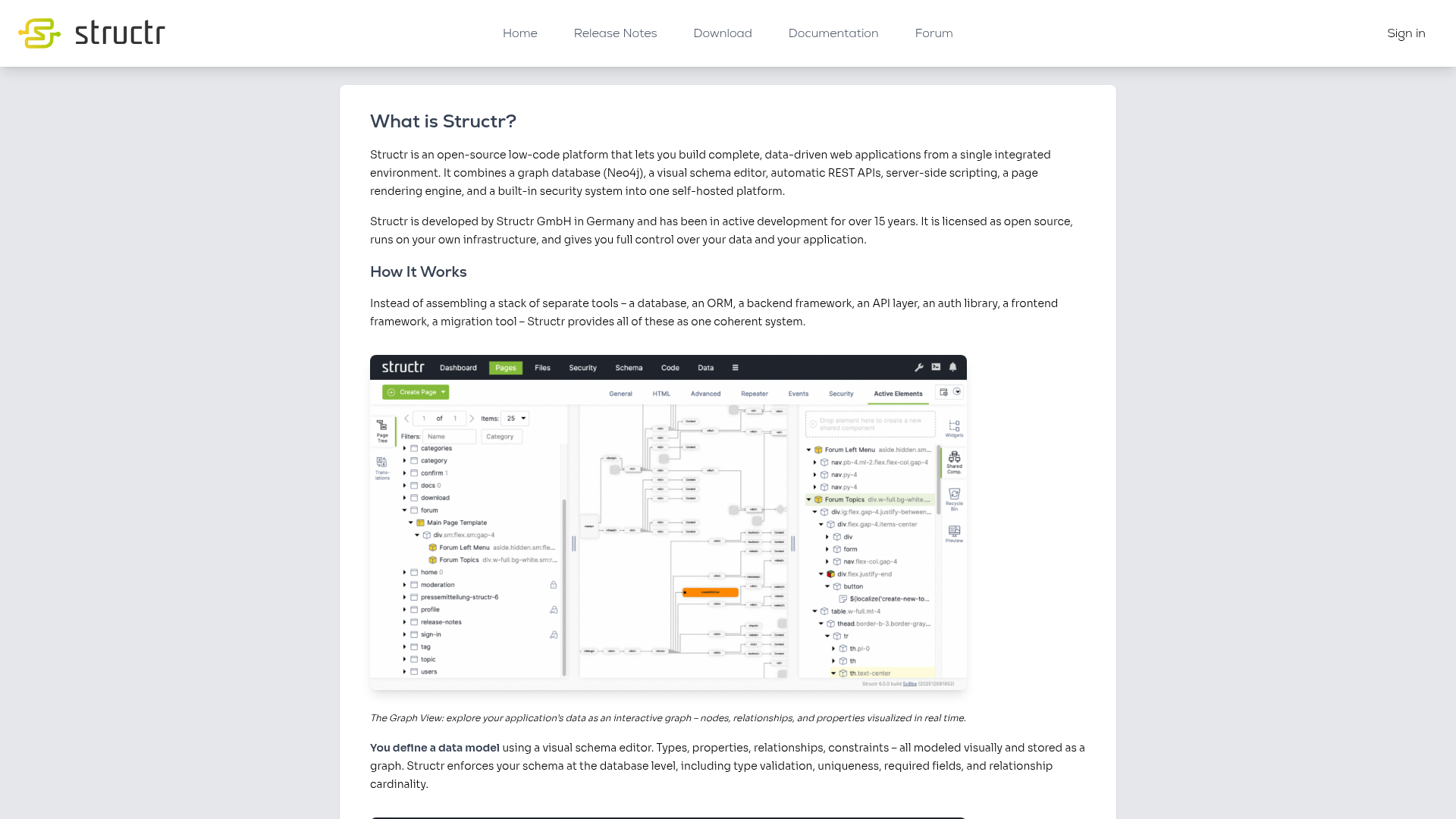
Structr is an open-source low-code platform that lets you build complete, data-driven web applications from a single integrated environment. It combines a graph database (Neo4j), a visual schema editor, automatic REST APIs, server-side scripting, a page rendering engine, and a built-in security system into one self-hosted platform. Structr is developed by Structr GmbH in Germany and has been in active development for over 15 years. It is licensed as open source, runs on your own infrastructure, and gives you full control over your data and your application. - Visual Data Modeling: Define types, properties, and relationships using an intuitive schema editor with real-time validation - Automatic REST APIs: Every data type is instantly exposed as a fully functional REST endpoint with CRUD operations - Server-Side Scripting: Write business logic in JavaScript (GraalVM) or StructrScript for advanced functionality - Visual Page Builder: Create pages with server-side rendering, dynamic content, and event-action mappings - Flow Editor: Design automated workflows visually with node-based logic for multi-step processes - Built-in Security: Comprehensive user management, object-level permissions, OAuth 2.0, JWT, 2FA, and SSL - Instant Schema Changes: Modify your data model in real-time without migrations or downtime - Graph Database Backend: Native Neo4j integration for efficient relationship handling and queries Structr is a self-hosted solution that runs on your own infrastructure. It requires Java 17+ and can be deployed on any system with Docker support. The platform is fully open source (AGPL-3.0) and provides comprehensive documentation for installation and configuration.

Connect 900+ APIs for AI agents and products
Nango is a platform for building, running, and maintaining integrations with AI agents and products. It enables developers to connect their applications to 900+ APIs seamlessly, with features for authorization, syncs, webhooks, and agent-ready tools. - AI-Powered Integration Generation: Describe use cases in plain English to generate integration code automatically. - 900+ API Integrations: Access a catalog of pre-built templates for popular APIs or build custom integrations. - Agent-Ready Tools: Expose integrations as MCP tools, APIs, or SDKs for AI agents. - Real-Time Webhooks & Triggers: React to external events with managed webhook handling. - Secure Authorization: OAuth, API keys, and token refresh handled securely for every API. - Managed Syncs & Ingestion: Keep data fresh with incremental, resumable syncs. - Production-Ready Runtime: High concurrency, tenant isolation, and sub-100ms execution latency. - Granular Access Control: RBAC and per-user API scopes for secure integrations. - Self-Hostable: Deploy in your environment for full control and compliance. - Enterprise-Grade Infrastructure: 99.9% uptime, 1M+ integrations managed, and certified security standards. Nango is open-source and can be self-hosted in your environment. It supports local development, CI/CD pipelines, and provides logs, metrics, and alerts for monitoring. The platform is designed for scalability, reliability, and security, making it suitable for enterprise use cases.

Visual AI app builder for product teams
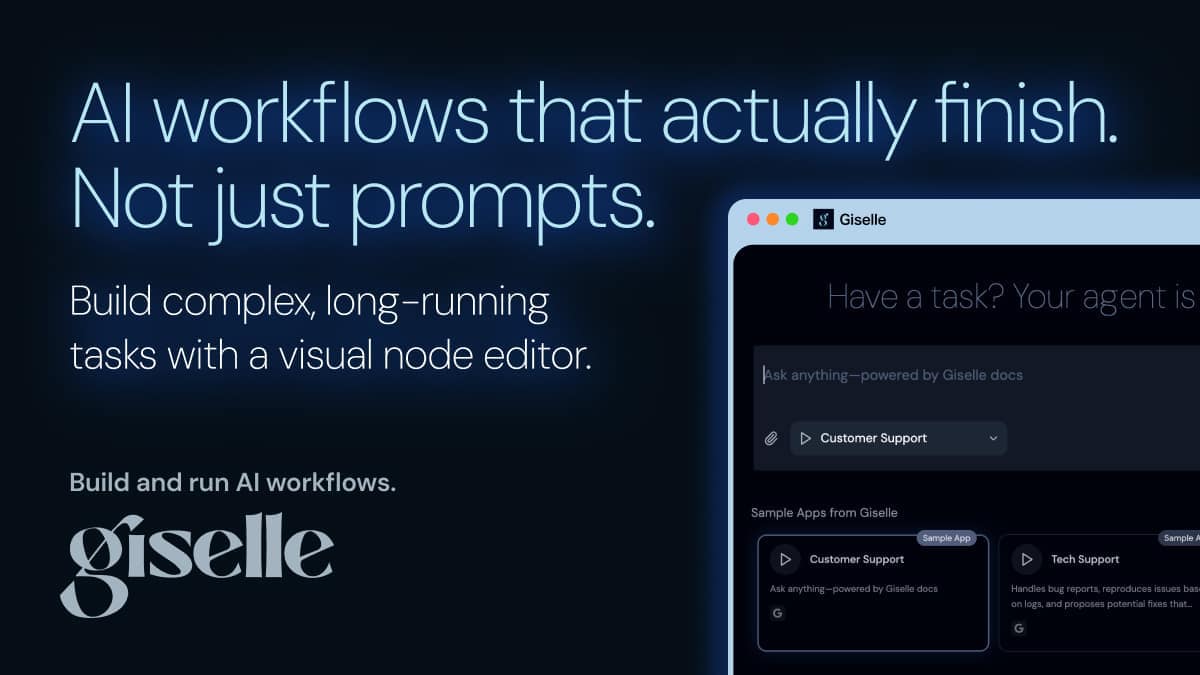
Giselle is an AI-native app builder designed to supercharge product teams by automating repetitive tasks and enabling rapid iteration. With a visual agent builder, multi-model composition, and seamless integrations, teams can deploy AI workflows in minutes—from deep research and PRD generation to automated code reviews and documentation updates. - Visual Agent Builder: Design and deploy AI agents visually with drag-and-drop, no coding or prompt engineering required. - Multi-Model Composition: Auto-select and chain top AI models for optimal performance across tasks. - Knowledge Store: Access external data sources (GitHub, databases, docs) to provide agents with full context. - End-to-End Automation: Automate research, PR reviews, documentation updates, and more from a single platform. - AI-First Architecture: Connect to any foundation model and adapt seamlessly as new models emerge. - Security & Compliance: ISO/IEC 27001 compliant by default with SOC 2 certification in progress. - GitHub AI Operations: Automate issues, PRs, and deployments with AI-powered workflows. Giselle is a cloud-based platform with no self-hosting option currently available. The service is built for AI-native teams and integrates with tools like GitHub, PostgreSQL, Slack, and Google Drive. The architecture supports multi-model AI workflows and is designed for scalability and security.

Build no-code backends and workflows instantly
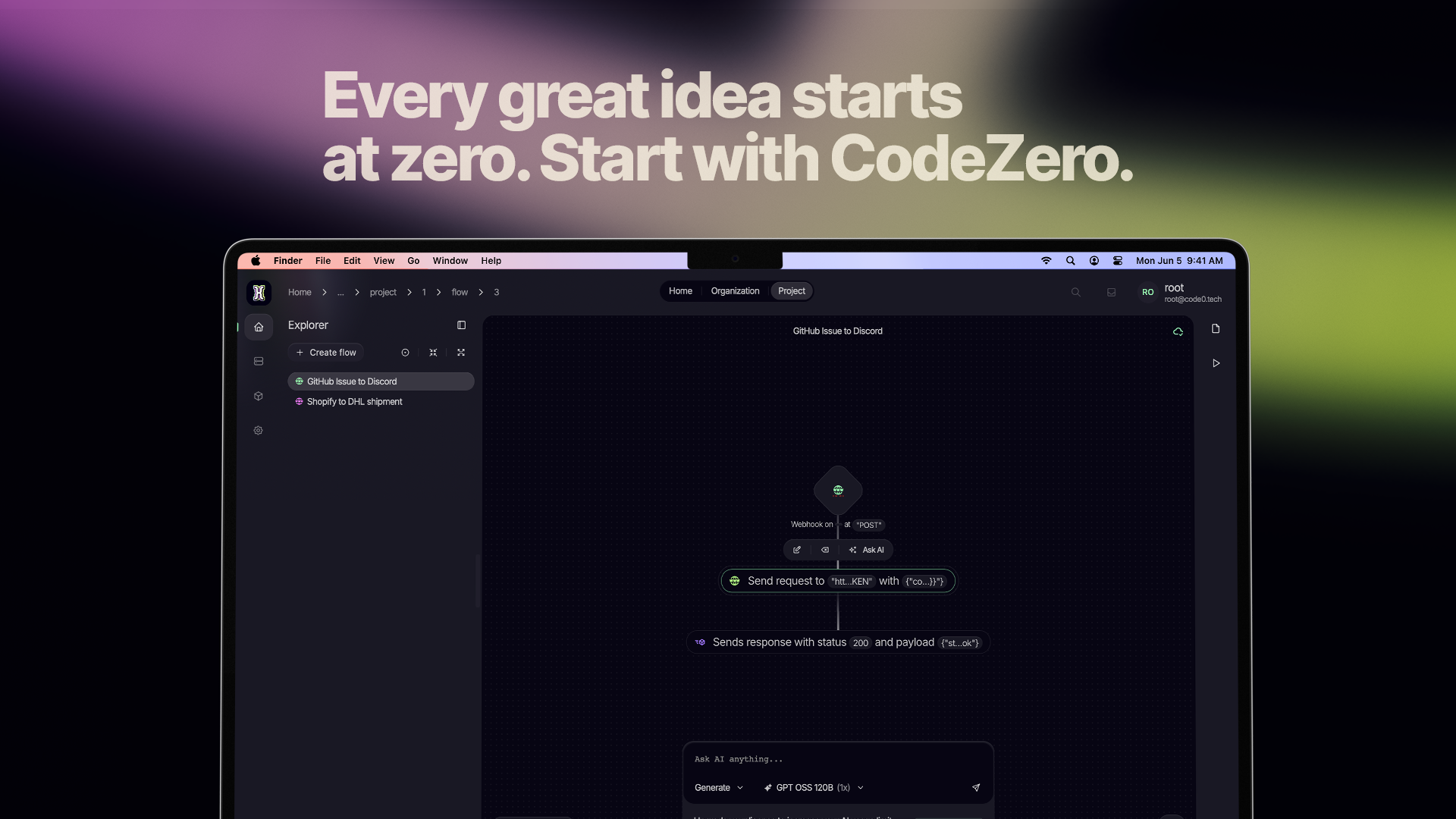
CodeZero is a no-code platform designed to help you build backends, automations, and complex workflows without writing a single line of code. Whether you're a developer or a non-technical user, CodeZero simplifies the process of creating functional applications and systems. - No-Code Backend Builder: Create robust backends with a visual interface, eliminating the need for manual coding. - Workflow Automation: Design and automate complex workflows with an intuitive drag-and-drop editor. - Integration Hub: Connect with popular services and APIs to extend functionality seamlessly. - Real-Time Collaboration: Collaborate with your team in real-time to build and refine projects. - Scalable Architecture: Deploy scalable solutions that grow with your needs, from small projects to enterprise-level applications. - Pre-Built Templates: Jumpstart your projects with a library of pre-built templates for common use cases. - Self-Hosting Support: Host your projects on your own infrastructure for full control and data privacy. CodeZero is open-source and can be self-hosted using Docker. The platform is designed to be flexible and adaptable to various hosting environments, ensuring you maintain full control over your data and infrastructure. - Self-Hosted: Yes - Tech Stack: Docker, Node.js, React - Deployment: Docker Compose for easy setup and management - Documentation: Available on the official website For more details, visit the GitHub repository.

Visual database and workflow automation tool with AI-powered features and 6,000+ app integrations

AITable.ai is a visual database and workflow automation platform that simplifies data organization and task automation for personal and enterprise use. It combines spreadsheet-like interfaces with database functionality, AI-powered analytics, and seamless integrations with over 6,000 apps via Zapier, Make, Pabbly, Activepieces, and Albato. - Visual Database Interface: Hybrid spreadsheet-database UI for intuitive data management - 6,000+ App Integrations: Connect with tools via Zapier, Make, Pabbly, Activepieces, and Albato - AI-Powered Analytics: Business Intelligence Copilot for data analysis and visualization - Automated Forms: One-click form creation with customizable pre-filled content for lead tracking - Workflow Automation: Code-free automation for repetitive tasks (Slack messages, emails, etc.) - AI Writing Assistant: Generate high-quality content for emails, ads, blogs, and more - Multi-View Workspaces: Organize work in lists, boards, tables, calendars, or mind maps - AI Customer Service Agent: Build custom ChatGPT-powered chatbots for support and sales AITable.ai is a cloud-based SaaS platform with no self-hosting option currently available. It offers API access for custom integrations and provides enterprise-grade security features.

Unified API & MCP platform for 837+ integrations

Unified.to provides a real-time unified API and MCP platform that enables B2B SaaS applications and AI agents to access, update, and monitor data from 837+ sources across 34 categories—including HR, CRM, accounting, and more—without storing end-customer data. - Real-time API Access: Every request hits the source API live with no caching or stale data. - Native & Virtual Webhooks: Instant updates via native and virtual webhooks for real-time synchronization. - Zero-Storage Design: No end-customer data is stored, reducing compliance scope. - Regionalized Traffic: Traffic is stateless and regionalized (US/EU/AU) for better performance and compliance. - 837+ Integrations: Access data from HR, sales, marketing, support, ticketing, accounting, and more. - MCP Server Support: Built-in Model Context Protocol (MCP) server for AI agent integration. - Free 30-Day Trial: Start with a free trial to explore the platform. - Embedded Authorization: Simplified OAuth flows for seamless integration. Unified.to is a cloud-native SaaS platform with no self-hosting option. The platform is designed for scalability, security, and compliance, with regionalized traffic handling and zero data storage. Developers can integrate via REST API, SDKs, or MCP server. - Primary Website: https://unified.to - API Documentation: https://docs.unified.to - GitHub Repository: https://github.com/unified-to/unified-cli - Postman Collections: https://www.postman.com/unified-to - Discord Support: https://discord.gg/85z7HF7JbD
About Retool
A quick way to build internal tools with drag-and-drop components and connecting them to databases and APIs to create complex workflows.