12 Best Open Source Vercel Alternatives
A curated collection of the 12 best open source and self-hosted alternatives to Vercel in 2026.
Looking for a free, privacy-friendly, or self-hosted replacement for Vercel in 2026? The top open-source alternative is Coolify — Self-hostable alternative to Vercel & Heroku.
Other highly rated open-source Vercel alternatives include Appwrite, Dokploy and Dokku.

Self-hostable alternative to Vercel & Heroku
Coolify is an open-source and self-hostable alternative to Vercel, Heroku, Netlify, and Railway. It enables you to easily deploy websites, databases, web applications, and 280+ one-click services to your own server. Open source and free forever, backed by our philosophy. - One-click deployments: Deploy websites, databases, and applications with minimal configuration. - 280+ pre-configured services: Instantly deploy popular services like PostgreSQL, Redis, MongoDB, WordPress, and more. - Self-hosted infrastructure: Full control over your data and infrastructure with no vendor lock-in. - Cloud & self-hosted options: Deploy on Coolify Cloud or host it yourself on any VPS. - Git integration: Automate deployments directly from your Git repositories. - Multi-server support: Manage multiple servers and deployments from a single dashboard. - Resource monitoring: Built-in monitoring for CPU, memory, and disk usage. - Custom domains & SSL: Easily configure custom domains with automatic SSL certificates. - Scalable architecture: Designed to scale with your needs, from small projects to enterprise deployments. - Open Source: Fully open-source under the Apache 2.0 license. - Tech Stack: Built with Node.js, Docker, and React. - Self-Hosting: Deployable on any VPS or bare-metal server with Docker installed. - Requirements: Docker (Docker Engine 20.10+ recommended), 2GB RAM minimum, 10GB disk space. - Documentation: Comprehensive docs available for setup and configuration. - Community: Active community of over 21,000 users on Discord.

Open-source backend server for web and mobile apps
Appwrite is an open-source backend server that simplifies the development of web and mobile applications. It provides a unified platform with built-in services for authentication, databases, file storage, serverless functions, real-time communication, messaging, and web hosting. - Auth: Secure user authentication with multi-factor authentication (MFA) and OAuth support - Databases: Scalable and robust database solutions with real-time capabilities - Storage: Advanced file storage with compression and encryption - Functions: Deploy and scale serverless functions effortlessly - Messaging: Full-featured messaging service for real-time communication - Realtime: Subscribe and react to events instantly - Sites: Host static sites, SSR, and CSR frontends with built-in deployment - Multi-framework support: Compatible with React, Next.js, Vue, Svelte, Astro, Flutter, and more - AI integration: Built-in support for AI agents and MCP tools - Cloud console: Centralized dashboard for monitoring and managing projects Appwrite is open-source (MIT license) and can be self-hosted on any infrastructure. It supports Docker for easy deployment and offers cloud hosting through Appwrite Cloud. The platform is optimized for performance and scalability, making it suitable for projects of all sizes from startups to enterprises. Pricing: Free tier available with paid plans for additional resources and enterprise features.

Open-source self-hostable PaaS for app deployments
Dokploy is an open-source, self-hostable Platform as a Service (PaaS) designed to simplify the deployment and management of applications and databases. Built for developers, it offers a unified interface to handle containerized deployments, AI-assisted apps, and multi-server orchestration with ease. - Flexible Application Deployment: Deploy any application using Nixpacks, Heroku Buildpacks, or custom Dockerfiles tailored to your stack. - Native Docker Compose Support: Deploy complex applications natively with full Docker Compose integration for seamless orchestration. - Multi-Server Deployments: Effortlessly deploy applications on remote servers with zero configuration hassle. - Advanced User Management: Control user access with detailed roles and permissions for secure and organized deployments. - Database Management: Manage and back up MySQL, PostgreSQL, MongoDB, MariaDB, and Redis directly from Dokploy. - API & CLI Access: Customize deployments with complete API and CLI access to fit your needs. - Docker Swarm Clusters: Scale deployments seamlessly with built-in Docker Swarm support for robust, multi-node applications. - Open Source Templates: Get started quickly with pre-configured templates for popular tools like Supabase, Cal.com, and PocketBase. - Real-Time Monitoring & Alerts: Monitor CPU, memory, and network usage across deployments for full visibility. - AI-Assisted Deployments: Connect AI tools via MCP or deploy AI-built apps in a governed sandbox with SSO and multitenancy. - Self-Hosted: Fully self-hostable with open-source deployment. - Tech Stack: Built with modern web technologies, leveraging Docker, Nixpacks, and Heroku Buildpacks for flexible deployments. - Scalability: Supports Docker Swarm for multi-node applications and multi-server deployments. - Community & Support: Backed by a thriving community with over 37K GitHub stars and 357+ contributors. Dokploy empowers developers to take control of their digital ecosystem, simplifying project and data management while ensuring robust monitoring and secure backups—all without vendor lock-in.
A Docker-powered platform that lets you deploy Heroku-compatible applications via Git, with buildpack support and container isolation.
A Docker-powered platform that lets you deploy Heroku-compatible applications via Git, with buildpack support and container isolation.

Open source Vercel alternative for Git push deployments

/dev/push is a self-hosted platform that enables developers to deploy applications directly from GitHub with a simple git push. It serves as an open-source alternative to services like Vercel and Render, offering a streamlined workflow for building, previewing, and shipping applications without managing servers. - Push to Deploy: Deploy apps automatically on every GitHub push or manually for any commit, with instant feedback on deployment status. - Zero-Downtime Deploys: New builds seamlessly replace production environments as soon as they build and run successfully. - Real-Time Logs: Stream and search build/runtime logs for each deployment in real-time. - Instant Rollback: Revert to previous deployments without rebuilding, ensuring quick recovery from mistakes. - Configurable Builds: Customize build commands, start commands, and other deployment settings per project. - Encrypted Environment Variables: Securely manage and share environment variables across teams. - Preview URLs: Generate unique URLs for each deployment, branch, and environment for testing and collaboration. - Framework Agnostic: Supports Python (FastAPI, Flask, Django), Node.js, and soon PHP. - Custom Domains & SSL: Add your own domains with automatic SSL certificate provisioning. - Team Collaboration: Create teams, invite users, share projects, and manage permissions with granular access control. - Free & Open Source: MIT licensed, free to use, and fully self-hostable. - Self-Hosted: Fully self-hostable with straightforward installation and configuration. - Tech Stack: Built for scalability and reliability, supporting multiple programming languages and frameworks. - Roadmap: Future features include SQLite databases, persistent storage, custom containers, remote nodes, observability tools, resource management, and cron jobs. Coming soon: SQLite databases per environment, persistent storage, custom Docker containers, remote node management, real-time monitoring, resource scaling, and scheduled tasks.
Self-hosted platform for small dev teams combining deployments, error tracking, analytics, session replay, uptime monitoring, and managed databases in one dashboard.
Self-hosted platform for small dev teams combining deployments, error tracking, analytics, session replay, uptime monitoring, and managed databases in one dashboard.

Self-hosted Vercel and Netlify alternative
Stormkit is a self-hostable deployment platform designed to provide a complete alternative to Vercel and Netlify. It empowers developers and enterprises to deploy, scale, and manage web applications with full control over infrastructure, data, and costs. - Git Push to Deploy: Automatically deploy changes when pushing to your repository with unique deployment URLs and instant rollbacks. - Zero Downtime Updates: Seamlessly deploy updates without interrupting users. - Enterprise-Grade Tools: Includes audit logs, automated E2E testing, and custom TLS certificates for enhanced security and compliance. - Multi-Environment Support: Manage multiple environments (e.g., staging, production) with ease. - Real-Time Monitoring: Track performance, errors, and user analytics in real-time. - Automatic TLS: Secure your deployments with automatic TLS certificate provisioning. - Cloud and Self-Hosted Options: Deploy via Stormkit's cloud service or self-host on your own infrastructure. - Integration with GitHub, GitLab, and Bitbucket: Seamless repository linking for streamlined workflows. Stormkit is open-source and can be self-hosted on your preferred infrastructure, including cloud providers like Hetzner Cloud. The platform supports automated E2E testing and local development setups with tools like Cloudflare Tunnels. Detailed self-hosting guides and documentation are available to help you get started.

Unified API platform for deployment and observability
Unkey is a unified developer platform designed to simplify API management. It brings together deployment, global traffic routing, and real-time observability into one seamless control plane. - Instant API Deployment: Deploy APIs in minutes with Git-based automation and zero setup. Test safely with preview environments and promote with confidence. - Global Traffic Routing: Route API traffic through a global network of gateways for low-latency performance and high availability. - Built-in Security: Protect every endpoint with API keys, rate limiting, and instant access revocation. Secure by default with no complex configuration. - Full Observability: Track every request, log every decision, and debug issues before users notice. Gain complete visibility into API usage and performance. - Docker Support: Deploy any language or framework using real containers that stay online, combining serverless flexibility with persistent runtime. - Branch Overview: Manage deployments with clear branch-based workflows, enabling safe testing, promotion, and rollback at any scale. - Usage Tracking: Monitor API usage over 30 days with detailed logs and metrics, ensuring transparency and quick issue resolution. Unkey is a fully managed cloud service with no self-hosting option. The platform is built for scalability and reliability, handling all infrastructure management automatically. For developers who prefer self-hosted solutions, Unkey provides an open-source alternative through its GitHub repository, allowing custom deployment and integration into existing infrastructure. The open-source version includes core features like API key management, rate limiting, and basic observability, making it suitable for teams that require full control over their deployment environment.

Enterprise-grade AI gateway for LLM routing & governance
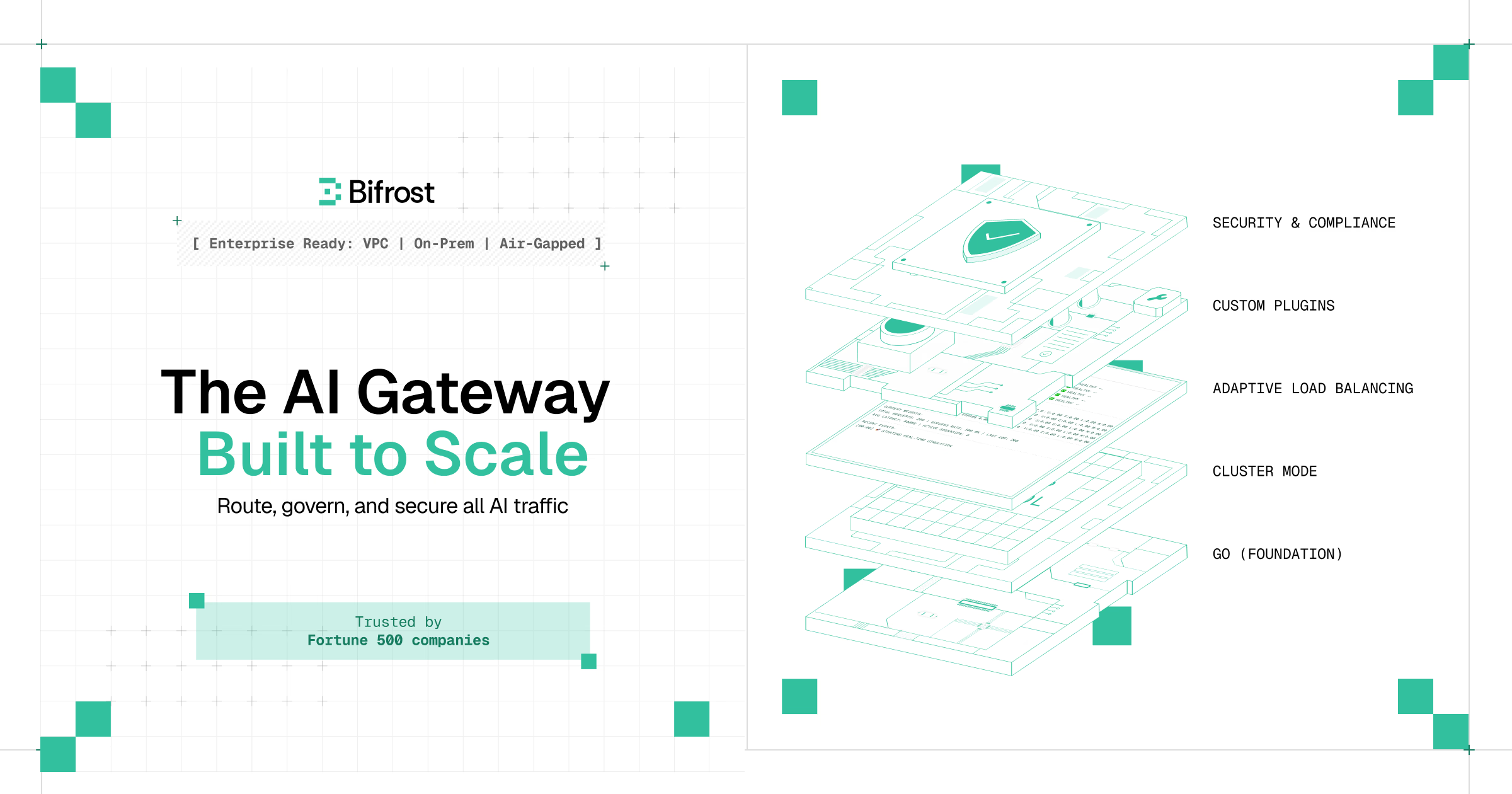
Bifrost is the fastest, most resilient enterprise-grade AI gateway designed for routing, governance, guardrails, and observability. Built for real-world scale, it provides a unified control plane to manage budgets, track audit logs, enforce access control via SSO, and protect models with real-time guardrails. - Ultra-low latency routing: 20 microseconds added latency and 5,000 requests/second throughput - Multi-provider support: Access 8+ providers and 1000+ AI models through a unified interface - Budgeting & cost control: Set spending limits and track costs across teams, projects, and models - Provider fallback: Automatic fallback to ensure high availability and reliability - MCP gateway: Built-in support for Model Context Protocol (MCP) to use tools within agents - Real-time guardrails: Blocks unsafe outputs, enforces compliance, and keeps agents secure - Audit & governance: Track audit logs and maintain access control via SSO - Drop-in replacement: Change just one line of code to work with OpenAI, Anthropic, Vercel AI SDK, LangChain, and more Bifrost is open-source and can be self-hosted. It supports deployment on any infrastructure and is compatible with all major AI SDKs. The project is available on GitHub and can be installed via npx @maximhq/bifrost.

Deploy AI agents as TypeScript functions with Linux VMs

OpenComputer is a cloud platform for deploying AI agents as TypeScript functions with full Linux VM sandboxes. Every agent session runs on isolated microVMs with hardware-level isolation via KVM, providing shell access, filesystem, and network capabilities. - Agent Deployment: Write agents as TypeScript functions and deploy them in seconds with simple CLI commands (opencomputer deploy). - Full Linux Sandboxes: Each session runs on a real Linux machine with shell access, filesystem, packages (apt, npm, pip), and full network egress. - Hardware-Level Isolation: Uses KVM for secure, isolated execution environments with no model keys entering the runtime. - Durable Sessions: Sessions stream, can be steered mid-run, hibernate when idle, and resume where they left off. - Model Flexibility: Bring your own model keys or use OpenComputer's API rates. Model selection is configurable per request. - Bare Sandboxes: Access the same Linux microVMs directly for custom agent loops or harnesses. - Checkpoint & Fork: Save and restore sandbox states, fork environments, and resize resources (CPU/memory) at runtime. - Usage-Based Pricing: Pay-as-you-go model with prepaid credit plans. Model calls are passed through at API rates, and machine time is billed per second. - Security: Secrets are bound to specific origins and injected after requests leave the sandbox, preventing token exposure. OpenComputer is a managed cloud service with no self-hosting option currently available. The platform handles all infrastructure, including sandbox orchestration, model routing, and billing. For enterprise needs, custom deployments in your own cloud or VPC are available with volume pricing and higher limits.

Enterprise-grade AI gateway for LLM routing and governance
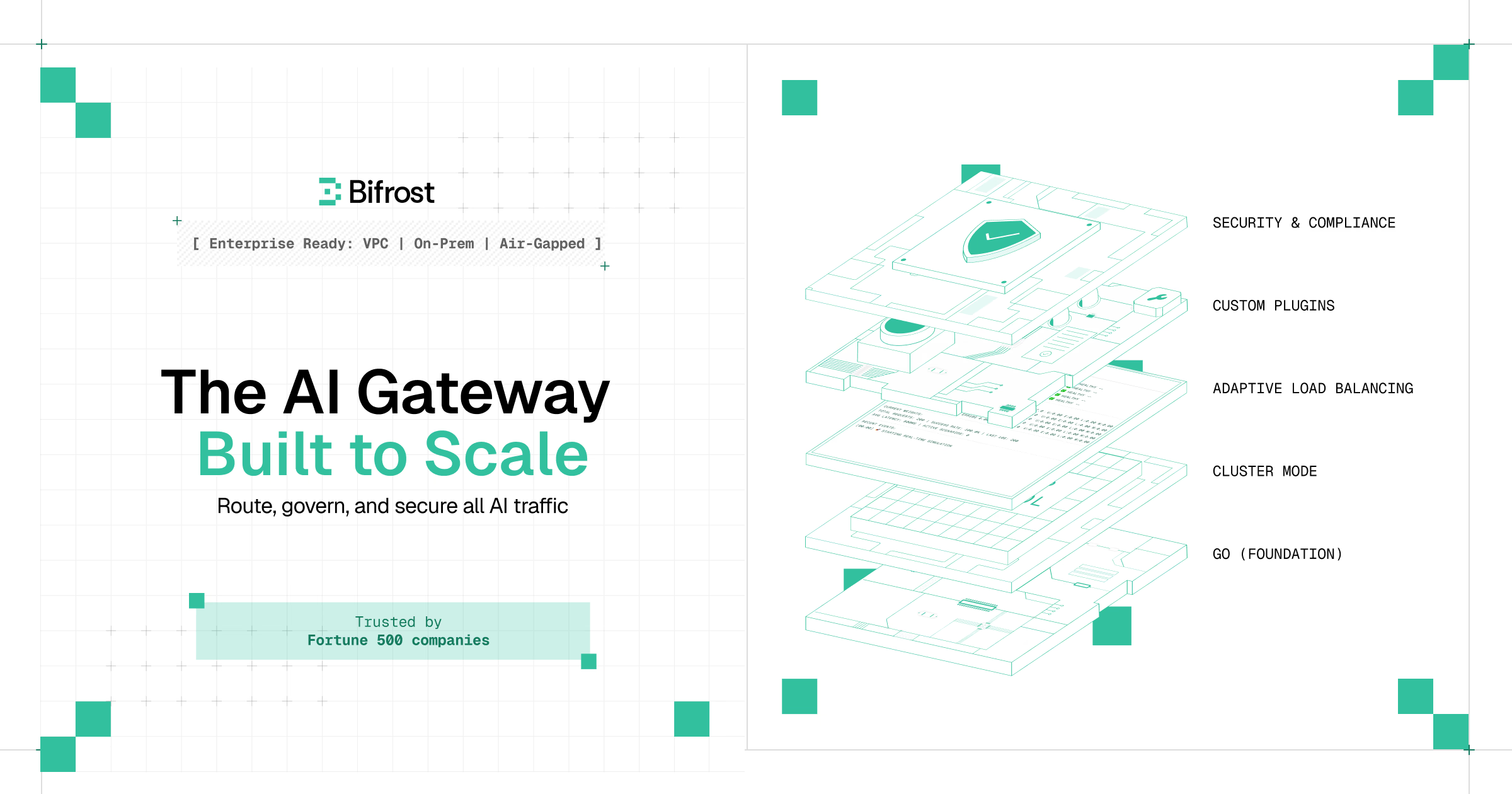
Bifrost is the fastest, most resilient enterprise-grade AI gateway for routing, governance, guardrails, and observability. Built for real-world scale, it provides a unified control plane to manage LLM, MCP, and agent workflows with drop-in compatibility for all major AI SDKs. - Ultra-low latency routing: 20 microseconds added latency and 5,000 req/s throughput - Multi-provider support: Access 8+ providers and 1000+ AI models through a unified interface - Governance & budgeting: Set spending limits, track costs, and enforce access control via SSO - Guardrails & security: Real-time model protection to block unsafe outputs and maintain compliance - MCP gateway integration: Built-in support for Model Context Protocol (MCP) tools - Observability: Comprehensive monitoring and audit logging for production environments - Drop-in replacement: Compatible with OpenAI, Anthropic, Vercel AI SDK, LangChain, and more - Enterprise scalability: Designed for high-volume production workloads with 99.9% uptime Bifrost is open source and can be self-hosted via Docker or deployed through Maxim's managed service. The open-source version includes all core features, while the enterprise edition adds advanced governance, budgeting, and support for custom models. Quick setup with a single line of code change to replace existing AI SDKs.

Deploy serverless functions globally in seconds

Deploy serverless functions globally in seconds with Cloudflare Workers. Built on isolates architecture, Workers offer unmatched performance, automatic scaling, and pay-per-use pricing—no cold starts, no infrastructure management. - Global Deployment: Run functions in 330+ cities worldwide with automatic scaling from zero to millions of requests. - Zero Cold Starts: Eliminate latency with instant function execution, no prewarming required. - Pay-Per-Use Pricing: Only pay for CPU execution time, not idle resources. - Multi-Language Support: Write functions in JavaScript, TypeScript, Python, or Rust. - Edge Computing: Process requests at the edge to reduce latency and offload server load. - Integrated Bindings: Connect seamlessly to databases (D1), storage (KV), AI models, and more. - Local Development: Test changes locally using the open-source workerd runtime. - Built-in Queues & Cron: Handle background jobs, webhooks, and scheduled tasks reliably. Cloudflare Workers is a fully managed serverless platform hosted by Cloudflare. The underlying runtime, workerd, is open-source and can be self-hosted for custom deployments. Workers integrate with Cloudflare's global network for optimal performance and security. Pricing: Free tier available; paid plans for higher usage. Self-Hosted: Possible via workerd runtime (open-source).
About Vercel
Vercel is a cloud platform designed to deploy, scale, and manage applications and AI agents with autonomous infrastructure. It provides tools for building, deploying, and monitoring applications and agents, including features like durable orchestration, sandboxed environments, AI model gateways, and global content delivery.
Key Features of Vercel
- Agent Stack: Includes AI SDK, AI Gateway, Sandbox, Passport, Connect, and eve for building and deploying autonomous agents.
- Core Platform: Offers security, content delivery, fluid compute, observability, workflows, and CI/CD for robust application management.
- Tools & SDKs: Provides Vercel Agent, Plugins, SDKs, and frameworks like Next.js, Nuxt, SvelteKit, and FastAPI for flexible development.
- Global Scalability: Supports deployment from zero to millions of users with global delivery and serverless functions.
- Security & Compliance: Features platform security, WAF, bot management, and identity provider integration for secure deployments.
- Observability: Built-in monitoring and error tracking for applications and agents.
- AI Integration: Supports AI-powered workflows, chat SDKs, and agent orchestration for autonomous operations.
Tech / Self-Hosting
Vercel is a fully managed cloud platform and does not support self-hosting. It is designed for cloud-native deployments with built-in scalability, security, and observability features.