5 Best Open Source Twilio Alternatives
A curated collection of the 5 best open source and self-hosted alternatives to Twilio in 2026.
Looking for a free, privacy-friendly, or self-hosted replacement for Twilio in 2026? The top open-source alternative is Fonoster — Build and deploy powerful voice and messaging applications with ease using Fonoster's flexible, scalable, and developer-friendly platform..
Other highly rated open-source Twilio alternatives include useSend, SAMA and LiveKit.
Build and deploy powerful voice and messaging applications with ease using Fonoster's flexible, scalable, and developer-friendly platform.
Build and deploy powerful voice and messaging applications with ease using Fonoster's flexible, scalable, and developer-friendly platform.

Open source email platform for everyone
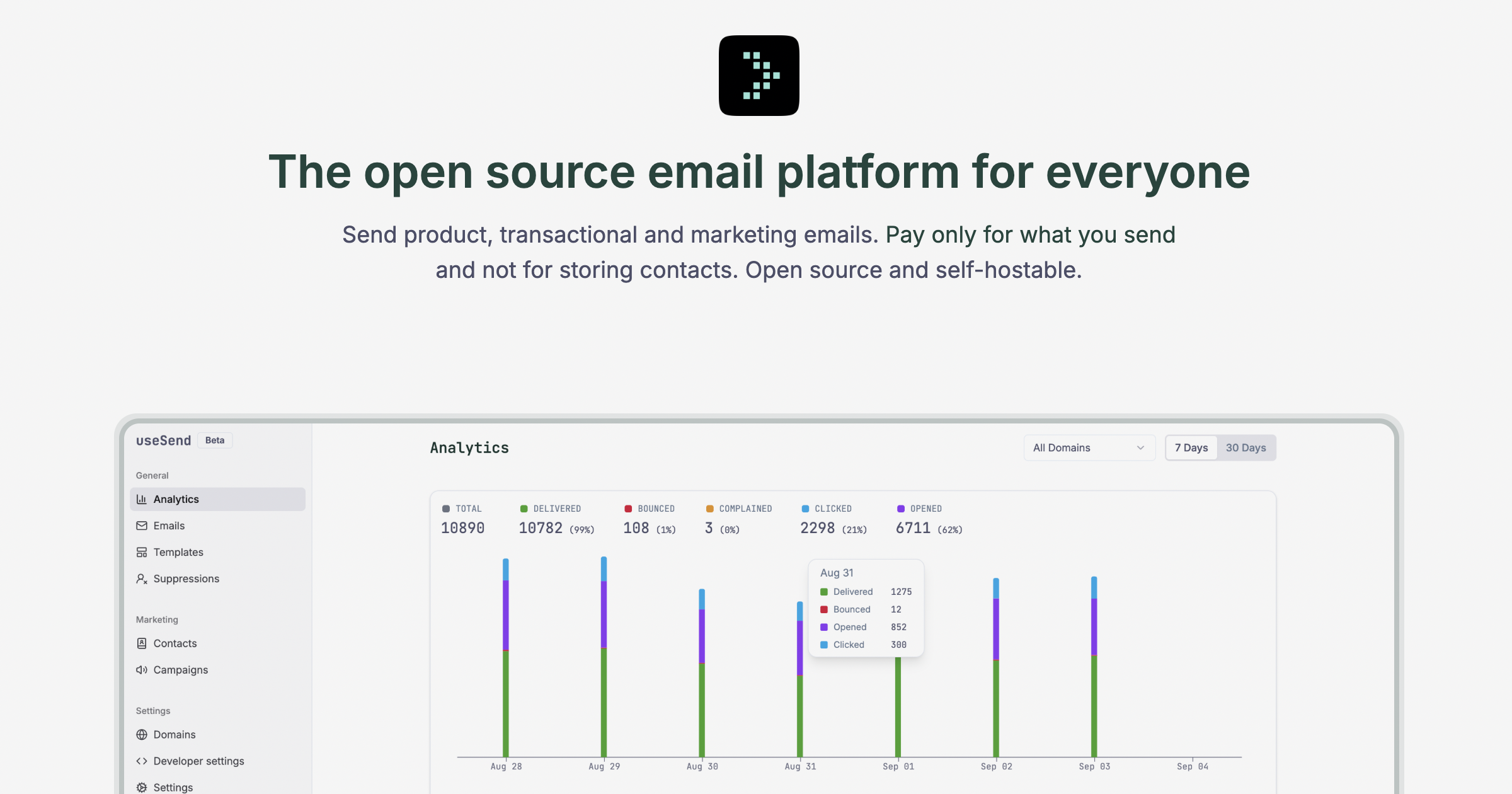
Send product, transactional and marketing emails. Pay only for what you send and not for storing contacts. - Pay-per-use pricing: Only pay for emails sent, not for storing contacts - Multi-purpose email sending: Supports product, transactional, and marketing emails - Real-time analytics: Track deliveries, opens, clicks, bounces and unsubscribes with searchable logs - Visual email editor: Notion-like WYSIWYG editor for designing campaigns without code - Contact management: Import/export contacts, manage lists, and track subscription status - Suppression list: Automatically blocks bounced and complained emails - SMTP relay: Drop-in SMTP service that works with any application or framework - Multi-language SDKs: TypeScript, Python, Go, and PHP libraries available - Self-hosting: Deploy in minutes with open source code - Free tier: Send up to 3000 emails/month with 100/day limit - Open source: Full source code available on GitHub - Self-hosting: Deployable in minutes with Docker or direct installation - API-first: RESTful API with SDKs for multiple programming languages - Database: Uses PostgreSQL for reliable data storage - Infrastructure: Requires Node.js runtime and Redis for caching - Hosting: Can be deployed on any cloud provider or on-premise servers

Open source chat server for mobile and web apps
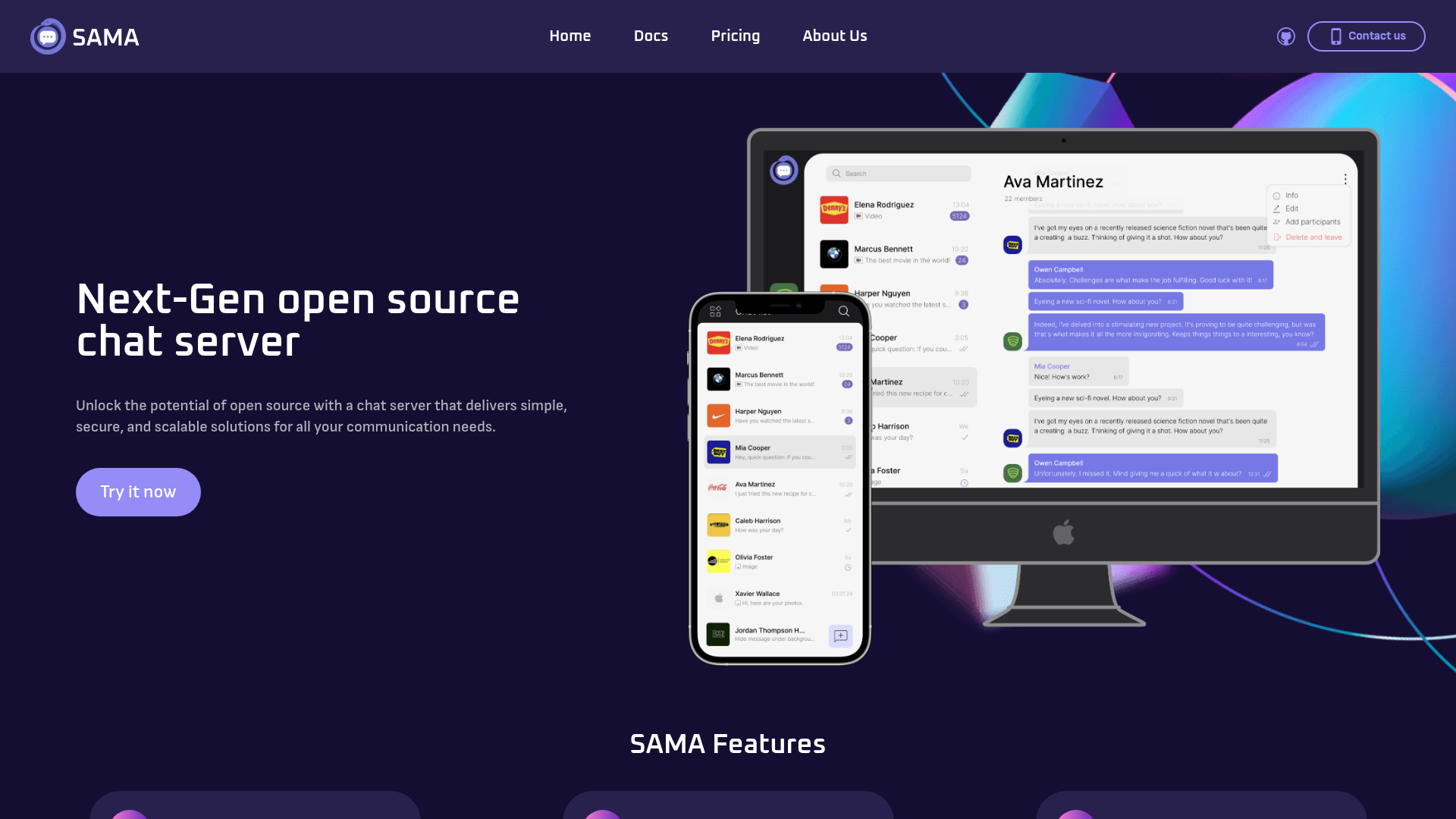
SAMA is a next-generation open source chat server designed for mobile and web applications. It provides a secure, scalable, and easy-to-use messaging solution with built-in end-to-end encryption and clustering capabilities. - Messaging: Rich media messages, status indicators, private/group chats, file attachments, and message history API - User Management: Authorization, profile editing, user search, and block list functionality - Multi-Device Support: Seamless connectivity across multiple devices with online/offline message delivery - Last Activity Tracking: Server-side tracking of online/offline status with subscription API - Push Notifications: APNS, FCM, and web push notifications for offline message delivery - Clustering: Built-in support for large-scale deployments and high user loads SAMA is open source and can be self-hosted. The server is built with modern technologies and supports clustering out of the box. Documentation and API references are available for developers looking to integrate or customize the solution. The project provides both backend (sama-server) and frontend (sama-client) components.

Open source framework for voice, video, and AI agents
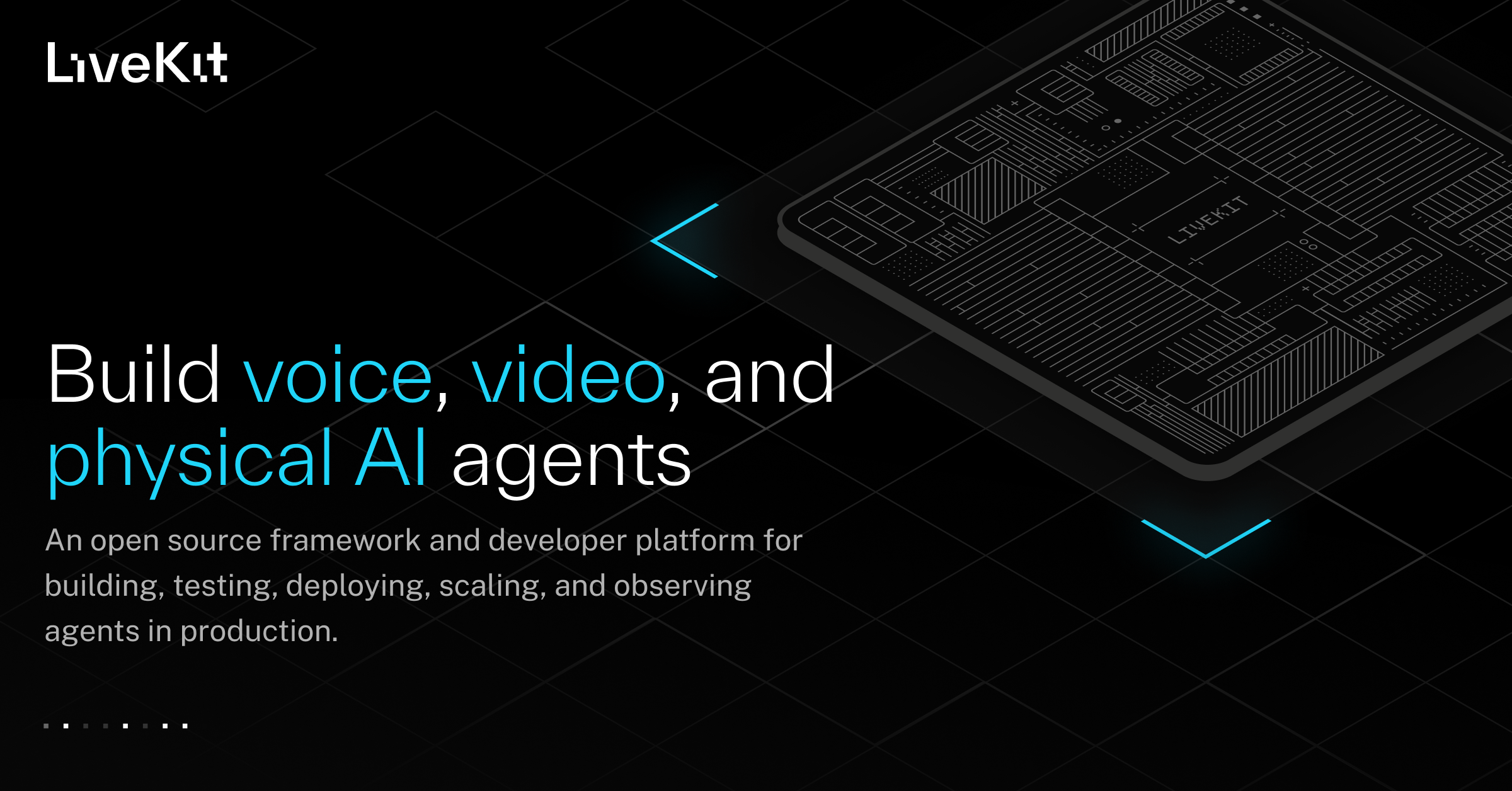
LiveKit is an open-source framework and developer platform designed for building, testing, deploying, scaling, and observing AI agents in production. It provides a complete stack for real-time communication and AI integration, enabling developers to create voice, video, and physical AI agents with minimal setup. - Open Source Framework: Build and test AI agents locally or in the cloud. - Real-Time Communication: Supports voice, video, and telephony integrations. - Inference Gateway: Access TTS, LLM, and STT models via a unified interface. - Cloud Platform: Deploy and scale agents globally with LiveKit Cloud. - Observability: Full-stack monitoring for every agent session. - Multi-Model Support: Integrate with leading AI models like OpenAI, Google, and Cartesia. - Telephony Integration: Enable agents to make or receive phone calls via SIP or phone numbers. - Enterprise-Grade Infrastructure: GDPR, SOC 2 Type 2, and HIPAA compliant with 99.99% uptime. LiveKit is open-source and can be self-hosted. The platform supports Kubernetes for scalable deployments and provides detailed documentation for local and cloud-based setups. For production use, LiveKit Cloud offers a managed solution with global infrastructure. Explore the LiveKit Cloud platform

Customer engagement infrastructure platform
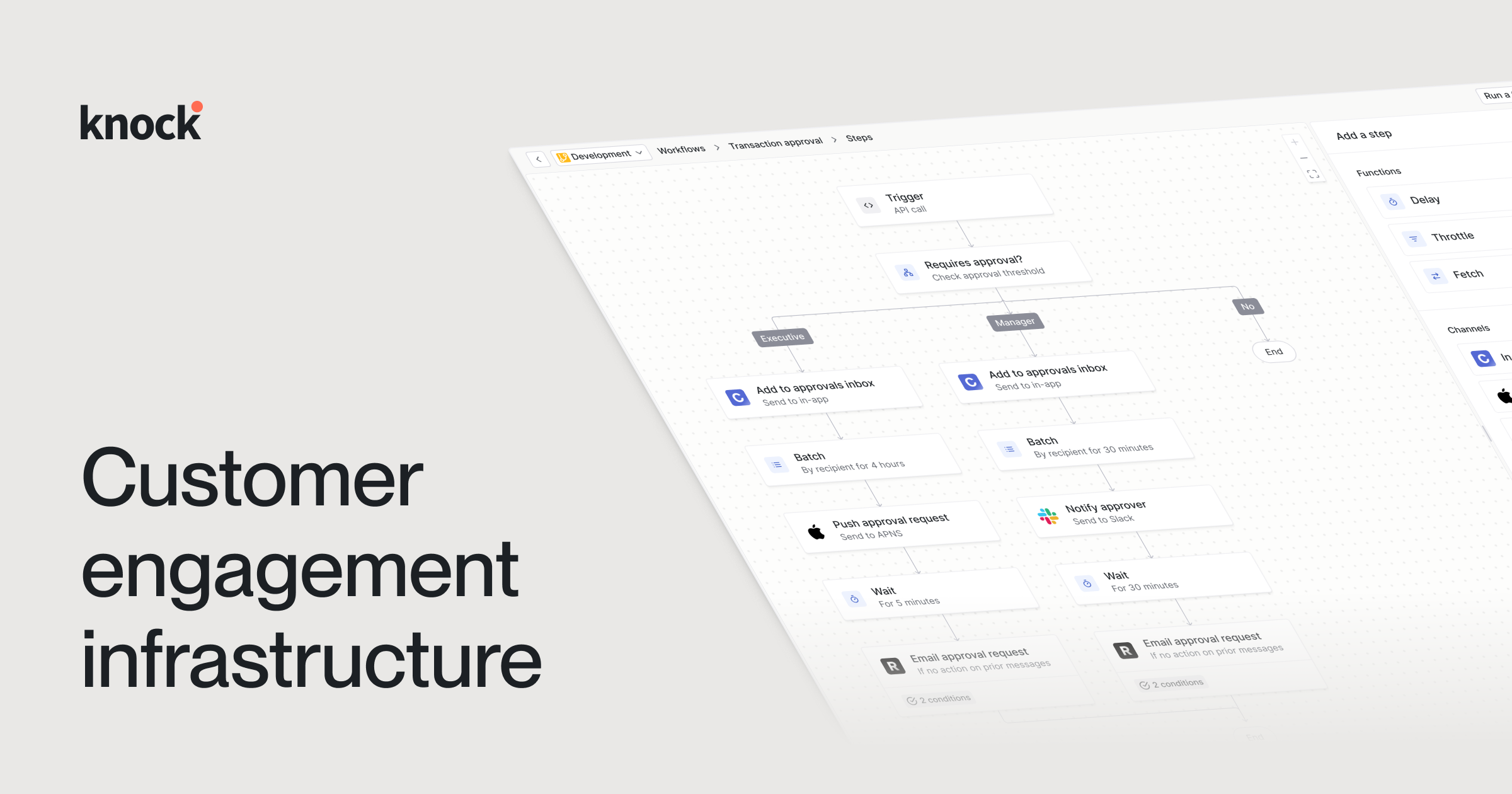
Knock is customer engagement infrastructure designed to activate your data and ship cross-channel messaging without limits. Purpose-built for control, speed, and collaboration, it unifies product, marketing, and transactional messaging into a single platform. - Cross-channel messaging: Send messages across email, SMS, push, chat, and in-app channels - AI-native workflows: Build complex messaging journeys with single prompts and generate client-safe emails - Unified data activation: Ingest real-time data from products, tools, and warehouses to trigger relevant messaging - User-first controls: Implement preference centers and send windows to respect user time - In-app messaging: Ship paywalls, dialogs, and nudges powered by your own components - Collaboration tools: Enable non-engineers to edit copy and targeting with Knock's intuitive interface - Developer tools: Access MCP server and CLI for streamlined account management - AI-powered email generation: Create beautiful, branded emails without manual coding Knock is a fully managed SaaS platform with no self-hosting option. The service provides comprehensive APIs, SDKs, and developer tools including a Node.js client library for seamless integration. All infrastructure is managed by Knock with enterprise-grade security and compliance standards.
About Twilio
Twilio is a cloud communications platform that enables developers to integrate SMS, voice, email, and RCS messaging into applications via simple APIs. The platform also offers conversational AI for smarter customer engagement and identity verification services to build trust.
Key Features of Twilio
- SMS & MMS APIs: Send and receive text messages globally with high deliverability.
- Voice APIs: Embed voice calls, IVR, and call tracking in applications.
- Email API: Send transactional and marketing emails at scale.
- RCS Business Messaging: Rich communication services for interactive messaging.
- Conversational AI: AI-powered chatbots and virtual assistants for customer support.
- Identity Verification: Secure user authentication via SMS, voice, or email.
- Global Reach: APIs available in over 190 countries with carrier-grade reliability.
- Developer Tools: SDKs, libraries, and documentation for quick integration.
Tech / Self-Hosting
Twilio is a fully managed cloud service. While it does not offer self-hosting options, its APIs are designed for seamless integration into any application stack. The platform is GDPR compliant and adheres to strict data privacy standards.