7 Best Open Source Qoder Alternatives
A curated collection of the 7 best open source and self-hosted alternatives to Qoder in 2026.
Looking for a free, privacy-friendly, or self-hosted replacement for Qoder in 2026? The top open-source alternative is OpenHands — Open platform for cloud coding agents.
Other highly rated open-source Qoder alternatives include Zed, Aider and Kilo.

Open platform for cloud coding agents
OpenHands is the open-source, model-agnostic platform for cloud coding agents. It enables engineers to automate real engineering work securely and transparently, providing full control over the agentic software development lifecycle (SDLC). - Model-Agnostic: Works with any AI model or agent framework - Agent Canvas: Visual interface for customizing and automating agent workflows - Cloud & Local Deployment: Run agents in the cloud or on-premise - SDK & Plugins: Extensible SDK with MCP servers, skills, and plugins - Security & Transparency: Built-in audit trails and secure execution environments - Enterprise Control Plane: Centralized management for large-scale deployments - Skill Management: Enable/disable default skills and add custom ones - Repository Context: Deep integration with GitHub and other version control systems OpenHands is fully open-source (Apache 2.0) and can be self-hosted. The platform supports both cloud and local deployment options, with enterprise features available for larger organizations. Documentation and setup guides are provided for all deployment scenarios.

High-performance, multiplayer code editor
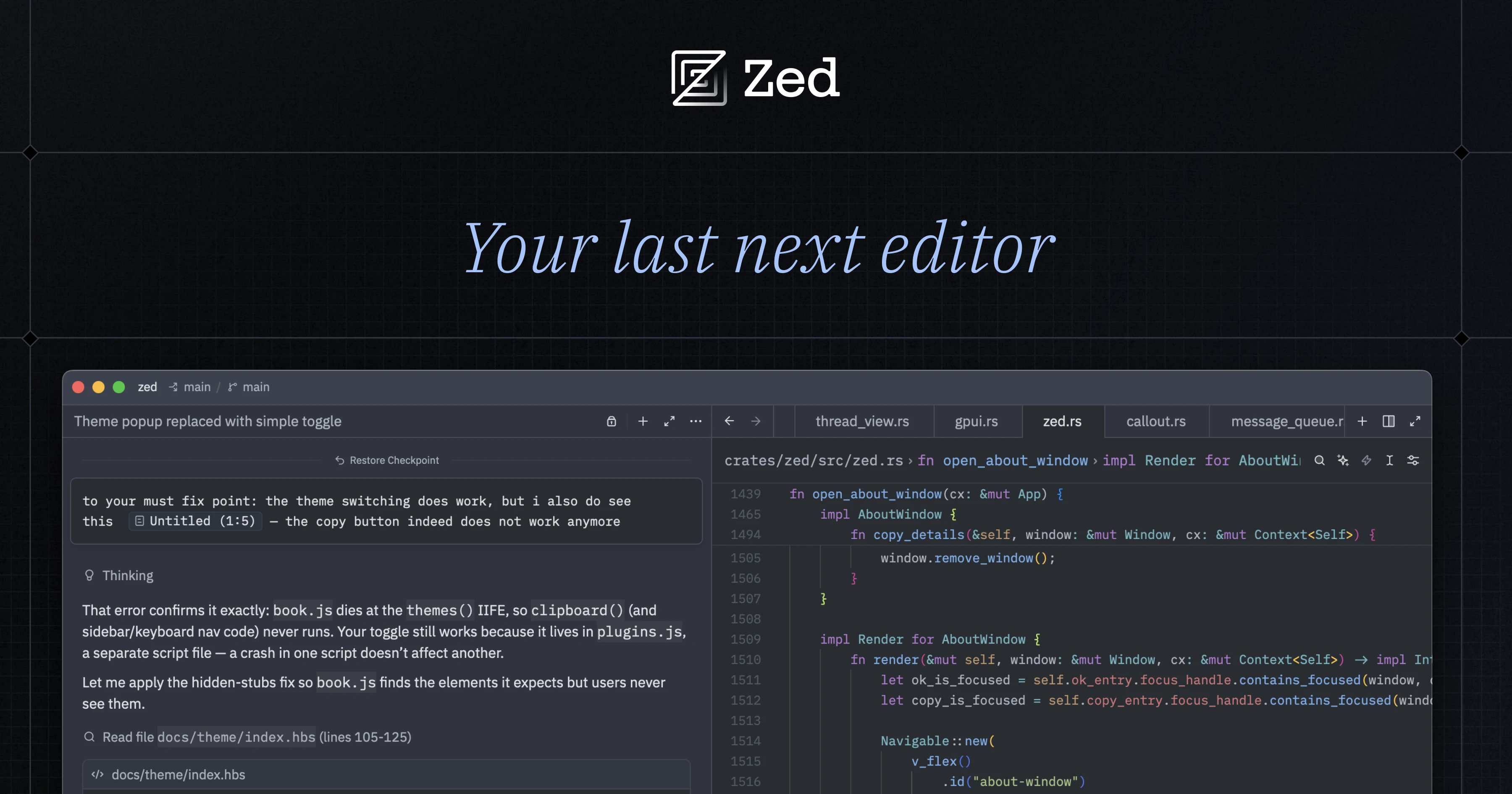
Zed is a high-performance, multiplayer code editor crafted for speed and collaboration with humans and AI. Built from scratch in Rust to efficiently leverage multiple CPU cores and your GPU, Zed delivers native-speed performance for editing, navigating code, and running tools. - Blazing Fast: Written in Rust to maximize CPU/GPU utilization and deliver native-speed performance. - Multiplayer Collaboration: Code together in real-time with teammates, chat, and screen sharing. - AI Agent Support: Run agents in parallel for intelligent code editing, navigation, and tool execution. - Cross-Platform: Available for macOS, Linux, and Windows. - Minimalist Design: Focused on speed and efficiency without unnecessary bloat. - Extensions Ecosystem: Extend functionality with a growing library of extensions. - Built-in AI Tools: Native support for AI-powered coding assistance and automation. Zed is open-source and self-hostable, with the core editor and collaboration features available for deployment. The Rust-based architecture ensures high performance and scalability. For teams, Zed offers business plans with advanced collaboration and AI features.
AI pair programming in your terminal
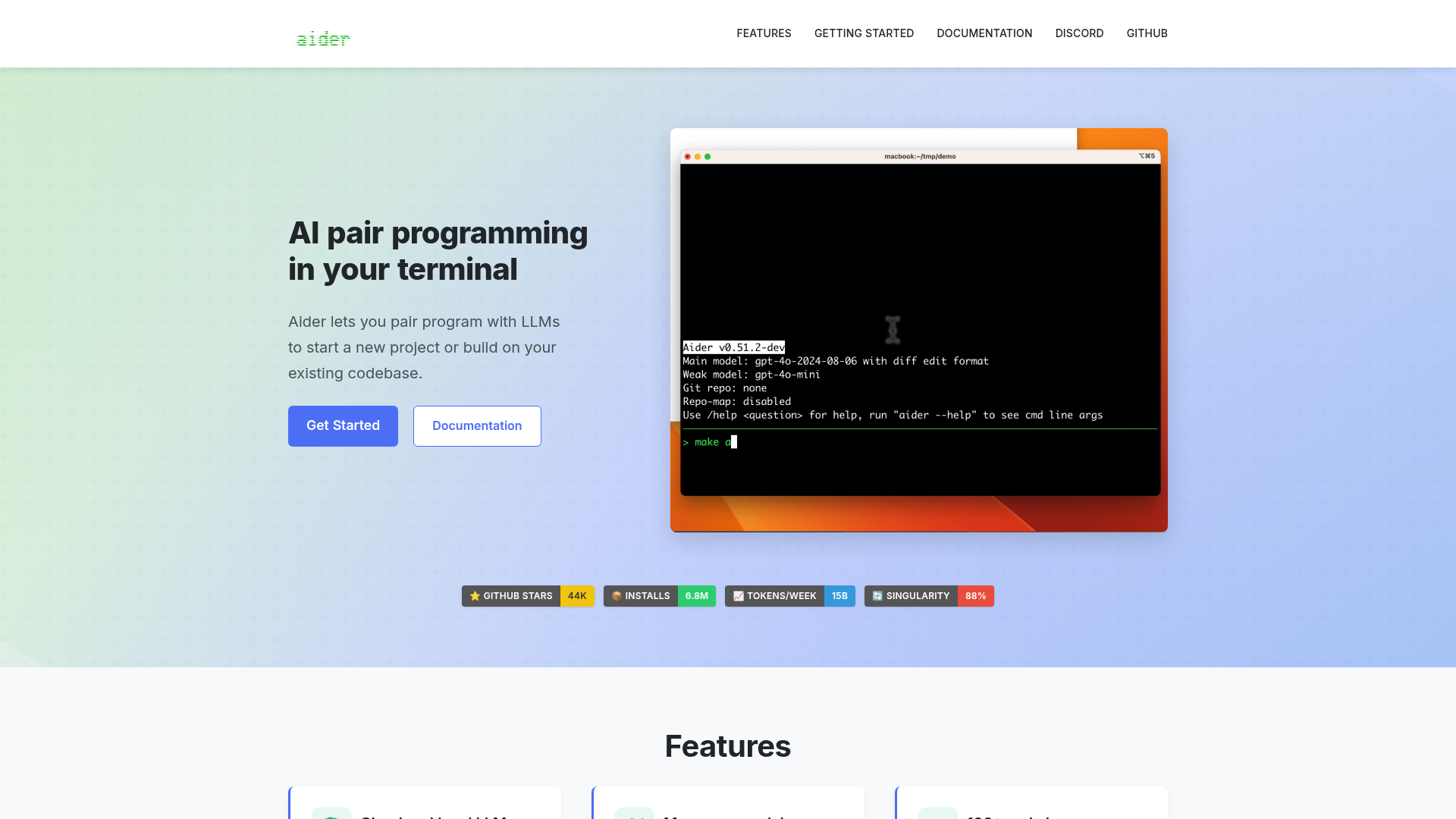
Aider is an AI pair programming tool that lets you collaborate with large language models (LLMs) directly in your terminal. Whether you're starting a new project or enhancing an existing codebase, Aider helps you write, edit, and debug code efficiently. - Cloud and local LLMs: Works with models like Claude 3.7 Sonnet, DeepSeek R1, OpenAI o1, and local models. - Codebase mapping: Creates a map of your entire codebase for better context in larger projects. - 100+ programming languages: Supports Python, JavaScript, Rust, Ruby, Go, C++, PHP, HTML, CSS, and more. - Git integration: Automatically commits changes with sensible messages and allows easy diffing and undoing of AI changes. - IDE integration: Use Aider within your favorite editor to request changes via comments. - Images & web pages: Add visual context, screenshots, or reference docs to the chat. - Voice-to-code: Speak your requests to implement new features, test cases, or bug fixes. - Linting & testing: Automatically lints and tests code, fixing issues detected by linters and test suites. - Web chat interface: Streamlines copy/pasting code with browser-based LLMs. Aider is a self-hosted, open-source tool that runs locally in your terminal. It connects to cloud-based LLMs or local models, making it flexible for different workflows. No server setup is required beyond installing the tool and configuring your preferred LLM API keys.
Open source AI coding agent with 500+ models, bring-your-own-key support, and specialized modes for writing, debugging, and planning code across IDEs and CLI.
Open source AI coding agent with 500+ models, bring-your-own-key support, and specialized modes for writing, debugging, and planning code across IDEs and CLI.

Open-source self-hosted AI coding assistant
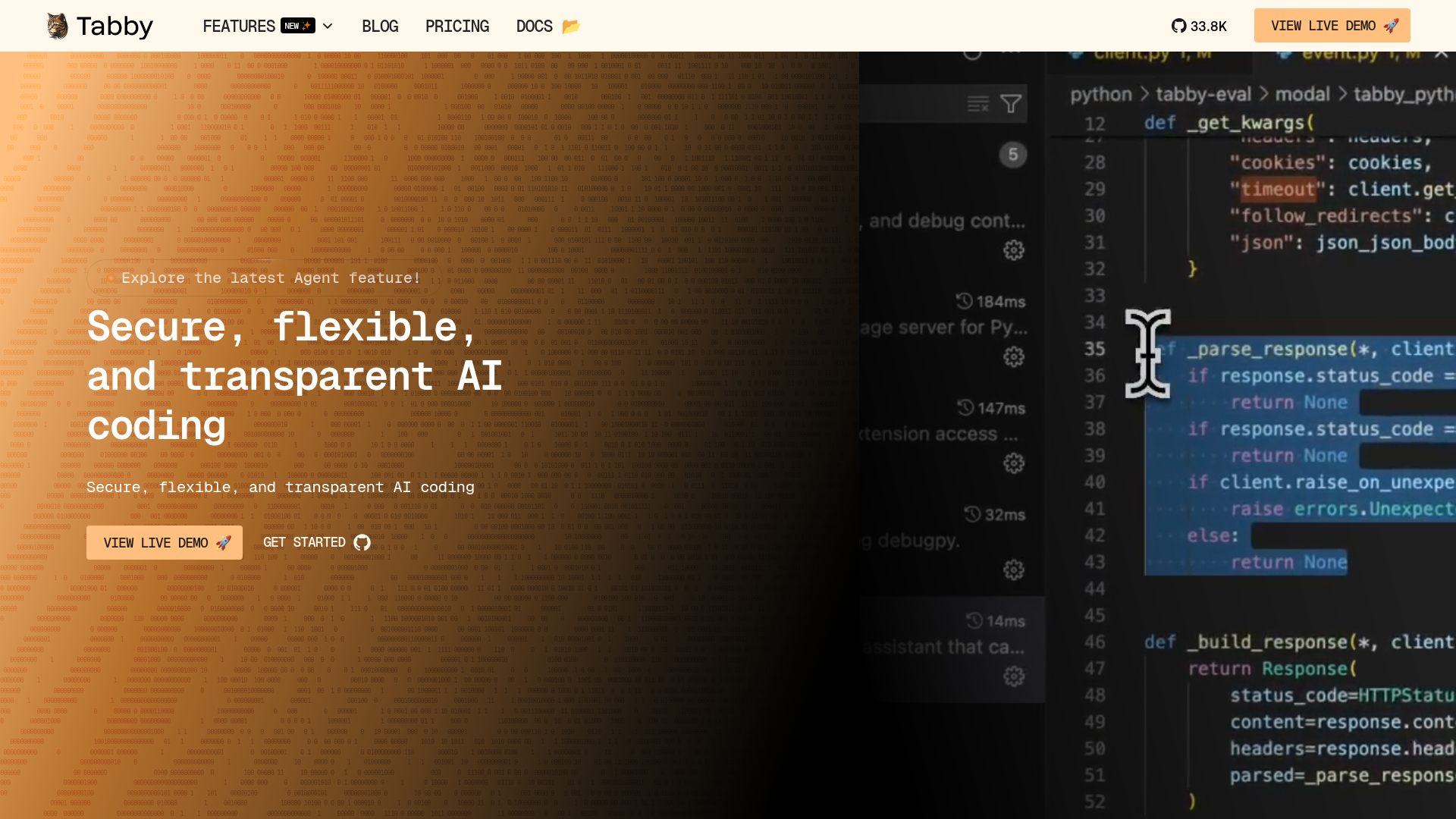
Tabby is an open-source AI coding assistant designed to help developers code faster and smarter. It provides secure, flexible, and transparent AI-powered coding assistance with features like code completion, inline chat, and an answer engine—all while ensuring data privacy through self-hosting. - Code Completion: AI-powered suggestions that predict and complete your next coding move. - Inline Chat: Real-time AI chat directly within your code editor for instant assistance. - Answer Engine: Get instant coding answers without leaving your IDE. - Data Connectors: Connect data sources to enable smarter AI assistance tailored to your projects. - Agent (Pochi): A full-stack AI teammate that plans, executes, and checks tasks like a human developer. - Self-Hosting: Deploy Tabby on your own infrastructure for full control over data and privacy. - Multi-Model Support: Compatible with various AI models for flexibility in model choice. - IDE Integration: Works seamlessly with popular IDEs like VS Code, JetBrains, and more. Tabby is open-source and can be self-hosted on your own servers or cloud infrastructure. It supports deployment via Docker, Kubernetes, and direct installation. The platform is designed for scalability, security, and customization, making it suitable for teams and enterprises that prioritize data privacy and control. Documentation and setup guides are available for easy deployment and management.
AI coding harness that runs inside your terminal, mixes LLMs per task, and uses multi-agent architecture to handle large codebases without bloating context.
AI coding harness that runs inside your terminal, mixes LLMs per task, and uses multi-agent architecture to handle large codebases without bloating context.

AI-powered developer platform for code hosting and collaboration
GitHub is the leading platform for software development, offering version control, project management, and collaboration tools. Built for developers, teams, and enterprises, it combines Git hosting with AI-powered features like GitHub Copilot for code generation and advanced security tools to streamline development workflows. - AI-Powered Development: GitHub Copilot for AI-assisted code writing and refactoring - Code Hosting & Version Control: Git repository management with pull requests and branching - Automated Workflows: GitHub Actions for CI/CD and workflow automation - Code Security: Advanced Security features for vulnerability detection and secret protection - Dev Environments: Codespaces for instant cloud-based development environments - Project Management: Issues, project boards, and tracking for agile workflows - Collaboration Tools: Team-based code reviews, discussions, and documentation - Enterprise Solutions: Scalable platform with premium support and security features GitHub is a cloud-based platform with no self-hosting option. It provides enterprise-grade security, compliance certifications (including SOC 2, ISO 27001), and GDPR compliance. The platform is built and maintained by GitHub, Inc. (a Microsoft subsidiary) with data centers globally.
About Qoder
Qoder
Qoder is a next-generation AI-powered agentic coding platform designed to transform how developers build software. Whether you're a solo developer or part of a team, Qoder combines deep codebase awareness with autonomous agents to deliver production-ready results efficiently.
Key Features of Qoder
- Agentic IDE: Intelligent coding agents with deep codebase awareness for collaborative and autonomous programming
- Multi-Platform Support: Available as a standalone IDE, VS Code extension, JetBrains plugin, CLI tool, and mobile app
- Conversational Coding: Natural language programming where you describe what you need and Qoder generates the code
- Autonomous Agents: Delegate complex tasks to AI agents that plan, execute, and deliver complete solutions
- Real-Time Collaboration: Work with AI agents and human experts simultaneously on the same project
- Terminal Integration: CLI tool for terminal-native AI-powered development workflows
- Mobile Control: Monitor agent progress, approve critical actions, and review deliverables from your phone
- Production-Grade Backend Intelligence: Advanced backend development capabilities with framework-aware refactoring
- Knowledge Center: Centralized repository for project knowledge, automations, and extensions
Tech / Self-Hosting
Qoder is available as a cloud-based platform with free and paid tiers. The platform is currently not available for self-hosting, but the company provides enterprise solutions and partnerships for organizations requiring on-premises deployment.
Supported IDEs: VS Code, JetBrains (IntelliJ, PyCharm, WebStorm, etc.)
Platforms: Desktop (macOS, Windows, Linux), CLI, Mobile (iOS/Android)