6 Best Open Source Paper Alternatives
A curated collection of the 6 best open source and self-hosted alternatives to Paper in 2026.
Looking for a free, privacy-friendly, or self-hosted replacement for Paper in 2026? The top open-source alternative is Penpot — Open-source design platform for teams.
Other highly rated open-source Paper alternatives include Graphite, OpenPencil and Grida.

Open-source design platform for teams
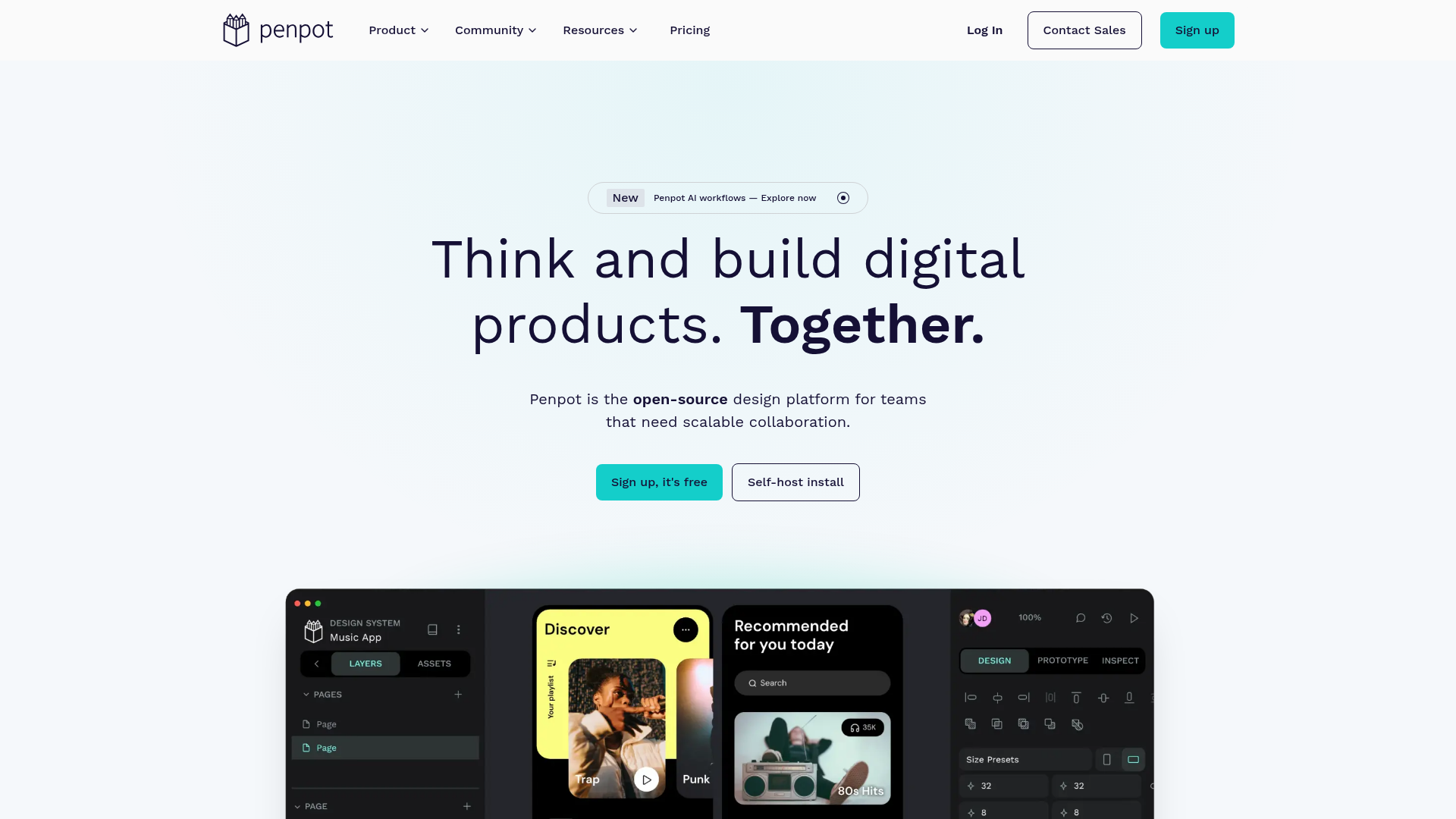
Penpot is the open-source design platform for teams building digital products at scale, enabling deeper collaboration across design, code, and AI workflows. - Full-stack design: Create responsive interfaces with wireframes, prototypes, and CSS Grid/Flex layouts - Design systems: Build scalable visual frameworks with components, design tokens, and shared libraries - AI workflows: Integrate any LLM or AI tooling directly into Penpot for code-to-design and design-to-code workflows - Code inspection: Work with open standards like CSS, HTML, SVG, and JSON with matching design-to-code output - Real-time collaboration: Design, review, and iterate together with team members in real-time - Self-hosting: Deploy Penpot on your own infrastructure for full data control - Cross-platform: Browser-based with no installation required, works on any device Penpot is built with Clojure and runs as a web application that can be self-hosted using Docker or Kubernetes. The platform supports PostgreSQL for data storage and Redis for caching. Self-hosting documentation is available at penpot.app/self-host.
A free, open source vector graphics editor built around nondestructive, node-based design. Runs locally in the browser, exports SVG, PNG, and JPG.
A free, open source vector graphics editor built around nondestructive, node-based design. Runs locally in the browser, exports SVG, PNG, and JPG.

Open-source Figma alternative with AI tools
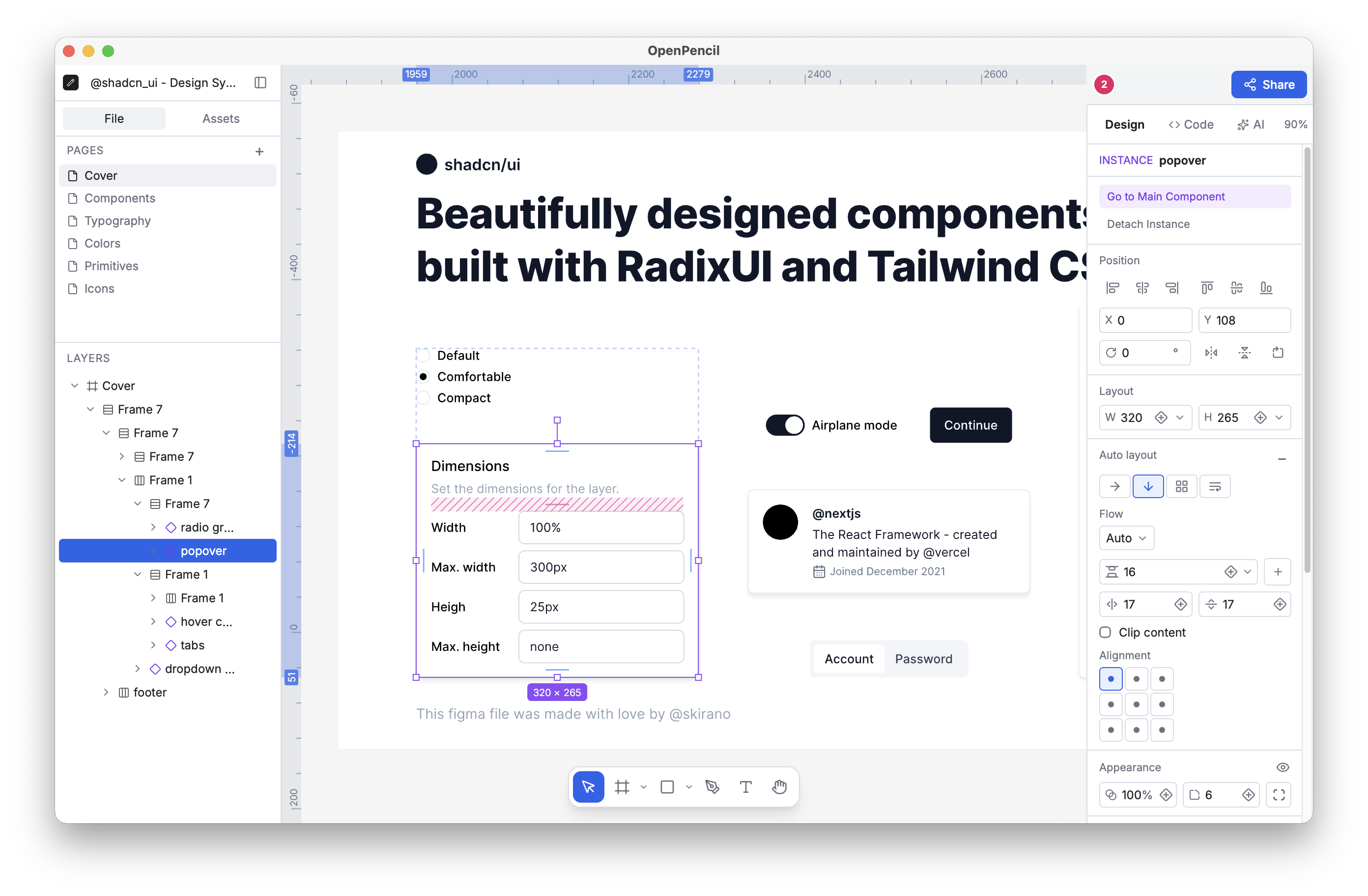
OpenPencil is a free, open-source design editor that opens Figma files natively while providing built-in AI tools and full programmability. It serves as both a standalone application and a toolkit for building custom editors. - Figma-Compatible: Opens .fig files natively with round-trip fidelity using Kiwi binary codec. Supports copy & paste between Figma and OpenPencil. - Programmable: Headless CLI for inspecting, exporting, and analyzing .fig files. Supports Figma Plugin API via eval, Tailwind CSS export, and JSON output for CI/automation. - Toolkit Approach: Build custom editing surfaces with the Vue SDK, embed OpenPencil into other products, or create workflow-specific editors around the same core. - AI-Native: Built-in chat with 90 tools for creating shapes, setting styles, managing layouts, and analyzing tokens. Includes MCP server for integration with Claude Code, Cursor, and Windsurf. - Open Source: Released under MIT license with full transparency—edit the editor, engine, file codec, and CLI. - Free & Local: No account, server, or internet required. Available as a ~7MB desktop app via Homebrew or as a web app. - Real-Time Collaboration: Peer-to-peer collaboration via WebRTC with live cursors and follow mode—no server needed. OpenPencil is designed for local-first usage with optional real-time collaboration. The desktop app is available via Homebrew, and the web app can be self-hosted. The entire stack is open-source under the MIT license, allowing for full customization and self-hosting capabilities.

Free open canvas for designing web apps
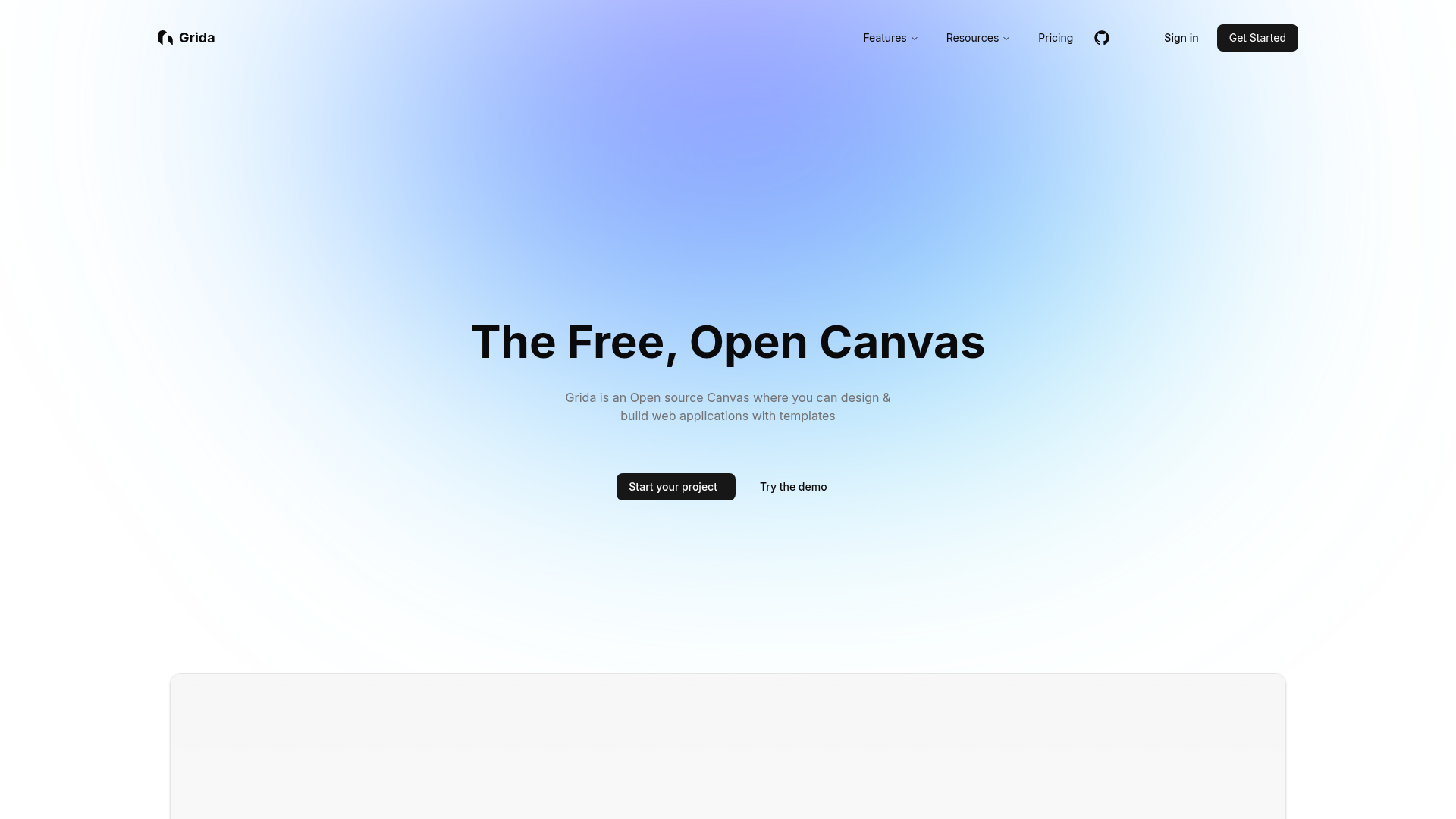
Grida is a free, open canvas designed for building and designing web applications with ease. Whether you're creating pixel art, UI/UX designs, or full-fledged web apps, Grida provides a versatile editor with customizable templates, AI-powered prompts, and seamless file export. - Free & Open Canvas: Design and build web applications with customizable templates and components. - AI-Powered Tools: Leverage AI for copywriting, design suggestions, and automation. - React Component Integration: Use Grida as a React component or integrate your own components. - Modular SDK: Build custom tools and extensions with Grida's modular SDK. - Optimized Performance: Powered by Rust and WebGPU for high performance. - Widgets & Templates: Drag-and-drop widgets and icons for quick UI building. - Scripting Interface: Create design automations and plugins with a runtime scripting interface. - Figma Integration: Import and export designs seamlessly with Figma. - Enterprise Solutions: Custom, on-premise solutions for businesses. Grida is open-source and can be self-hosted. It supports modular SDKs, React components, and is optimized for performance with Rust and WebGPU. The platform is designed for extensibility and customization, making it suitable for both individual developers and enterprises.

Open source UX design and user testing tool
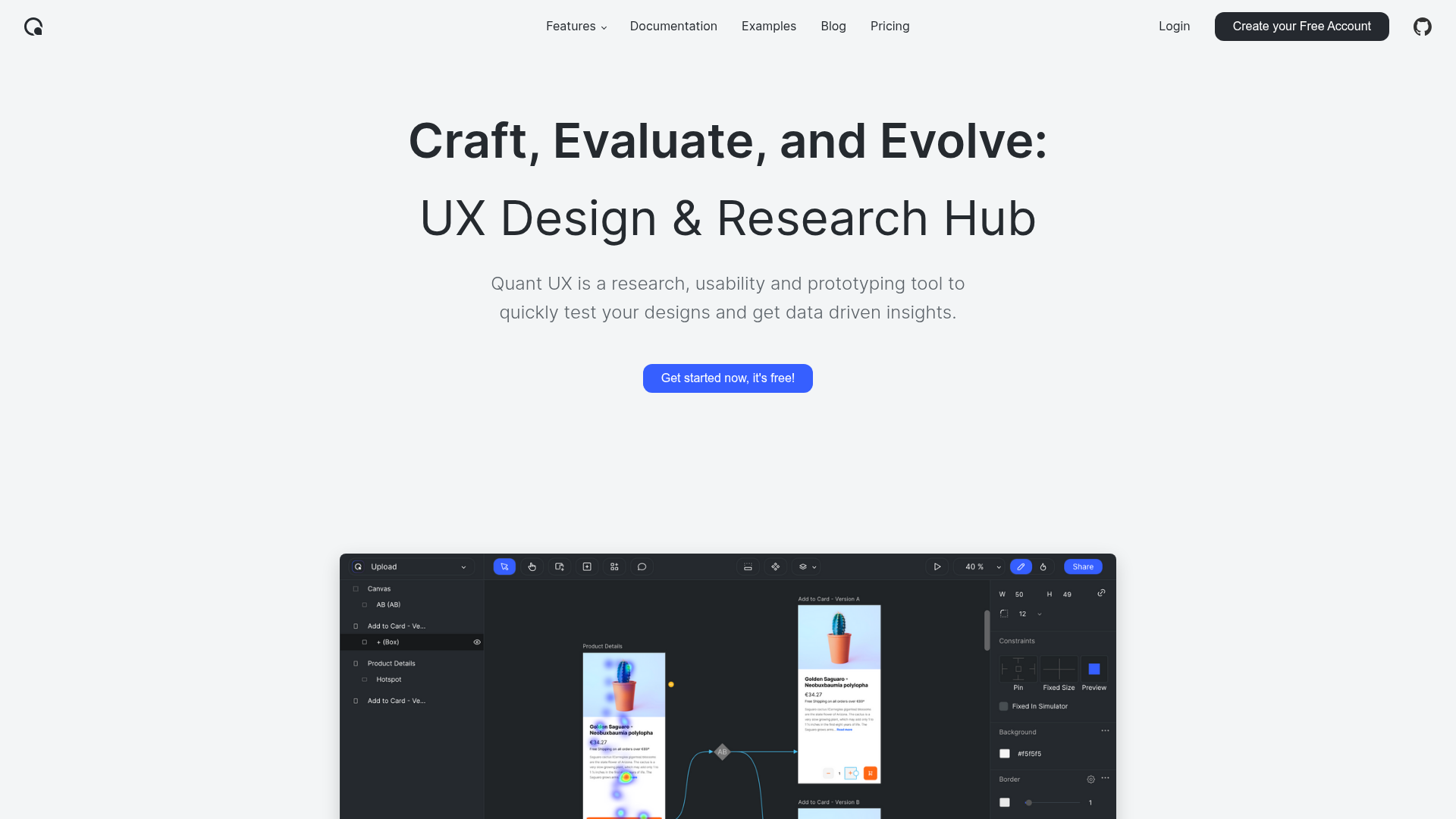
Quant-UX is a comprehensive, open-source tool for UX design and user research. It combines prototyping, user testing, and analytics into a single platform, enabling designers and researchers to quickly validate ideas and gather actionable insights. - Visual Prototyping: Create interactive prototypes with a drag-and-drop editor, animations, logic flows, and form validation. Build scalable design systems using components and master screens. - User Testing: Conduct usability tests by sharing a link with your audience. Define tasks, record screen sessions, and perform A/B testing to compare different prototype versions. - Automated Analytics: Generate heatmaps, success rates, drop-off analysis, and task completion metrics automatically. Embed surveys to collect direct user feedback. - AI Assistant: Enhance workflows with an AI assistant that simplifies repetitive tasks and accelerates prototyping. - Cross-Platform Testing: Test prototypes on mobile devices using QR codes or direct links, ensuring seamless user experience across devices. - Data-Driven Insights: Automatically compute KPIs and visualize insights in an intuitive analytics canvas for informed decision-making. Quant-UX is open-source and can be self-hosted for full control over data and infrastructure. The project is built with modern web technologies and supports deployment on various platforms. For more details, visit the GitHub repository.

Open-source document archiving and organization platform
Papra is an open-source document management platform designed to help you organize, secure, and archive your files effortlessly. Whether for personal use or team collaboration, Papra provides a centralized solution to manage all your documents in one place. - Centralized Document Storage: Archive and organize all your documents in one place, eliminating scattered files across different platforms. - Organizations & Teams: Create organizations to manage documents and users, ideal for teams or companies. - Smart Tagging System: Categorize and filter documents easily with custom tags and automated tagging rules. - Powerful Search: Find any document in seconds with advanced search functionality. - Developer-Friendly: Access a robust API, webhooks, CLI, and SDK for seamless integration into existing workflows. - Email Ingestion: Forward emails to dedicated addresses to automatically save attachments as documents. - Privacy-First: All data is encrypted in transit and at rest, with no selling of user data. - Self-Hostable: Deploy Papra on your own infrastructure for complete data control. Papra is built with modern web technologies and is fully self-hostable. The platform is available as a Docker container, making deployment straightforward. All source code is open-source under the AGPL-3.0 license, allowing for transparency and community contributions. The system is designed to be scalable and can be customized to fit specific organizational needs. For self-hosting instructions, visit the official documentation.
About Paper
Paper is a modern design tool that bridges the gap between design, development, and AI agents. Built on web standards, it provides a connected canvas where teams can create, iterate, and ship high-quality work while integrating seamlessly with codebases, tools, and AI workflows.
Key Features of Paper
- Connected Canvas: Unify design, code, data, and AI agents in one space for real-time collaboration.
- Design-to-Code Sync: Sync design tokens, styles, and components between Paper and your codebase for a single source of truth.
- Agent Integration: Work with AI agents via MCP (Model Context Protocol) to automate tasks and generate designs.
- Cross-Platform: Available as a desktop app (Linux, macOS, Windows) and web browser version.
- Real-Time Collaboration: Share and iterate on designs with teams in real time.
- Web Standards Based: Built on modern web technologies for compatibility and performance.
- Design System Support: Create and manage design systems with reusable components.
- Agentic Workflows: Enable AI agents to assist in design, prototyping, and development tasks.
Tech / Self-Hosting
Paper is a proprietary SaaS platform with a desktop application. It does not offer self-hosting options. The tool is designed for cloud-based collaboration and integrates with various development environments and AI tools via APIs and MCP.