8 Best Open Source Mode Alternatives
A curated collection of the 8 best open source and self-hosted alternatives to Mode in 2026.
Looking for a free, privacy-friendly, or self-hosted replacement for Mode in 2026? The top open-source alternative is Redash — Open source data visualization and dashboarding tool.
Other highly rated open-source Mode alternatives include Teable, Lightdash and Deepnote.

Open source data visualization and dashboarding tool
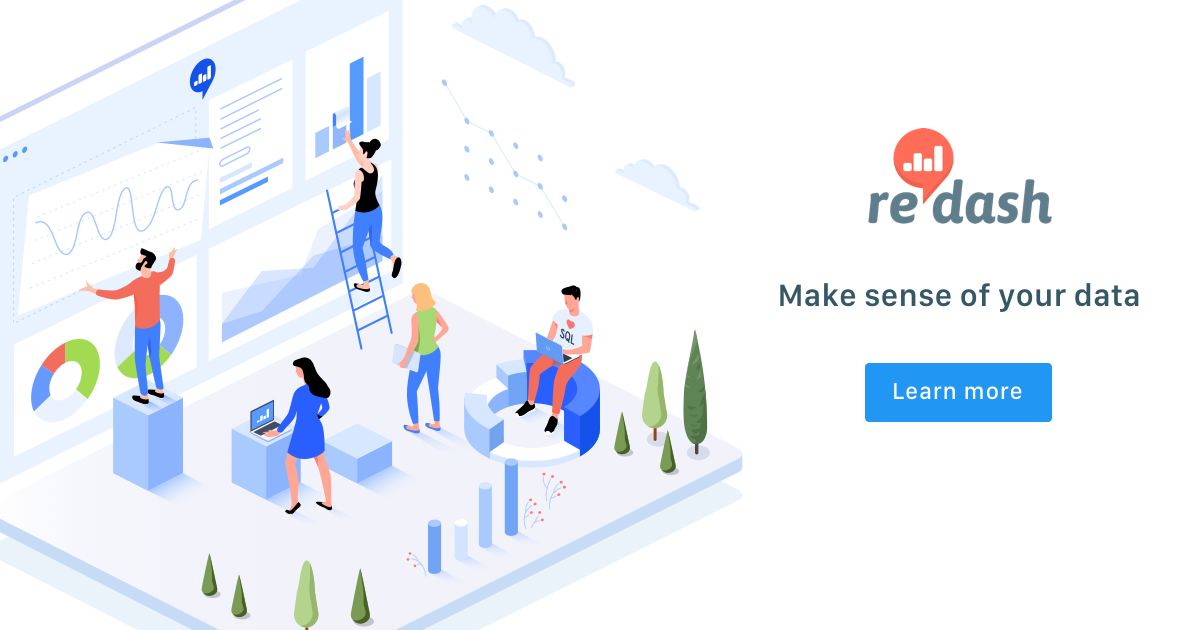
Redash is a powerful open-source platform for connecting to databases and APIs, writing SQL queries, and creating interactive dashboards. It helps teams transform raw data into actionable insights through collaborative visualization and sharing. - Multi-source data connections: Supports PostgreSQL, MySQL, Redshift, BigQuery, MongoDB, and more - Collaborative SQL editor: Browse schemas, create reusable snippets, and write queries with team collaboration - Drag-and-drop dashboards: Visualize data with customizable charts and graphs - Scheduled refreshes: Automatically update dashboards with fresh data - Alerts system: Get notified when data meets specific conditions - User management: Control access and permissions for teams - API access: Integrate with other tools and systems - Open source: Self-hostable with no vendor lock-in Redash is fully open-source and can be self-hosted on your own infrastructure. The project provides comprehensive setup guides for Docker, Kubernetes, and bare-metal installations. It's built with Python, JavaScript, and PostgreSQL, making it suitable for most modern environments.

AI-powered spreadsheet for custom business apps
Teable is an AI-powered spreadsheet platform that transforms traditional spreadsheets into dynamic business applications. It enables teams to build custom workflows, automate processes, and extract insights from their data—all within a single, intuitive interface. - AI Workflow Automation: Generate custom workflows from natural language prompts to organize data, extract key information, and automate repetitive tasks. - Custom App Builder: Create business-fit applications tailored to your specific needs without requiring extensive coding knowledge. - Data Integration: Connect and migrate data from various sources into a centralized platform for seamless management and analysis. - Collaborative Environment: Work together with your team in real-time, ensuring everyone stays aligned and productive. - Advanced Data Processing: Extract structured data from unstructured files like receipts, contracts, and resumes using AI-powered tools. - Template Library: Access a variety of pre-built templates for common business use cases to get started quickly. - Self-Hosting Capabilities: Deploy Teable on your own infrastructure for enhanced control and data privacy. Teable is built with modern web technologies and supports self-hosting for organizations that require full data control. The platform is designed to be scalable, secure, and customizable, making it suitable for businesses of all sizes. For deployment instructions, visit the official documentation.

Open-source, code-first BI platform for modern data teams
Lightdash is the open-source, code-first BI platform designed for modern data teams. It enables you to connect directly to dbt, define metrics once, and instantly generate reliable insights that AI agents can trust. - AI-Native Analytics: Give AI agents access to governed metrics via Slack, Claude, or Lightdash for automated insights. - Code-First Semantic Layer: Define metrics in code (YAML) for consistency and reusability across teams. - Legacy BI Migration: Seamlessly migrate from Looker, Power BI, or Tableau without rebuilding dashboards. - Self-Hosted & Cloud Options: Deploy on your infrastructure or use Lightdash Cloud for managed hosting. - Governed Data Access: Control permissions and data access while empowering teams to build custom data apps. - Trustworthy Metrics: Ensure data accuracy with version-controlled metrics and transparent definitions. - Scalable Pricing: Start for free and scale as your team grows. Lightdash is open-source and can be self-hosted on your own infrastructure. It supports Docker deployments and integrates with existing data stacks like dbt, Snowflake, BigQuery, and PostgreSQL. The platform is built with TypeScript, React, and Node.js, making it extensible for custom integrations.

Collaborative data science notebook for teams
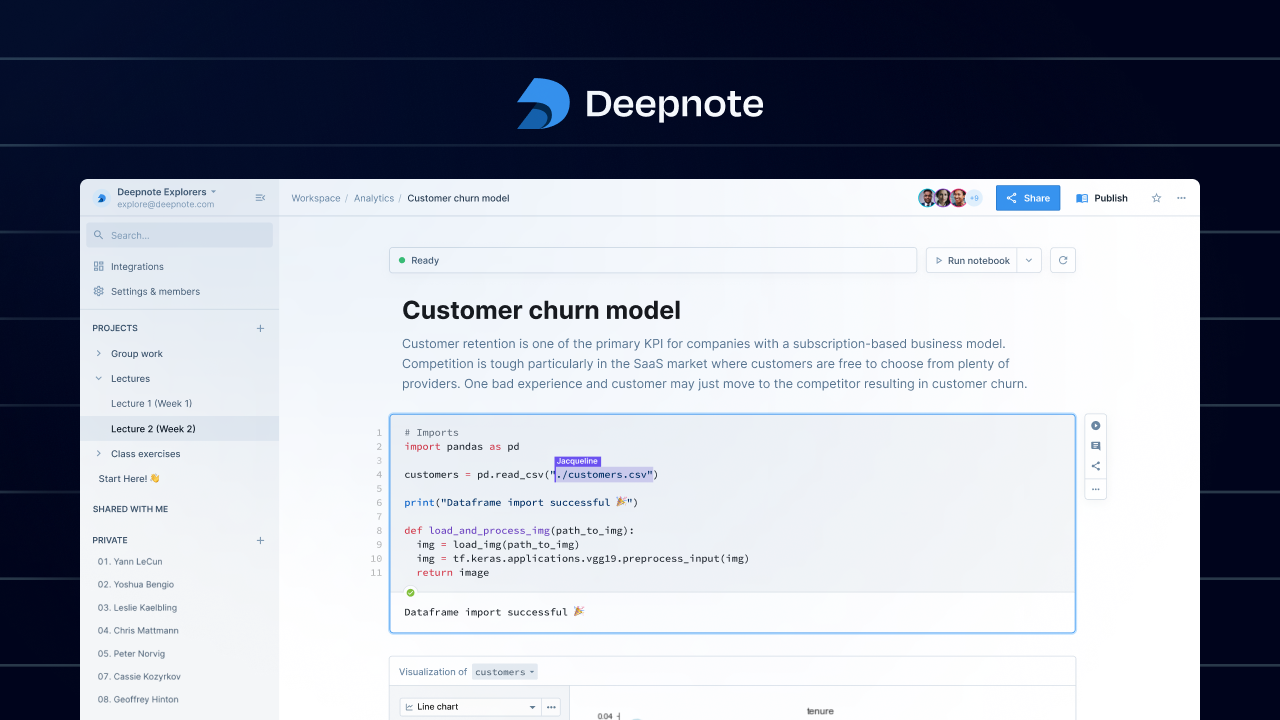
Deepnote is a collaborative data science notebook designed for teams to explore data, build models, and share insights. Whether you're working with Python, SQL, or AI agents, Deepnote provides a unified workspace for data analytics, engineering, and machine learning workflows. - Collaborative Notebooks: Real-time multi-user editing with built-in version control and history tracking. - AI-Powered Insights: Generate dashboards, data apps, and AI-driven insights directly from notebooks. - Data Analytics: Advanced Python and SQL support with semantic layers, modules, and dbt integration. - Data Engineering: ETL/ELT pipelines, Spark and Snowpark support, and data cataloging. - Machine Learning: Train, deploy, and monitor models with GPU support and automated workflows. - Security & Compliance: SOC2, HIPAA, and enterprise-grade auditing with audit logs. - Integrations: Connect to any data source, including databases, APIs, and cloud services. - Autonomous Agents: Build and deploy AI agents for tasks like fraud detection and churn analysis. Deepnote is a fully managed cloud platform with no self-hosting option. It supports local development with VS Code integration and seamless cloud deployment. The platform is designed for scalability, security, and collaboration, making it ideal for teams of all sizes.

Enterprise BI platform with embedded analytics
Looker is a leading enterprise platform for business intelligence (BI), data applications, and embedded analytics. It helps organizations transform raw data into actionable insights through a governed, AI-powered experience. - Conversational Analytics: Move beyond static dashboards with AI agents that interpret and execute data-driven decisions using natural language queries powered by Gemini. - Agentic BI Platform: A composable, governed intelligence experience that combines foundational AI, cloud-first infrastructure, and a flexible semantic layer for enterprise-wide consistency. - Universal Semantic Layer: A trusted backbone built on LookML that translates complex SQL into business metrics, ensuring accuracy and eliminating agent hallucinations across all applications. - Embedded Analytics: Transform data into deeply integrated, value-driving experiences within any application using Looker’s powerful APIs and SDKs. - Self-Service BI: Empower business users to explore and analyze data independently without relying on technical analysts. - Real-Time Insights: Deliver up-to-date data insights with cloud-native infrastructure and seamless integration with Google Cloud. - Custom Data Applications: Build and deploy AI-first data products with embedded conversational AI capabilities. - Industry-Leading APIs: Enable rapid development and integration with third-party systems through robust and flexible APIs. Looker is a fully managed cloud service provided by Google Cloud, requiring no self-hosting. It integrates seamlessly with Google Cloud’s infrastructure and supports multi-cloud environments. While primarily a SaaS solution, Looker’s semantic layer (LookML) and APIs allow for custom deployments and integrations within enterprise ecosystems.

Open source AI analytics with verified queries
Metabase is an open-source business intelligence and embedded analytics platform designed for teams to explore, visualize, and share data without requiring SQL knowledge. Grounded in your semantic layer—your metrics and business logic—Metabase ensures every answer is verifiable and traceable to its source query. - Self-service analytics: Drag-and-drop query builder for non-technical users - Embedded analytics: SDK for integrating analytics into customer-facing applications - Metabase AI: AI-powered insights and natural language querying - Semantic layer: Centralized metrics and business logic for consistency - Dashboards & reporting: Customizable, shareable dashboards with drill-through capabilities - Data segregation: Role-based access control and permissions - SQL editor: Advanced users can write and execute custom SQL queries - White-label analytics: Fully customizable branding for embedded solutions - CSV uploads: Direct data import for quick analysis - Usage analytics: Track engagement and adoption across teams Metabase is open-source and can be self-hosted on your own infrastructure. It supports a wide range of databases including PostgreSQL, MySQL, BigQuery, Snowflake, and more. The platform is available as a Docker container, on Kubernetes, or as a standalone JAR file. Metabase Cloud offers a managed hosting option with enterprise-grade security and scalability.
Distraction-free open-source notebook for focused writing
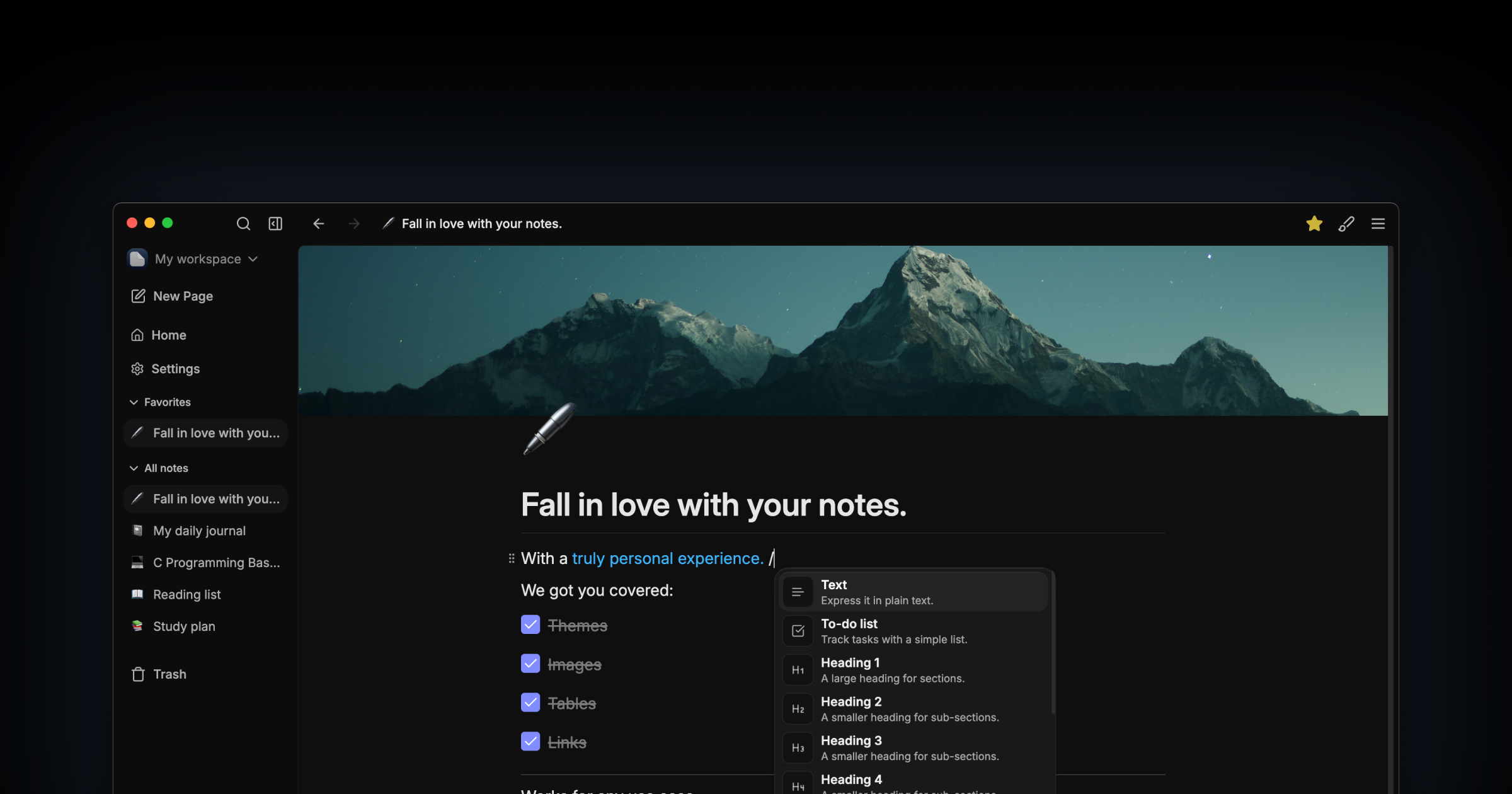
Darkwrite is a minimalist, open-source notebook designed for distraction-free writing. Built for users who prioritize simplicity and privacy, it offers a clean editor with no AI integrations, offline functionality, and full customization. - Distraction-free writing: Simple interface with no unnecessary features or AI buttons - Offline-first: All notes stored locally; no account or internet required - Customizable themes & fonts: Choose from included themes or create your own - One-click backups: Archive and restore notes effortlessly - No ads or tracking: Respects user privacy with no data collection - Open source: AGPLv3 licensed with full transparency - Cross-platform: Available for Linux with planned Flatpak support - Future roadmap: Collaboration sync server, plugin API, and graph view Darkwrite is a fully self-contained desktop application with no backend or cloud dependencies. All data remains on the user's device, making it inherently self-hosted. The app is built with modern web technologies and distributed as a native Linux binary. No server setup or configuration is required.
Privacy-first open-source knowledge base
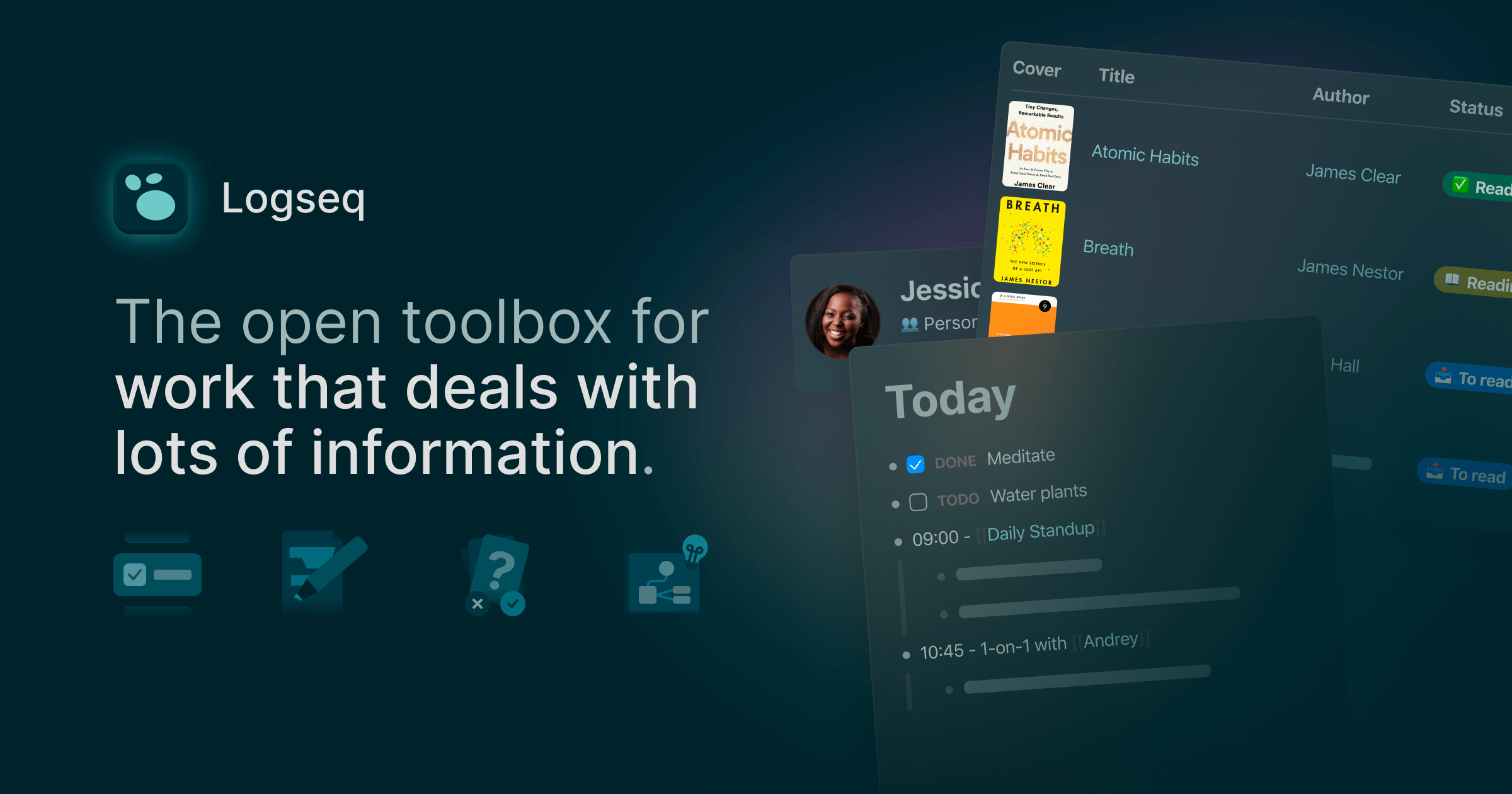
Logseq is a privacy-first, open-source knowledge base that helps you organize thoughts, manage tasks, and retain knowledge efficiently. Built for local-first workflows, it stores all data in plain markdown files for future-proof access. - Local-first architecture: All notes stored locally in markdown files for complete data ownership - Outliner & block-based editing: Structure ideas with nested blocks and indentation - Flashcards & spaced repetition: Built-in flashcard system for memorization (via plugins) - Knowledge graph: Visualize connections between notes and concepts - Task management: Built-in task tracking with kanban-style boards - PDF annotation: Highlight and annotate PDFs directly within the app - Cross-platform sync: Encrypted sync between devices (beta) - Plugin ecosystem: 150+ plugins to extend functionality - Multi-format support: Works with markdown, org-mode, and more - Privacy focused: No tracking, no ads, GDPR compliant - Open source: MIT licensed, available on GitHub - Cross-platform: Native apps for Windows, macOS, Linux, iOS, and Android - Self-hosting: Not required (local-first by default), but sync service available - Data format: Plain text markdown files for easy migration - Performance: Optimized for handling thousands of notes efficiently
About Mode
Mode is a collaborative data platform designed for teams to connect, analyze, and share insights efficiently. It combines SQL, Python, and R in a single workspace, enabling data teams to query, visualize, and collaborate without switching tools.
Key Features of Mode
- Unified Analytics Workspace: Write and run SQL, Python, and R queries in one place.
- Data Connectivity: Integrate with databases, data warehouses, and APIs seamlessly.
- Visual Analytics: Create interactive dashboards and reports with built-in visualization tools.
- Collaboration: Share insights, comment on queries, and collaborate in real time.
- Embedded Analytics: Embed reports and dashboards into applications or websites.
- Automated Insights: Generate automated insights and alerts based on data trends.
- Security & Governance: Role-based access control, audit logs, and compliance features.
- Scalability: Supports large datasets and high-performance querying.
Tech / Self-Hosting
Mode is a cloud-based platform and does not offer a self-hosted version. It is designed for teams of all sizes, from startups to enterprises, and provides enterprise-grade security and compliance features.