16 Best Open Source LangChain Alternatives
A curated collection of the 16 best open source and self-hosted alternatives to LangChain in 2026.
Looking for a free, privacy-friendly, or self-hosted replacement for LangChain in 2026? The top open-source alternative is Mem0 — AI memory layer for persistent agent context.
Other highly rated open-source LangChain alternatives include Agno, CopilotKit and Langfuse.

AI memory layer for persistent agent context
Mem0 provides persistent memory infrastructure for AI agents and applications, enabling them to continuously learn from past interactions and maintain context across sessions. Built for production with enterprise-grade security and compliance. - Persistent Memory: Retains user context and preferences across sessions without pipeline changes - Memory Compression Engine: Automatically condenses chat history into compact memories to reduce tokens and latency - Multi-Signal Retrieval: Advanced retrieval system for accurate context matching - Cross-Domain Adaptation: Configurable for healthcare, education, e-commerce, customer support, and sales - Enterprise Governance: SOC 2, HIPAA, GDPR compliant with BYOK and zero-trust architecture - Portable Deployment: Runs on Kubernetes, private cloud, or air-gapped environments - Full Observability: Complete audit logs for every read/write operation - SDK Integration: Python and Node.js SDKs for easy implementation Mem0 is primarily offered as a cloud service with enterprise-grade infrastructure. The platform is SOC 2 Type 1, HIPAA, and GDPR compliant, ensuring robust security and privacy standards. While the core service is managed, Mem0 provides portable deployment options including Kubernetes and private cloud configurations for organizations requiring on-premises or air-gapped solutions. The open-source components and SDKs allow for integration into existing AI agent frameworks and applications, with the main repository available at https://github.com/mem0ai/mem0.

Self-driving agent platform for your cloud
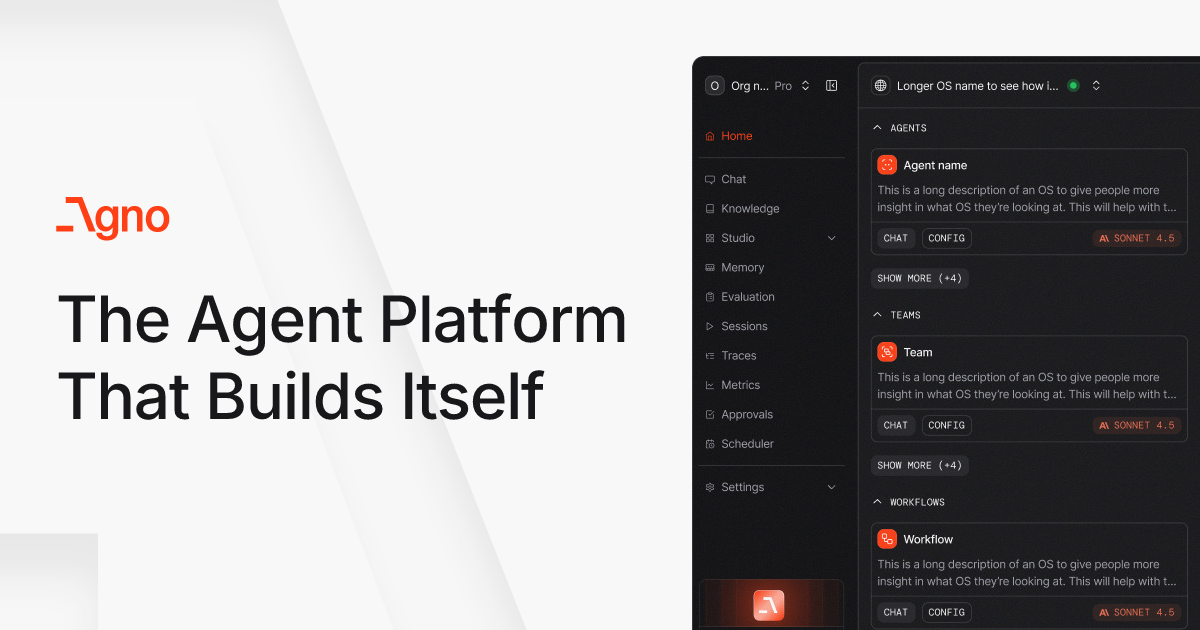
Agno is a self-driving agent platform that runs in your cloud, enabling agents to build and run agents for you. - Agent Autonomy: Agents can autonomously build, manage, and run other agents, teams, and workflows. - Cloud Runtime: Deploy and serve agents directly in your cloud infrastructure. - Live Demo Environment: Explore a pre-configured demo with sample agents like Support Agent, Product Agent, and Sales Agent. - Teams & Workflows: Create specialized teams (e.g., Customer Ops, Deep Research) and workflows (e.g., Invoice Processing, Weekly Digest). - Interfaces: Built-in chat interfaces for seamless agent interaction. - Memory & Knowledge: Agents leverage memory and knowledge bases for context-aware operations. - Metrics & Evaluation: Monitor agent performance and outcomes with built-in metrics and evaluation tools. - Enterprise-Ready: Scalable solutions for businesses with advanced security and compliance features. Agno is designed to run in your cloud infrastructure, providing full control over deployment, security, and scalability. The platform supports self-hosting for enterprises requiring on-premises or private cloud solutions.

Enterprise-ready frontend stack for AI agents
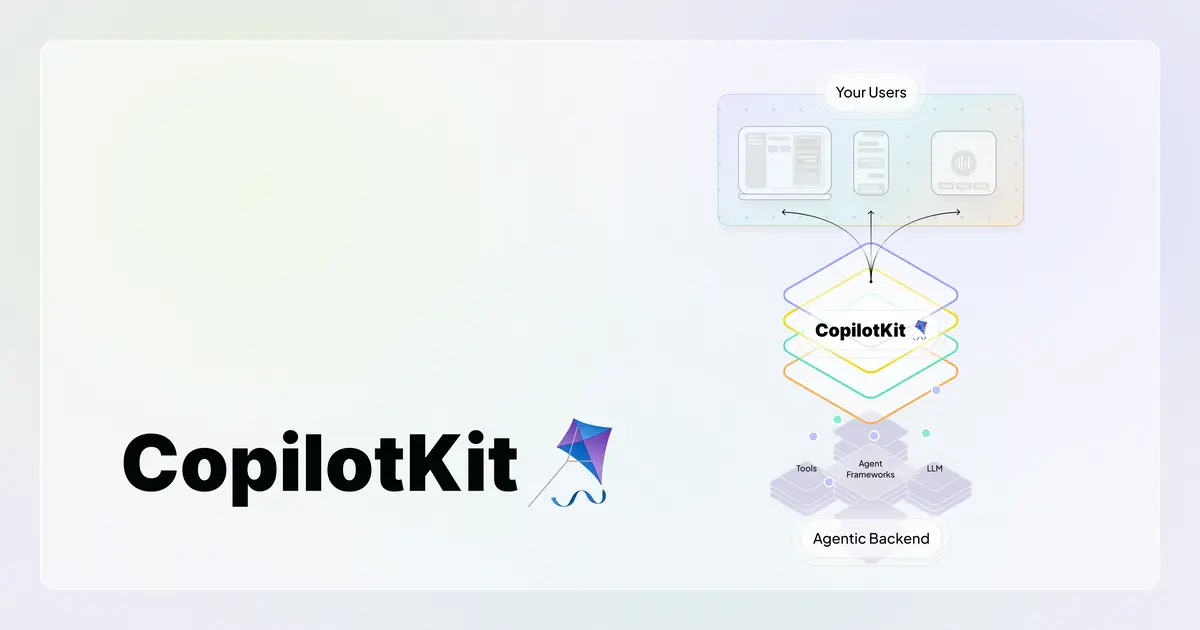
CopilotKit is the Enterprise-Ready Frontend Stack for Agents, enabling seamless integration of LLMs or AI agents into real applications. It provides real-time context, UI control, and full flexibility for building rich agentic applications that learn from every interaction. - AG-UI (Agent–User Interaction): Bi-directional connection between user-facing applications and any agentic backend. - Generative UI: Build dynamic, AI-driven user interfaces with full control. - Multi-Surface Support: Connect a single agent to multiple surfaces like React, Slack, and Teams. - Self-Hostable: Deploy and scale within your own infrastructure. - Enterprise-Grade: Trusted by the majority of the Fortune 500 and Global 50 companies. - Flexible Backend Integration: Works with existing agent stacks like Google, Microsoft, and Amazon. - Human-in-the-Loop: Enable human oversight and intervention in agent workflows. - Agent Learning: Applications learn and improve from every user interaction. CopilotKit is designed for enterprise environments and supports self-hosting for full data control and scalability. It integrates with popular agent frameworks and provides SDKs for frontend development, making it a versatile solution for building agentic applications.

Open source AI agent observability platform
Langfuse is an open-source platform designed to help teams trace, evaluate, and improve AI agents. By leveraging production data, it provides deep insights into agent behavior, enabling teams to collaborate on fixes and optimize performance for better quality, reduced costs, and lower latency. - LLM Observability: Monitor and debug AI agent interactions in real-time with detailed traces and logs. - Prompt Management: Centralize and version control prompts for consistent AI outputs. - Evaluation & Metrics: Assess agent performance using built-in evaluation tools and custom metrics. - Collaboration Tools: Share insights and collaborate on fixes with your team. - Self-Hosting Support: Deploy Langfuse on your infrastructure using Docker, Kubernetes, or cloud providers (AWS, GCP, Azure). - Scalability: Handle millions of observations per month with high-performance data processing. - Integration Ready: Works seamlessly with popular AI frameworks like LangChain and OpenAI. - Open Source: Fully open-source with a vibrant community and enterprise-grade features. Langfuse is built with modern technologies and supports multiple deployment options: - Docker Compose: Quick local or cloud deployment. - Kubernetes (Helm): Scalable production deployments. - Cloud Providers: AWS, GCP, and Azure via Terraform. - Database: Powered by ClickHouse for high-performance analytics. Langfuse is trusted by over 100,000 engineers and used by 21 of the Fortune 50 companies.

AI agents that learn continuously and improve over time

Letta is an AI research lab in San Francisco focused on building machines that learn. Their vision is a future where humans coexist with digital people: experiential agents that remember everything, learn continuously, and improve themselves over time. - Stateful AI Agents: Create agents with persistent memory that evolves through experience - Memory-Native Learning: Agents learn through specialized memory models trained with memory-native reinforcement learning - Git-Based Memory: Programmatic context management with git-based versioning for agent memory - Offline Learning: Sleep-time compute allows agents to reason and learn during idle periods - Self-Improving Capabilities: Agents continuously refine their identity, memory, and capabilities based on interactions - Research-Backed: Built on foundational work like MemGPT (LLM Operating System) from UC Berkeley's Sky Computing Lab Letta's research ships as software through the Letta Agent, available as a npm package (@letta-ai/letta-code). The technology is designed for enterprise and research applications, with case studies from companies like Bilt, 11x, Kognitos, and Hunt Club. The team consists of researchers and engineers from UC Berkeley's Sky Computing Lab, advised by industry leaders including Ion Stoica and Joey Gonzalez.

Open-source AI agent development platform
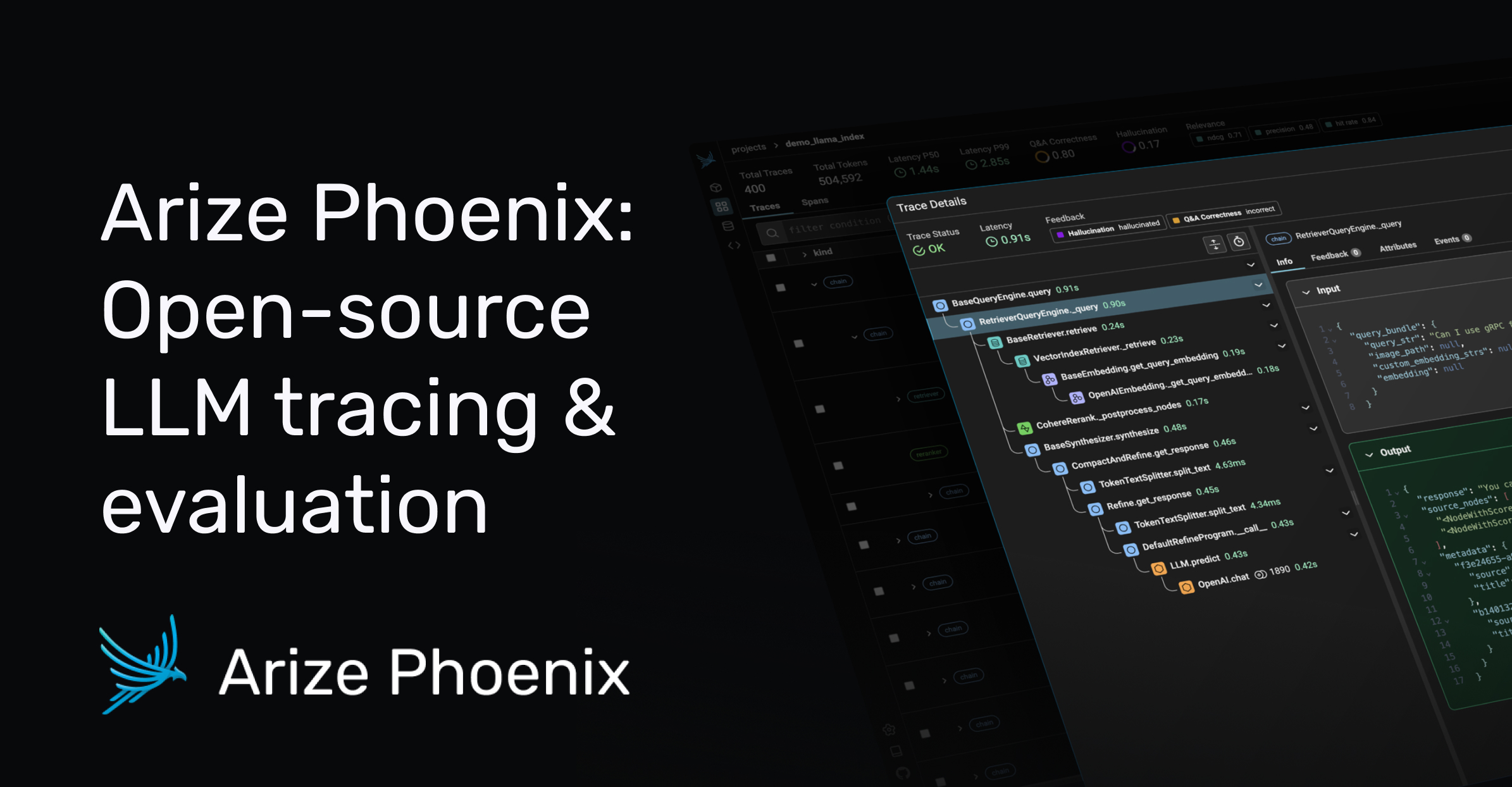
Phoenix is an open-source platform designed for AI agent development and evaluation. It provides comprehensive observability, tracing, and evaluation tools to help AI engineering teams build, monitor, and improve their AI applications. - AI Agent Development: Build and test AI agents with integrated tracing and debugging tools. - Observability & Monitoring: Gain deep insights into AI agent performance and behavior. - Evaluation & Benchmarking: Measure and compare AI agent capabilities with built-in evaluation frameworks. - Self-Hosting: Deploy Phoenix locally or in your own infrastructure for full control. - Integration with Coding Agents: Works seamlessly with popular coding agents like Claude, Codex, and Cursor. - Open-Source: Fully open-source under Apache 2.0 license. - Enterprise-Grade: Used by Fortune 500 companies for production AI deployments. Phoenix is open-source and can be self-hosted using Docker, Kubernetes, or directly via CLI. It supports Python and TypeScript SDKs for easy integration with existing AI workflows. Documentation and quick-start guides are available for local setup and production deployment.

Open-source LLM observability and monitoring platform
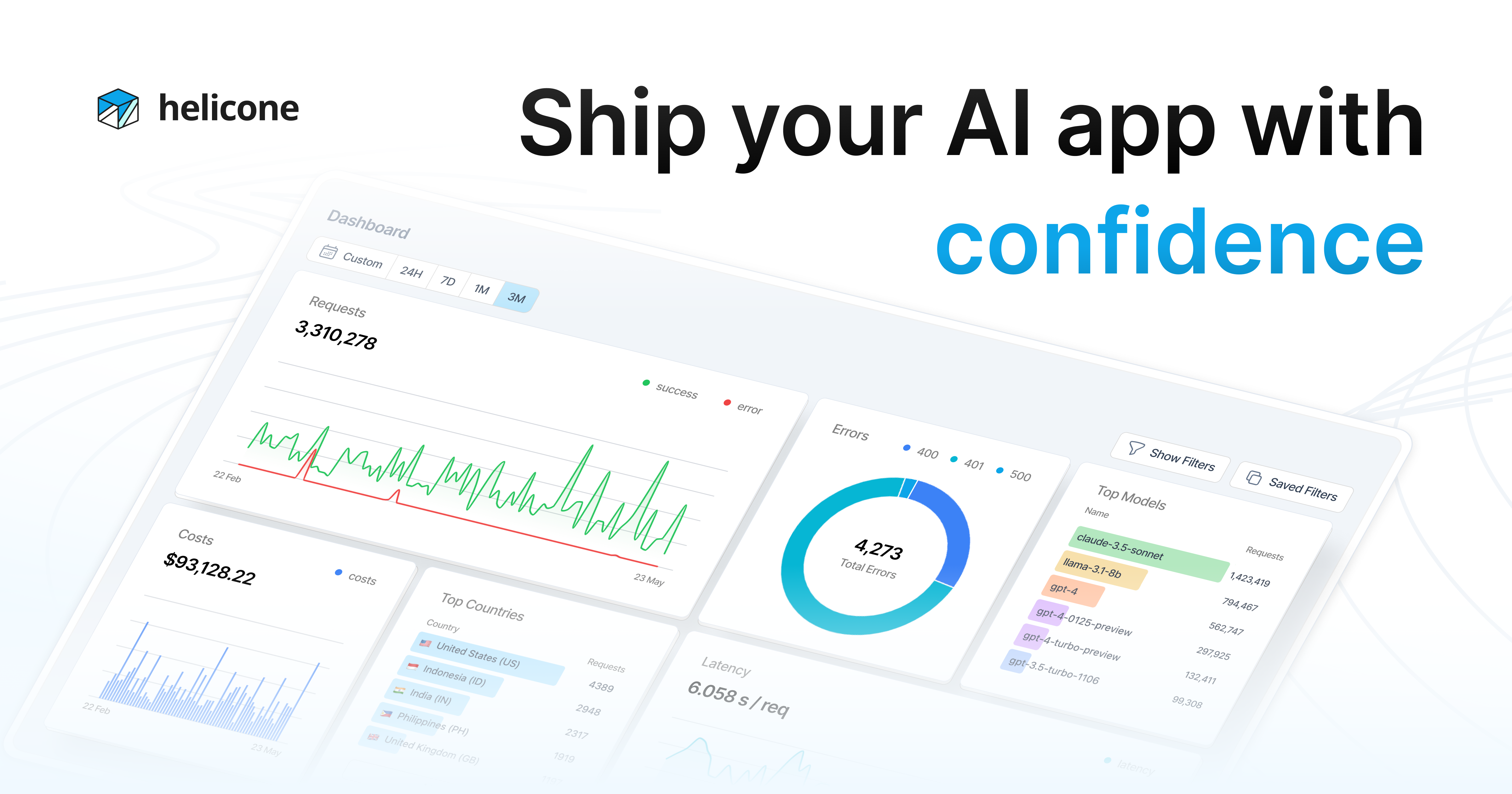
Helicone is the LLMOps platform powering the fastest-growing AI companies. It enables developers to route, debug, and analyze their AI applications with real-time observability, monitoring, and analytics. - LLM Observability: Real-time monitoring and debugging of LLM interactions. - AI Gateway: Route requests to multiple LLM providers seamlessly. - Analytics Dashboard: Track performance, usage, and costs across models. - Prompt Management: Store, version, and optimize AI prompts. - Rate Limiting & Alerts: Prevent abuse and get notified of anomalies. - Multi-Provider Support: Integrate with OpenAI, Anthropic, Azure, and more. - HQL (Helicone Query Language): Query and analyze AI interactions efficiently. - Datasets & Playground: Test and refine AI models with interactive tools. Helicone is open-source and can be self-hosted. It supports integration with major LLM providers and offers a cloud-based solution for ease of use. The platform is designed for scalability and reliability, making it suitable for both small projects and enterprise-level AI applications.

Open-source AI agent observability platform
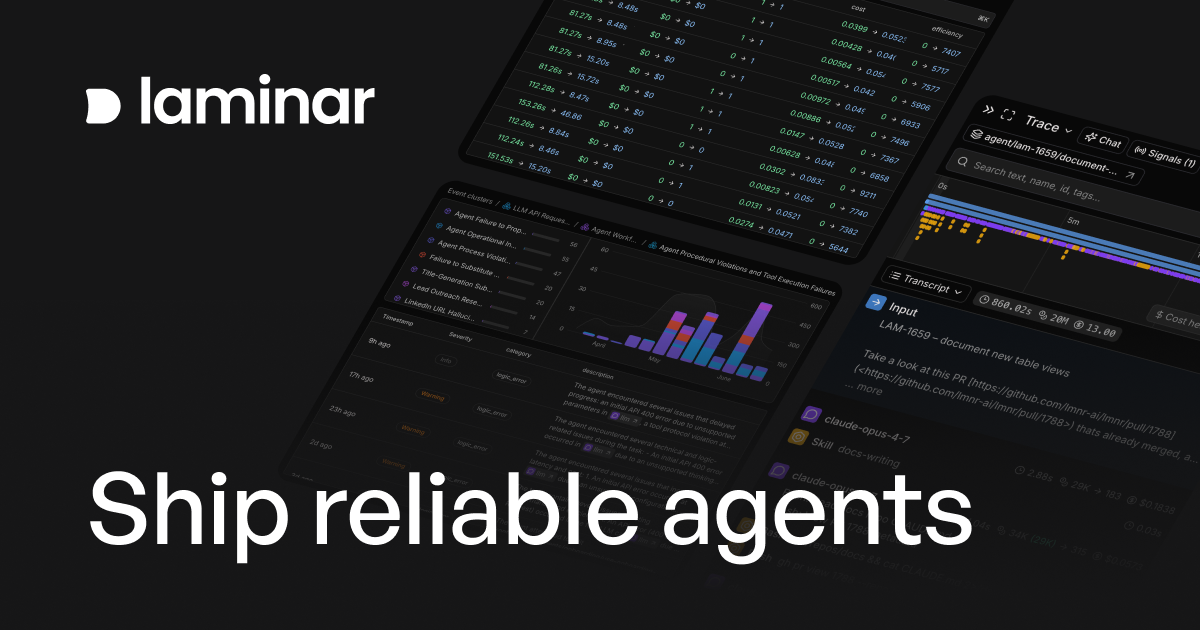
Laminar is an open-source platform designed to help developers trace, evaluate, and debug AI agents in production. It automatically captures agent interactions, costs, and failures, providing actionable insights to improve reliability. - Automated Tracing: Capture LLM calls, tool invocations, sub-agents, costs, and tokens in a readable transcript view. - Failure Detection: AI-powered Signals analyze every agent run to surface unexpected failure modes without manual configuration. - Signal Clustering: Group similar failures into patterns for high-level insights and trend analysis. - Real-time Alerts: Receive notifications in Slack about new failures and clusters. - Debugging Tools: Use the CLI and MCP to query traces, replay checkpoints, and verify fixes. - Cost & Performance Monitoring: Visualize agent costs and performance with heatmaps and detailed metrics. - Integration-Friendly: Works with popular AI frameworks and tools for seamless adoption. Laminar is open-source (Apache 2.0) and can be self-hosted. The platform supports Docker-based deployments and integrates with existing infrastructure. Documentation and setup guides are available on the official website.

Enterprise-grade AI gateway for LLM routing & governance
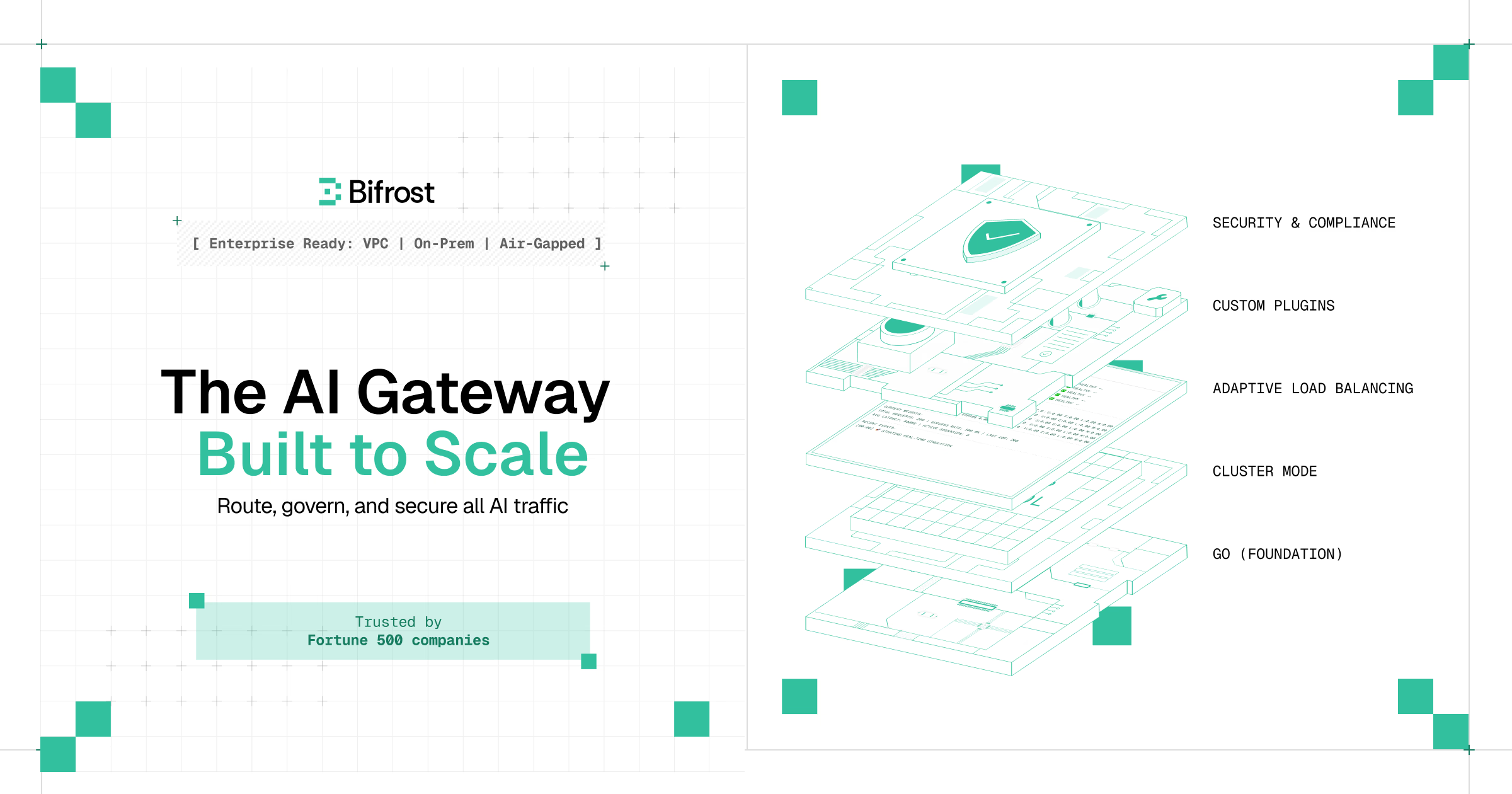
Bifrost is the fastest, most resilient enterprise-grade AI gateway designed for routing, governance, guardrails, and observability. Built for real-world scale, it provides a unified control plane to manage budgets, track audit logs, enforce access control via SSO, and protect models with real-time guardrails. - Ultra-low latency routing: 20 microseconds added latency and 5,000 requests/second throughput - Multi-provider support: Access 8+ providers and 1000+ AI models through a unified interface - Budgeting & cost control: Set spending limits and track costs across teams, projects, and models - Provider fallback: Automatic fallback to ensure high availability and reliability - MCP gateway: Built-in support for Model Context Protocol (MCP) to use tools within agents - Real-time guardrails: Blocks unsafe outputs, enforces compliance, and keeps agents secure - Audit & governance: Track audit logs and maintain access control via SSO - Drop-in replacement: Change just one line of code to work with OpenAI, Anthropic, Vercel AI SDK, LangChain, and more Bifrost is open-source and can be self-hosted. It supports deployment on any infrastructure and is compatible with all major AI SDKs. The project is available on GitHub and can be installed via npx @maximhq/bifrost.
Generative UI from Markdown for LLMs
MDMA is an open-source generative UI framework that extends Markdown with interactive components in fenced mdma blocks. It enables LLMs to return structured, validated, and renderable UI (forms, tables, approval gates) instead of free-form text or brittle JSON. The framework supports rendering in React, Vue, and React Native, and is designed to work efficiently with small, cost-effective models. - Markdown Extension: Define interactive components using fenced mdma blocks in Markdown. - Structured UI Output: LLMs generate validated, renderable UI components instead of unstructured text. - Multi-Framework Support: Render the same MDMA document in React, Vue 3, or React Native. - Ten Component Types: Includes forms, buttons, tasklists, tables, callouts, approval gates, webhooks, charts, thinking blocks, and custom components. - Validation & Linting: Static analysis with 17 lint rules and auto-fix capabilities. - State Management: Built-in state, bindings, audit logs, and policy enforcement. - Theming: Customizable themes for light, dark, or auto modes, with CSS variable overrides. - Streaming Support: Real-time rendering as the LLM streams responses, with skeleton loading for partial content. - Agent Integration: Stream MDMA documents over AG-UI protocol and route actions back into the agent run. - CLI & MCP Server: Tools for prompt building, validation, and serving specs to LLMs. MDMA is open-source and self-hostable. It consists of multiple small packages for parsing, validation, runtime, and rendering. The framework is designed to run on small, cost-effective models and supports self-hosting for full data control and privacy. The core packages include: - Parser: @mobile-reality/mdma-parser – Remark plugin for Markdown to MDMA AST conversion. - Validator: @mobile-reality/mdma-validator – Static analysis and linting. - Runtime: @mobile-reality/mdma-runtime – State management, bindings, and audit logs. - Renderers: React, Vue 3, and React Native renderers for cross-platform compatibility. - CLI: Tools for prompt building and validation. - MCP Server: Serves specs, prompts, and documentation to LLMs. The framework is built by Mobile Reality and is available under open-source licensing.

Open-source platform for building enterprise-grade agents
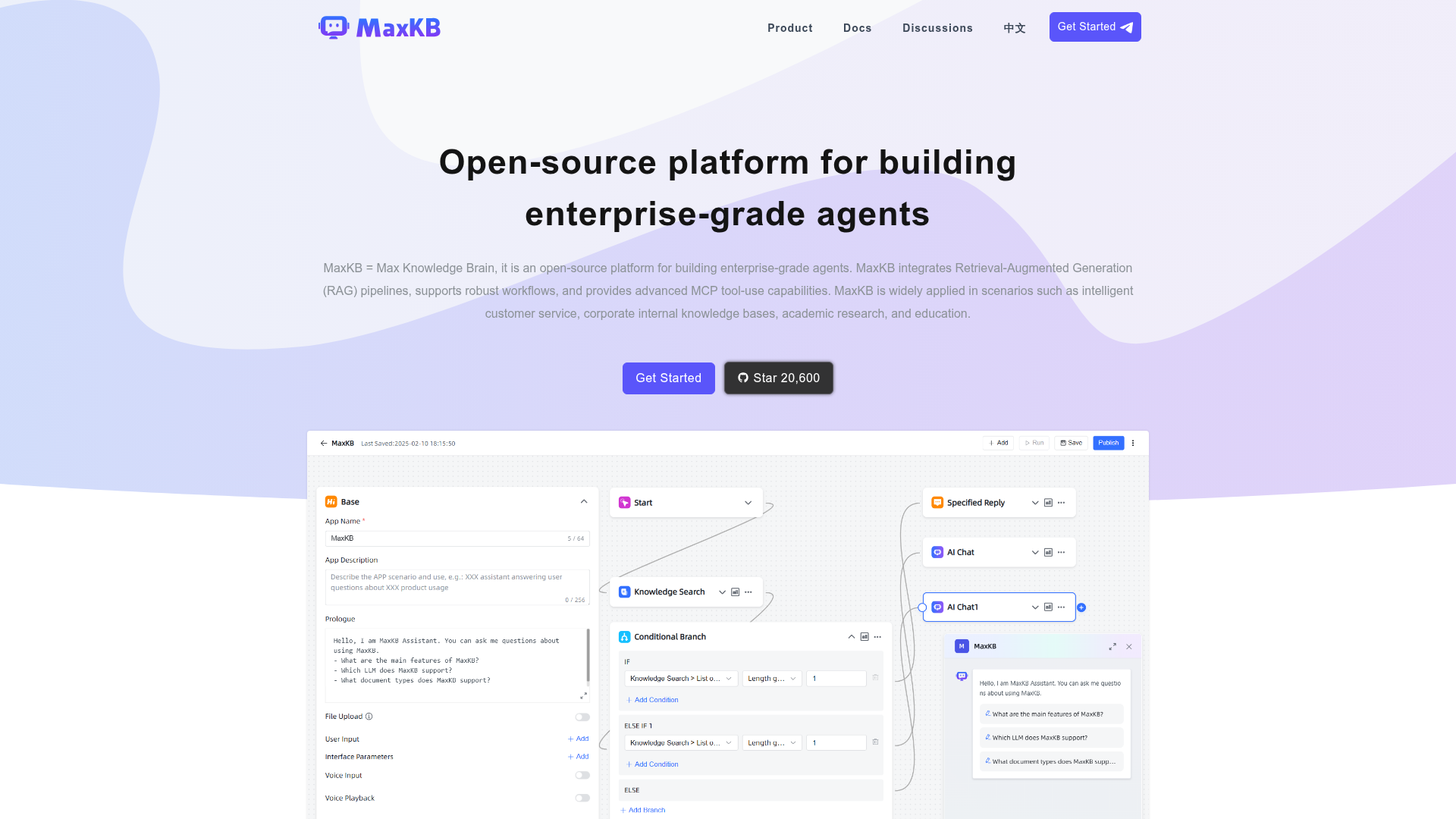
MaxKB (Max Knowledge Brain) is an open-source platform designed for building enterprise-grade AI agents. It integrates Retrieval-Augmented Generation (RAG) pipelines, supports robust workflows, and provides advanced MCP tool-use capabilities. - RAG Pipeline: Direct document uploads, automatic text splitting, vectorization, and RAG to reduce hallucinations and enhance smart Q&A interactions. - Agentic Workflow: Powerful workflow engine with function libraries and MCP tool-use for orchestrating complex AI processes. - Seamless Integration: Zero-coding integration into third-party business systems to quickly add intelligent Q&A capabilities. - Model-Agnostic: Supports various large models, including private (DeepSeek, Llama, Qwen) and public (OpenAI, Claude, Gemini) models. - Enterprise-Grade: Built for intelligent customer service, corporate knowledge bases, academic research, and education. MaxKB is open-source and can be self-hosted. It is developed by 1Panel, a Hong Kong-based company, and supports deployment flexibility across different environments.

Incremental data framework for AI agents
CocoIndex is an open-source incremental data framework designed to provide AI agents with continuously fresh context. It eliminates the need for re-processing entire datasets by tracking changes and updating only the affected portions, ensuring sub-second freshness at any scale. - Incremental Processing: Only re-indexes deltas, ensuring minimal processing overhead and sub-second freshness regardless of repository size. - Real-time Codebase Indexing: Maintains a live index of your codebase synchronized with every commit, providing structured context for coding and code-review agents. - Semantic Search: Enables agents to find code by meaning, patterns, and intent rather than string matches. - Call Graphs & Blast Radius Analysis: Visualizes dependencies and impact of changes before deployment, helping teams understand what a modification affects. - Global Repository View: Identifies duplicates and provides architectural insights across the entire codebase, not just individual files. - Persistent Data Pipeline: Features version tracking, caching, and lineage for reliable, explainable data transformations. - Multi-source Integration: Supports codebases, meeting notes, web APIs, file systems, databases, and more as input sources. - Python Native: Built with a Python API for easy integration and customization. CocoIndex is open-source and designed for self-hosting. It provides: - Control Plane: Manages persistent data pipelines, caching, and scheduling. - Version Tracking: Tracks changes in code, schema, and data end-to-end. - Observability: Monitors throughput, freshness, and cost metrics. - Failure Management: Implements retries, back-off strategies, and dead letter queues to ensure data integrity. The framework is optimized for low-latency, parallel processing and can scale to handle large repositories and complex data workflows. View examples | Documentation | Get started

Open-source workspace for building AI agents
Agenta is an open-source workspace designed for building, improving, and sharing AI agents. Whether you're working solo or with a team, Agenta provides the tools to create agents through natural language, refine them with feedback, and deploy them seamlessly. - Chat-based Agent Building: Create custom agents by describing tasks in plain language, eliminating the need for complex coding. - Feedback Loops: Continuously improve agents by collecting and integrating user feedback directly into their workflows. - Team Collaboration: Share agents with your entire team, enabling collaborative development and deployment. - Automation: Schedule agents to run at specific times or trigger them based on events, ensuring they work even when you're not active. - Multi-Model Support: Use self-hosted models or integrate with popular providers like Claude, ChatGPT, or others without changing your agent's code. - MCP & Tool Integration: Connect agents to over 20 tools and services, including GitHub, Slack, Linear, Notion, PostgreSQL, and more. - Pre-built Templates: Start with ready-to-use templates for engineering, customer support, sales, knowledge management, and operations. - Open Standards: Agents are defined by AGENTS.md files, skills, and MCP tools, allowing easy swapping of harnesses, models, or runtimes. Agenta is fully open-source and can be self-hosted on your own infrastructure. It supports local model runners, making it compatible with existing subscriptions like Claude or ChatGPT. The platform is designed for flexibility, allowing you to deploy agents in the cloud or on-premises based on your needs.

Open-source TypeScript AI agent framework for building adaptive autonomous agents

AgentOS is an open-source TypeScript framework for building production-ready autonomous AI agents with cognitive memory, multi-agent orchestration, and runtime tool generation. It supports 11 LLM providers and achieves 85.6% on LongMemEval-S benchmarks. Built by Frame.dev. - Cognitive Memory: Neuroscience-grounded memory system with Ebbinghaus decay and reconsolidation - Runtime Tool Generation: Agents dynamically write and approve their own TypeScript functions mid-task - Multi-Agent Orchestration: Supports specialist spawning and hierarchical agent coordination - 11 LLM Providers: Compatibility with multiple language models for flexibility - AI Guardrails: Built-in safety mechanisms for production deployments - Multimodal RAG: Supports retrieval-augmented generation across different data types - Voice Pipelines: Integration for voice-based agent interactions - Type-Safe Alternative: Designed as a type-safe alternative to LangGraph, CrewAI, Mastra, and AutoGen - Benchmark Performance: 85.6% on LongMemEval-S (0.4% behind top closed-source SaaS) - License: Apache 2.0 - Runtime: TypeScript/JavaScript - Deployment: Self-hosted on your infrastructure - Workbench: Official desktop application for visual agent building and management - Community: Active Discord community (Wilds AI) for support and collaboration

Build and deploy enterprise-grade AI agents
Gemini Enterprise Agent Platform is Google Cloud's comprehensive platform for developers to build, scale, govern, and optimize enterprise-grade AI agents. It provides a single destination for technical teams to transform enterprise applications and workflows into powerful agentic systems. - Unified Agent Development: Build, scale, and govern AI agents with enterprise-grade tools - Model Selection: Access 200+ Google and third-party AI models including Gemini 3.5, Anthropic's Claude, and open models like Gemma - Model Customization: Train, test, and tune ML models with enterprise-grade evaluation tools - Workflow Orchestration: Deploy multiple agents to execute complex workflows like product launches - Governance & Security: Securely register, manage, and govern custom-built agents - Antigravity Integration: Centralized app for steering, customizing, and orchestrating agents - Production Deployment: Deploy models for production use with built-in scaling capabilities - Data Integration: Accelerate agent development with unified data and AI capabilities Gemini Enterprise Agent Platform is a fully managed cloud service provided by Google Cloud. It does not require self-hosting as it operates as a SaaS platform with enterprise-grade infrastructure, security, and compliance features. The platform is designed for global scale and includes built-in governance, security, and optimization tools. For developers looking to extend functionality, Google provides sample code, notebooks, and documentation through their GitHub repository (https://github.com/GoogleCloudPlatform/vertex-ai-samples/).

Enterprise-grade AI gateway for LLM routing and governance
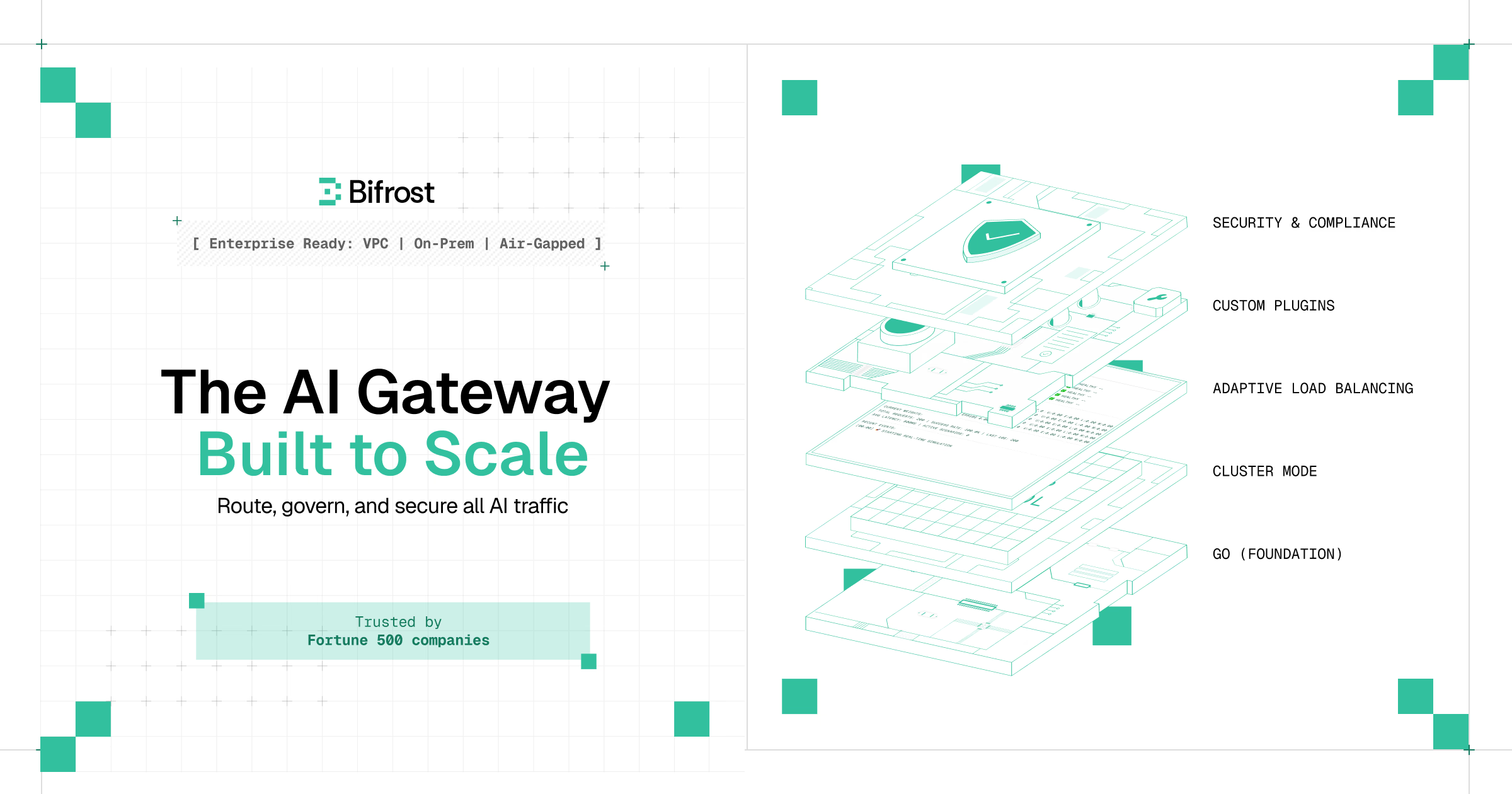
Bifrost is the fastest, most resilient enterprise-grade AI gateway for routing, governance, guardrails, and observability. Built for real-world scale, it provides a unified control plane to manage LLM, MCP, and agent workflows with drop-in compatibility for all major AI SDKs. - Ultra-low latency routing: 20 microseconds added latency and 5,000 req/s throughput - Multi-provider support: Access 8+ providers and 1000+ AI models through a unified interface - Governance & budgeting: Set spending limits, track costs, and enforce access control via SSO - Guardrails & security: Real-time model protection to block unsafe outputs and maintain compliance - MCP gateway integration: Built-in support for Model Context Protocol (MCP) tools - Observability: Comprehensive monitoring and audit logging for production environments - Drop-in replacement: Compatible with OpenAI, Anthropic, Vercel AI SDK, LangChain, and more - Enterprise scalability: Designed for high-volume production workloads with 99.9% uptime Bifrost is open source and can be self-hosted via Docker or deployed through Maxim's managed service. The open-source version includes all core features, while the enterprise edition adds advanced governance, budgeting, and support for custom models. Quick setup with a single line of code change to replace existing AI SDKs.
About LangChain
LangChain provides the tools to build, deploy, and govern AI agents at scale. Control model calls, monitor performance, and improve agents autonomously with an open agent engineering platform.
Key Features of LangChain
- Agent Improvement: Autonomous agent optimization with LangSmith Engine
- Observability: Real-time monitoring of agent actions and decisions
- Evaluation: Performance scoring and improvement tracking
- Deployment: Production-ready agent scaling and management
- Sandboxes: Secure execution of agent-generated code
- LLM Gateway: Centralized control over agent model calls
- No-Code Agents: Fleet for company-wide agent deployment
- Open Source Frameworks: langchain, langgraph, and deepagents for flexible agent development
- Coding Agent: dcode for AI-powered software development
Tech / Self-Hosting
LangChain offers cloud-based and self-hosted deployment options. The platform supports integration with various model providers and provides SDKs for Python, JavaScript, and other languages. Self-hosting is possible through LangSmith's infrastructure components.