4 Best Open Source InVision Alternatives
A curated collection of the 4 best open source and self-hosted alternatives to InVision in 2026.
Looking for a free, privacy-friendly, or self-hosted replacement for InVision in 2026? The top open-source alternative is Excalidraw — Virtual whiteboard for sketching diagrams, flowcharts, and wireframes with a distinctive hand-drawn look. Real-time collaboration built in..
Other highly rated open-source InVision alternatives include Penpot, Tldraw and Quant-UX.
Virtual whiteboard for sketching diagrams, flowcharts, and wireframes with a distinctive hand-drawn look. Real-time collaboration built in.
Virtual whiteboard for sketching diagrams, flowcharts, and wireframes with a distinctive hand-drawn look. Real-time collaboration built in.

Open-source design platform for teams
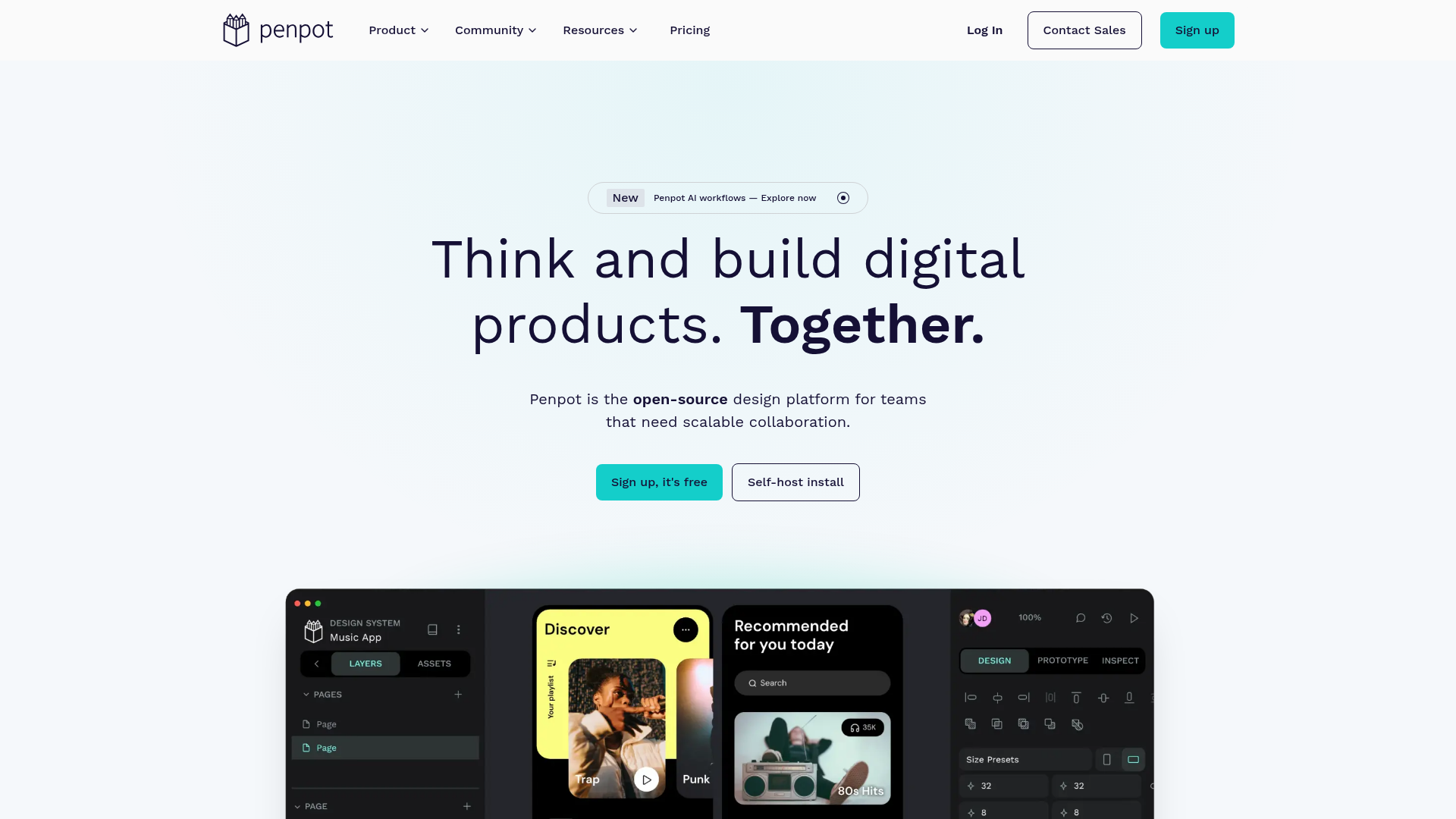
Penpot is the open-source design platform for teams building digital products at scale, enabling deeper collaboration across design, code, and AI workflows. - Full-stack design: Create responsive interfaces with wireframes, prototypes, and CSS Grid/Flex layouts - Design systems: Build scalable visual frameworks with components, design tokens, and shared libraries - AI workflows: Integrate any LLM or AI tooling directly into Penpot for code-to-design and design-to-code workflows - Code inspection: Work with open standards like CSS, HTML, SVG, and JSON with matching design-to-code output - Real-time collaboration: Design, review, and iterate together with team members in real-time - Self-hosting: Deploy Penpot on your own infrastructure for full data control - Cross-platform: Browser-based with no installation required, works on any device Penpot is built with Clojure and runs as a web application that can be self-hosted using Docker or Kubernetes. The platform supports PostgreSQL for data storage and Redis for caching. Self-hosting documentation is available at penpot.app/self-host.

Free instant collaborative whiteboard for all devices
tldraw is a free, instant virtual whiteboarding tool designed for seamless online collaboration without requiring user signups. Built to work across all devices—mobile, tablets, and desktops—it provides a simple yet powerful canvas for brainstorming, planning, and visual collaboration. - Instant Collaboration: Real-time multi-user editing with no signup required. - Cross-Platform Support: Fully functional on mobile, tablet, and desktop devices. - No Installation Needed: Access directly from your browser with zero setup. - Simple & Intuitive: Clean, user-friendly interface for quick adoption. - SDK for Developers: Build custom whiteboard experiences with the tldraw SDK. - Privacy-First: No forced account creation or tracking by default. tldraw is primarily a web-based SaaS application, but developers can leverage the tldraw SDK to build custom whiteboard solutions. The SDK enables self-hosting and integration into existing applications. The core library is open source under the MIT license, allowing for extensive customization and deployment flexibility.

Open source UX design and user testing tool
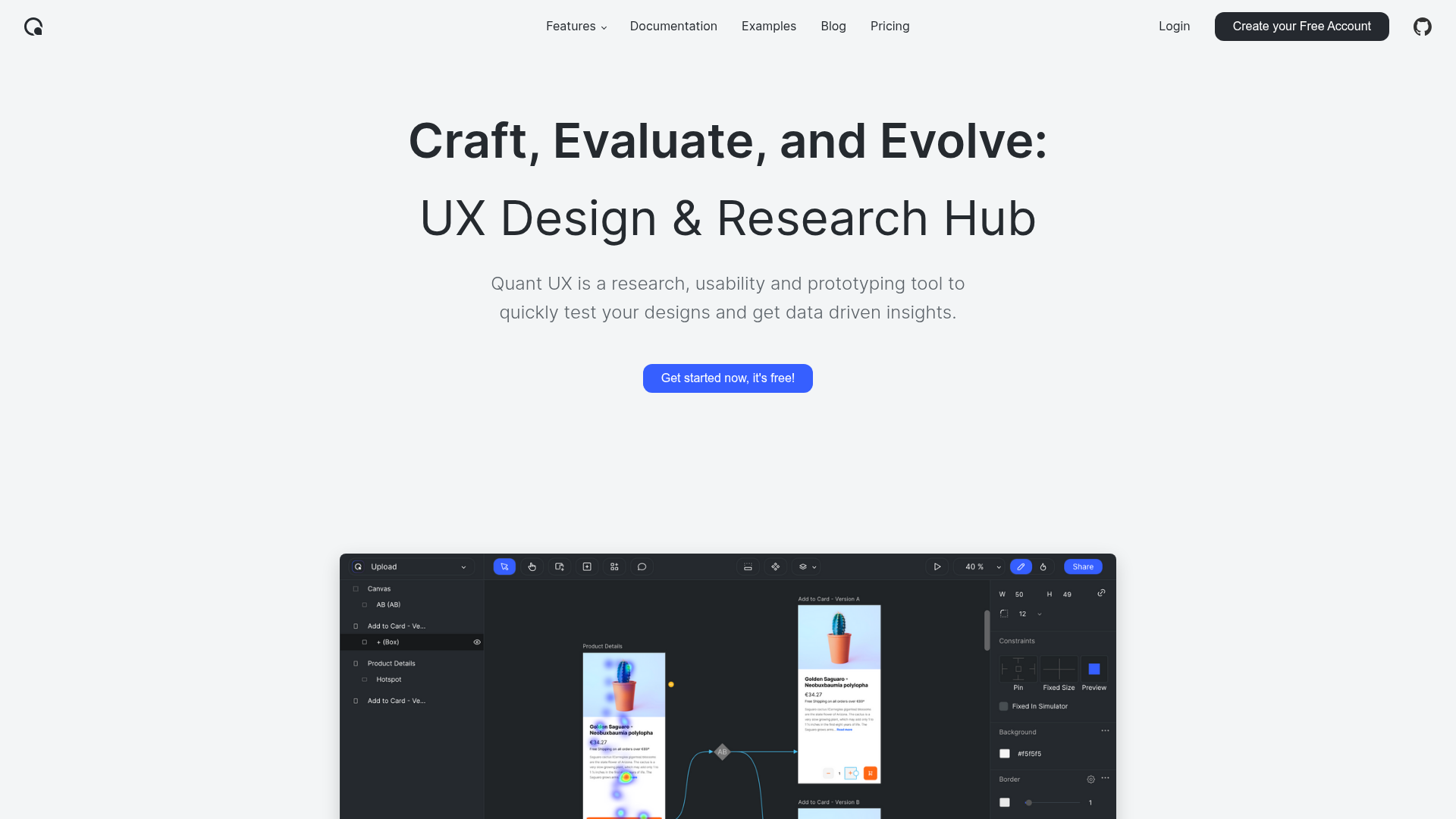
Quant-UX is a comprehensive, open-source tool for UX design and user research. It combines prototyping, user testing, and analytics into a single platform, enabling designers and researchers to quickly validate ideas and gather actionable insights. - Visual Prototyping: Create interactive prototypes with a drag-and-drop editor, animations, logic flows, and form validation. Build scalable design systems using components and master screens. - User Testing: Conduct usability tests by sharing a link with your audience. Define tasks, record screen sessions, and perform A/B testing to compare different prototype versions. - Automated Analytics: Generate heatmaps, success rates, drop-off analysis, and task completion metrics automatically. Embed surveys to collect direct user feedback. - AI Assistant: Enhance workflows with an AI assistant that simplifies repetitive tasks and accelerates prototyping. - Cross-Platform Testing: Test prototypes on mobile devices using QR codes or direct links, ensuring seamless user experience across devices. - Data-Driven Insights: Automatically compute KPIs and visualize insights in an intuitive analytics canvas for informed decision-making. Quant-UX is open-source and can be self-hosted for full control over data and infrastructure. The project is built with modern web technologies and supports deployment on various platforms. For more details, visit the GitHub repository.
About InVision
Miro is a visual collaboration platform designed to help teams think, plan, and build together in a shared workspace. It combines AI-powered tools with flexible formats like whiteboards, diagrams, and flowcharts to streamline product development from ideation to launch.
Key Features of InVision
- Intelligent Canvas™: AI-enhanced collaborative workspace for real-time teamwork
- AI Workflows: Automate repetitive tasks and generate insights with AI
- Prototyping & Wireframing: Create interactive prototypes and wireframes
- Flows: Visualize and map workflows with AI assistance
- Blueprints: Structured templates for strategic planning
- Integrations: Connect with 160+ tools and platforms
- Enterprise Guard: Advanced security and compliance features
- MCP Server: Integration with AI model context protocol for enhanced AI capabilities
- AI Playbooks: Pre-built workflows for common use cases
Tech / Self-Hosting
Miro is a cloud-based SaaS platform with no self-hosting option. It offers enterprise-grade security, GDPR compliance, and SOC 2 Type II certification. The platform is built for scalability and supports teams of all sizes with customizable plans.