17 Best Open Source Contentful Alternatives
A curated collection of the 17 best open source and self-hosted alternatives to Contentful in 2026.
Looking for a free, privacy-friendly, or self-hosted replacement for Contentful in 2026? The top open-source alternative is Strapi — Open-source headless CMS for content APIs.
Other highly rated open-source Contentful alternatives include Payload, Directus and WordPress.

Open-source headless CMS for content APIs
Strapi is an open-source, JavaScript/TypeScript-based headless CMS designed to empower developers and content creators. It provides a flexible, framework-like environment to build, customize, and scale content-driven applications. - Content Type Builder: Design and manage content models with a no-code interface, generating REST and GraphQL APIs instantly. - Custom Fields & Components: Extend content structures with reusable blocks and custom field types to fit any project's needs. - Full Customization: Write custom backend logic (controllers, services, middleware) and reshape the admin panel for complete control. - Plugin Marketplace: Access a rich ecosystem of plugins and integrations to extend functionality without building from scratch. - Self-Hosting & Cloud Deployment: Deploy on your own infrastructure or use Strapi Cloud for a managed experience with Postgres, CDN, and email included. - Scalability: Built to handle growth with edge caching, database flexibility, and framework-level performance. - Community & Enterprise Support: Backed by a vibrant developer community and enterprise-ready features for large-scale deployments. - AI-Powered Workflows: Integrate with AI agents via the Strapi MCP server for automated content management. Strapi is a Node.js application with MIT licensing, allowing full ownership of code, data, and infrastructure. It supports self-hosting on any server or cloud provider, ensuring data residency and compliance control. Strapi Cloud provides a managed deployment option with optimized infrastructure. The platform is GDPR-compliant and designed for scalability across teams of all sizes.

Open-source headless CMS and app framework
Payload is an open-source headless CMS and application framework built with TypeScript and React. Designed for developers who want full control and marketers who need an intuitive interface, Payload simplifies content infrastructure while enabling the creation of custom applications. - Headless CMS: Manage content with a flexible, code-first approach - Enterprise App Builder: Build custom applications with full backend capabilities - Headless E-Commerce: Power online stores with customizable product management - Digital Asset Management: Organize and serve media assets efficiently - Multi-Tenancy: Support multiple projects or clients from a single instance - Localization: Manage content in multiple languages and regions - Access Control: Fine-grained permissions and user management - Authentication: Built-in auth system with SSO support - White Label: Customize the admin panel to match your brand - Live Preview: Real-time content previews before publishing - Enterprise Features: SSO, AI auto-embedding, publishing workflows, and visual editor (Enterprise plan) Payload is a self-hosted solution that runs on Node.js and Next.js. It can be deployed on any platform supporting Node applications, including Vercel, AWS, or self-managed servers. The framework is designed for developers who prefer code-based customization over configuration-heavy solutions. Full TypeScript support ensures type safety throughout the development process. Deployment options: - Self-hosted (Node.js/Next.js) - Vercel integration - Docker support - Cloud-agnostic Tech stack: - TypeScript - React - Next.js - Node.js - MongoDB (default) or any database via adapters

Open source headless CMS & backend platform
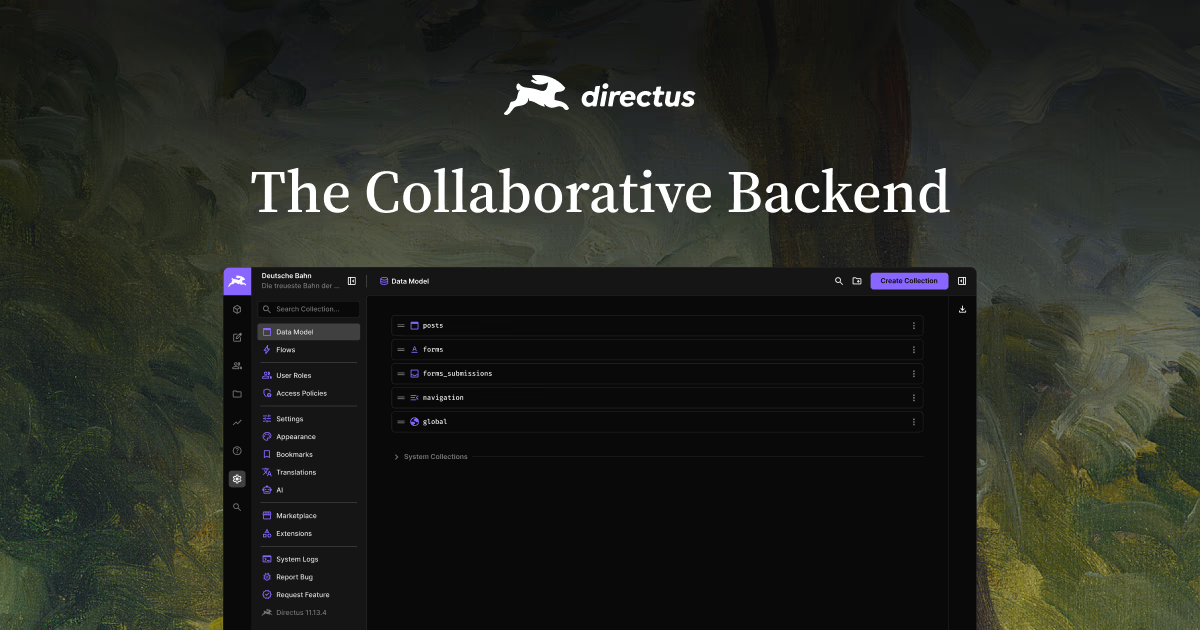
Directus is an open-source backend platform that connects to any SQL database, instantly generating REST and GraphQL APIs while providing a no-code admin interface. It includes native MCP server support for AI tools like Claude, ChatGPT, and Cursor, enabling teams to work collaboratively on their data without tickets or manual processes. - Instant APIs: Automatically generates production-ready REST and GraphQL APIs from your database schema - No-Code Admin Interface: Full-featured CMS with digital asset management, dashboards, and visual editing - AI Integration: Native MCP server for connecting AI assistants directly to your live data with role-based access control - Self-Hosting: Deploy on your own infrastructure or use Directus Cloud - Real-Time Updates: WebSocket subscriptions for live data changes and collaborative editing - Multi-Team Workspace: Separate interfaces and permissions for content, development, and operations teams - Reusable Blocks: Many-to-any relationships for creating modular content structures - Built-in AI Assistant: Conversational AI embedded in the Studio for content operations - Database Agnostic: Works with PostgreSQL, MySQL, SQLite, SQL Server, Oracle, and more - Self-Hosting: Docker, Node.js, or direct deployment options available - MCP Server: Native integration with Claude Desktop, Cursor, ChatGPT, and other MCP-compatible tools - Cloud Hosting: Directus Cloud available for managed deployments - Extensible: Plugin architecture for adding custom functionality and integrations

Open source website builder and CMS
WordPress is the world's most popular open-source content management system (CMS) and website builder. Used by millions of websites worldwide—from personal blogs to enterprise platforms—WordPress combines flexibility, ease of use, and a vast ecosystem of themes and plugins. - Design Flexibility: Create any website with block-based editing, themes, and customizable layouts without coding - Extensible with Plugins: Add functionality through thousands of free plugins for e-commerce, SEO, forms, and more - Block Editor (Gutenberg): Modern drag-and-drop editor for content creation and site design - Themes: Choose from thousands of free and premium themes or build your own - Community & Support: Access extensive documentation, forums, and learning resources - Self-Hosted: Full control over your data and hosting environment - Multilingual Support: Build websites in multiple languages - SEO Optimized: Built-in tools and plugins to improve search engine visibility WordPress is a self-hosted PHP/MySQL application that can be deployed on any web server. It requires: - Hosting: Any PHP 7.4+ compatible hosting provider (shared, VPS, or dedicated) - Database: MySQL 5.7+ or MariaDB 10.2+ - Server: Apache or Nginx recommended - PHP: Version 7.4 or higher - Installation: One-click installers available on most hosting platforms The software is fully open-source under the GPLv2 license and can be self-hosted on any infrastructure, including cloud providers, VPS, or local servers.

GitHub-powered visual editor for Markdown content
TinaCMS is a GitHub-powered headless CMS with a visual editor designed for Markdown content. It bridges the gap between developers and content creators by providing an intuitive interface to edit, preview, and manage content directly from your Git repository. - Visual Editor: Edit Markdown content in a user-friendly interface without leaving your Git workflow. - Git Integration: Seamlessly syncs with GitHub, enabling version control and collaboration. - Markdown Support: Works natively with Markdown files for easy content creation and editing. - Dynamic & Static Sites: Supports both static site generators and dynamic applications. - Customizable: Highly extensible with plugins and custom components to fit your project needs. - TinaCloud: Optional cloud hosting for easier deployment and management. - Developer-Friendly: Built for developers who love great UX and workflow efficiency. - Open Source: Core features are open source, with optional enterprise features available. TinaCMS is open source and can be self-hosted. It integrates with GitHub, GitLab, or other Git providers. For cloud-based solutions, TinaCloud offers managed hosting with additional features like enterprise support and scalability. - Self-Hosted: Yes (via Git integration) - Tech Stack: JavaScript/TypeScript, React, Next.js - Deployment: Self-hosted or via TinaCloud - Hosting Requirements: Node.js environment, Git repository

Superpowered Node.js Headless CMS for developers

KeystoneJS is a programmable open-source GraphQL API backend designed for structured content projects. It helps developers build faster and scale further than traditional CMS or app frameworks by allowing you to describe your schema and automatically generating a powerful GraphQL API and beautiful Management UI. - Schema-first development: Define your data models with TypeScript or JavaScript and get automatic GraphQL API scaffolding - Built-in Admin UI: Intuitive content management interface that respects your access control rules - TypeScript support: Full TypeScript integration for type-safe development - Access control: Fine-grained permissions and session management out of the box - Database migrations: Automatic migrations via Prisma integration - Relational data: Support for complex data relationships and queries - Custom logic: Add bespoke business logic and event hooks to your API - Field types: 100+ primitive and advanced field types including rich text, relationships, and custom components - CRUD scaffolding: Automatic create, read, update, and delete operations - Powerful filters: Advanced filtering, sorting, and pagination capabilities KeystoneJS is a self-hosted solution that runs on Node.js. It requires a database backend (typically PostgreSQL) and can be deployed to any Node.js hosting environment. The project is open source under the MIT license and welcomes community contributions. Enterprise support and services are available through Thinkmill, the company behind KeystoneJS.

Visual development platform for React, Vue, Svelte, Qwik
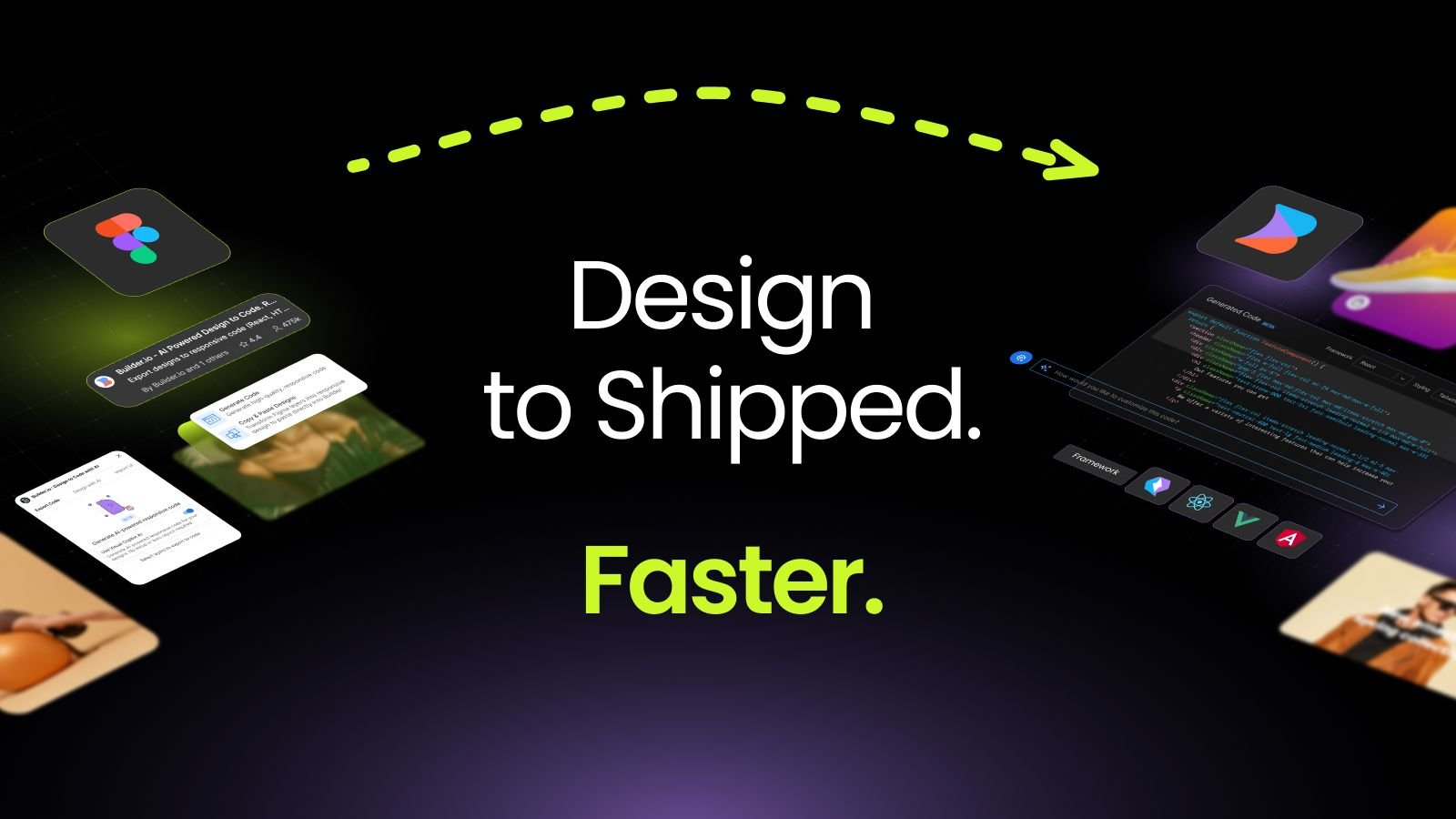
Builder.io is a visual development platform that allows developers and designers to create, edit, and deploy websites and applications without writing code. It supports modern frameworks including React, Vue, Svelte, and Qwik, making it ideal for teams looking to accelerate development while maintaining flexibility. - Drag-and-Drop Interface: Build pages visually with an intuitive drag-and-drop editor. - Multi-Framework Support: Compatible with React, Vue, Svelte, Qwik, and more. - Real-Time Collaboration: Enable teams to collaborate seamlessly on projects. - Content Management: Integrate with any CMS or use Builder.io's built-in content management system. - Performance Optimized: Deliver fast-loading, optimized websites with built-in performance tools. - Custom Components: Extend functionality with custom components and integrations. - Deployment Flexibility: Deploy to any hosting provider or use Builder.io's hosting solutions. - SEO-Friendly: Built-in tools to ensure your site is search engine optimized. Builder.io is primarily a cloud-based platform, but it offers self-hosting options for enterprise customers. The open-source core (Builder) can be self-hosted, providing full control over data and infrastructure. The platform is built with modern web technologies and supports deployment on various cloud providers.

Open-source AI-programmable headless CMS
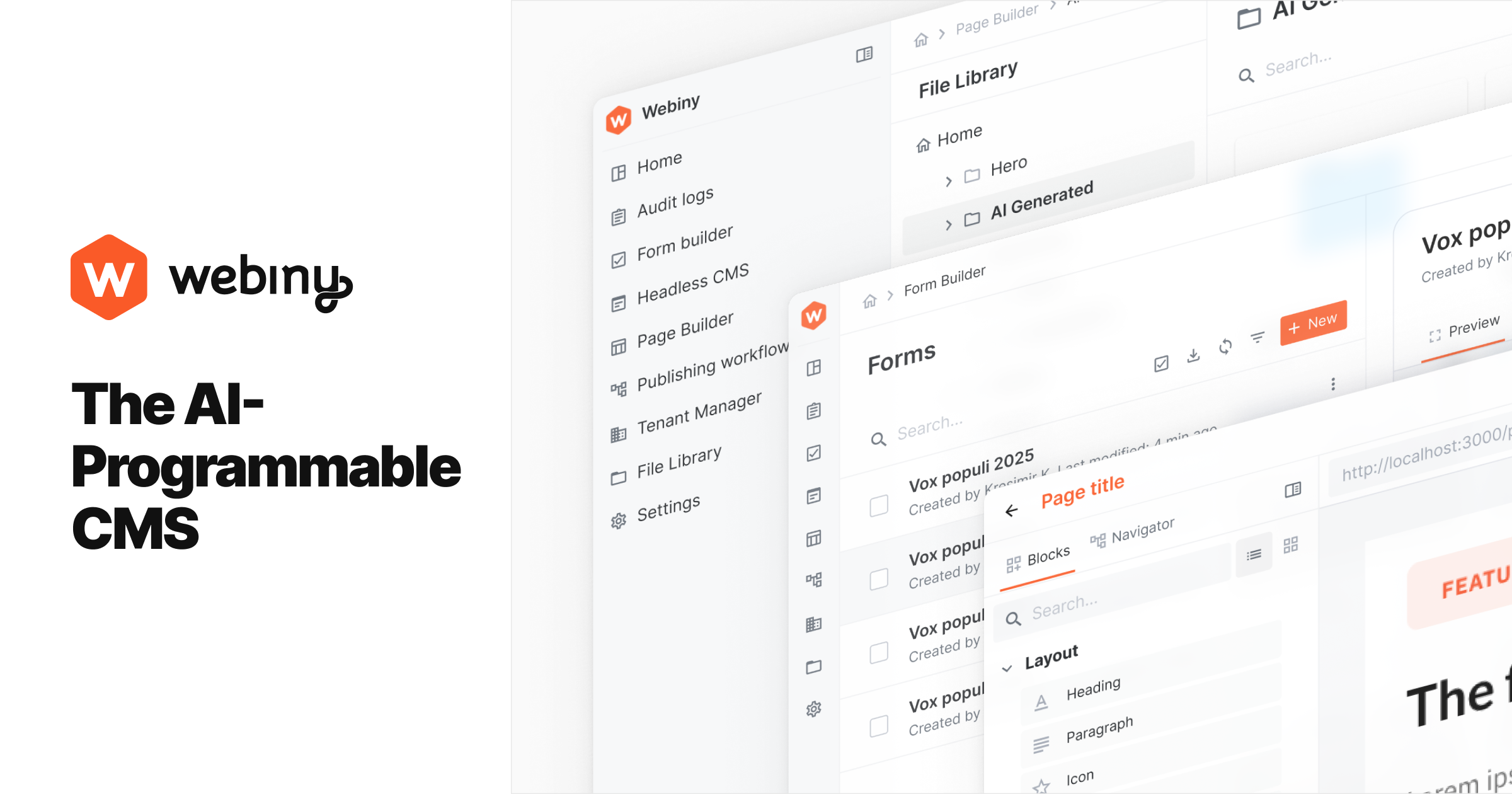
Webiny is an open-source, self-hosted headless CMS platform designed for enterprise scale. It empowers developers to use AI not just for content generation, but to build and extend the CMS itself through programmable workflows and APIs. - AI-Programmable CMS: Build APIs, automate workflows, and extend the platform using AI prompts via MCP server, not just generate content. - Ready-Made Apps: Includes Headless CMS, Website Builder, and File Manager out of the box for immediate customization. - Multi-Tenant Architecture: Supports global publishing, embedded builders, and large-scale content operations with full control. - Self-Hosted or Managed: Deploy on your own infrastructure or use managed services with no vendor lock-in. - TypeScript & React: Built with modern web technologies, delivering to Next.js, Nuxt, or any frontend. - Enterprise-Grade Scalability: Powers projects with hundreds of millions of records, petabytes of assets, and demanding security requirements. - Advanced Permissions & Security: Role-based access control, built-in point-in-time recovery, and compliance-ready infrastructure. - Serverless Infrastructure: Scales seamlessly with serverless architecture, ensuring zero downtime and high performance. - Open Source: Available under MIT License on GitHub. - Self-Hosting: Deploy on AWS, Kubernetes, or other cloud/on-premise infrastructure. - Tech Stack: TypeScript, React, GraphQL, AWS Native (serverless), and modern frontend frameworks. - Documentation: Comprehensive guides and tutorials at webiny.com/learn. - Community & Support: Active open-source community with 24/7 enterprise support options.
Open source content management framework

Drupal is a powerful open-source content management framework designed for building websites, applications, and digital experiences. It provides a flexible and modular architecture that allows developers to create custom solutions tailored to specific needs. - Modular Architecture: Extensible with thousands of modules for custom functionality. - Scalability: Handles high-traffic websites and complex applications efficiently. - Security: Robust security features with regular updates and a dedicated security team. - Multilingual Support: Built-in tools for creating multilingual websites. - Community-Driven: Large, active community contributing to continuous improvement. - API-First: Supports RESTful and GraphQL APIs for headless applications. - Accessibility: Compliance with WCAG and other accessibility standards. - Content Workflows: Advanced content management and workflow capabilities. Drupal is a self-hosted solution that can be deployed on any web server with PHP and MySQL/PostgreSQL support. It is highly customizable and can be optimized for performance, security, and scalability based on specific requirements.

Flexible flat-file CMS built on Laravel
Statamic is a flat-file CMS built on Laravel that eliminates the complexity of traditional database-driven systems. It offers an award-winning user experience, a vibrant community, and all the power of Laravel at your fingertips. - Flat-file architecture: No database required, making setup and maintenance simpler. - Laravel integration: Leverage Laravel’s ecosystem, tools, and performance. - Award-winning UI: Intuitive control panel designed for content editors and developers alike. - Extensible: Customize with addons, starter kits, and marketplace integrations. - Developer-friendly: Full access to Laravel’s features, including Eloquent, Blade, and more. - Scalable: Powers everything from personal blogs to enterprise websites. - Community & support: Active Discord, documentation, and customer stories. - Marketplace: Access to addons, starter kits, and professional services. Statamic is a self-hosted solution that can be deployed on any server or cloud platform. It requires PHP and Laravel, making it compatible with most hosting environments. The open-source core (available on GitHub) allows for full customization and self-hosting flexibility.

Open source CMS toolkit for Laravel
Twill is an open-source CMS toolkit designed for Laravel, enabling rapid development of custom admin consoles that are intuitive, powerful, and flexible. Built by AREA 17, it balances convention with configuration, ensuring design integrity while giving teams full creative freedom. - Intuitive Publishing: Streamlined content authoring and curation with personalized workflows for publishers. - Design Controls: Built-in tools to maintain design system integrity without restricting creativity. - Developer-Friendly: Encourages clean code, no data lock-in, and supports both headed and headless setups. - Collaborative Workflows: Multi-level permissions, activity tracking, and content scheduling for teams. - Media Management: High-resolution media library with smart cropping and drag-and-drop features. - Multi-Language Support: Built-in localization for global content management. - CLI Generator: Simplifies common tasks with command-line tools. - Extensible: Modular architecture allows customization to fit specific project needs. Twill is built on Laravel and requires PHP 8.1+ and MySQL 5.7+ or PostgreSQL 12+. It supports self-hosting on any server with these requirements and can be deployed via Composer. The project is open-source under the MIT license and actively maintained on GitHub. View the demo to explore its capabilities.

Flexible CMS for custom digital experiences
Craft CMS is a flexible, user-friendly content management system that empowers creators to build custom digital experiences. Designed for content-first workflows, it offers a clean interface, customizable entry types, and robust developer tools. - Content Creation: Intuitive interface with customizable entry types and live preview capabilities - Content Strategy: Content-first approach with flexible content modeling and organization - Design & Development: Supports both Twig templates and decoupled frontends with self-generating GraphQL API - Ecommerce: Craft Commerce provides flexible, customizable store-building capabilities - Security & Support: Enterprise-grade security with available support plans and SLAs - Extensibility: Plugin store with thousands of extensions and integrations - Accessibility: Built with accessibility in mind, including comprehensive accessibility reports Craft CMS is open-source software that can be self-hosted on any PHP/MySQL compatible server. It also offers managed hosting through Craft Cloud for simplified deployment and maintenance. The system is GDPR compliant and designed with data privacy in mind.

Open source drag-and-drop CMS and eCommerce builder
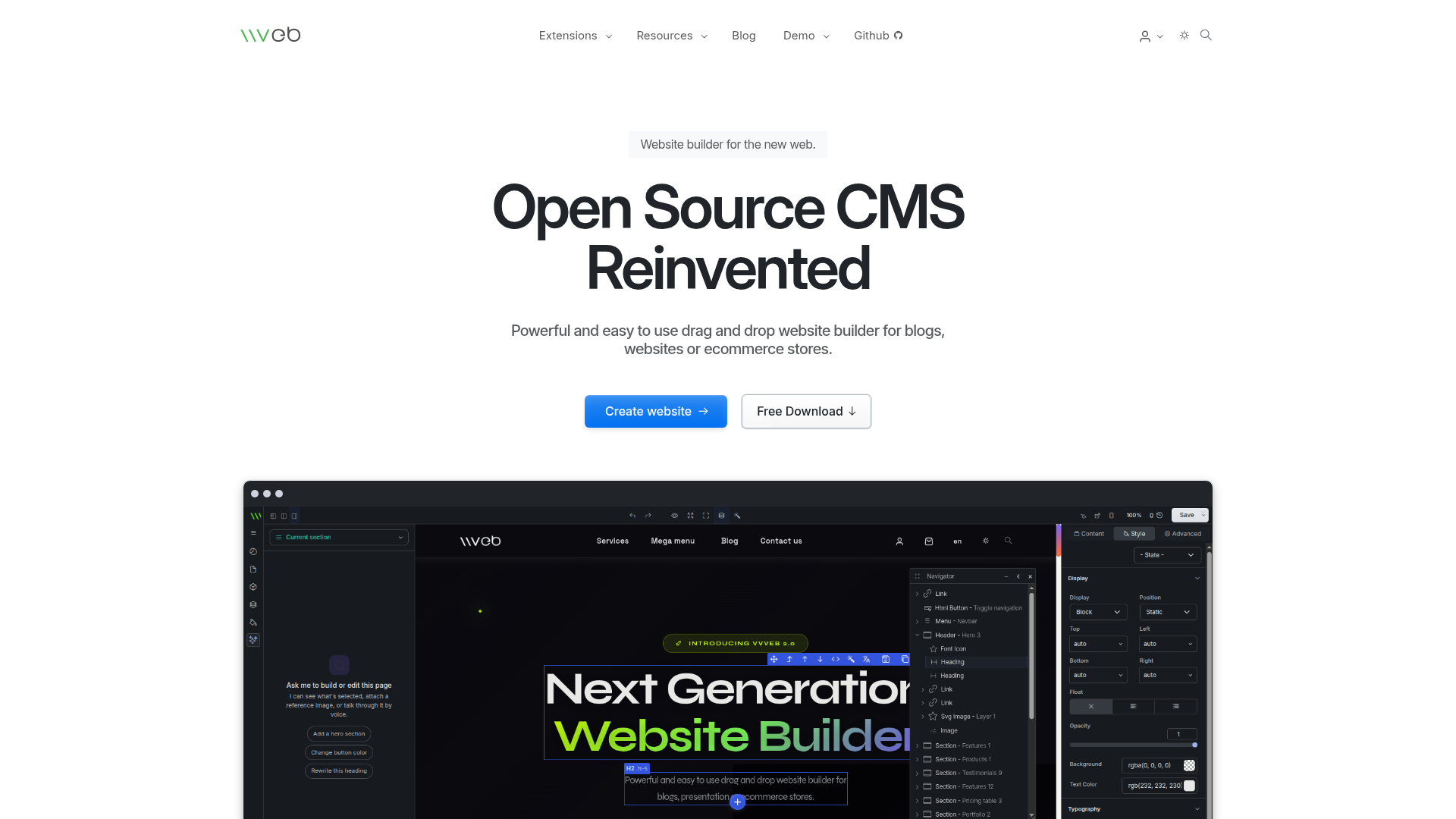
Vvveb is an open-source CMS and eCommerce platform designed for simplicity and power. It offers a drag-and-drop page builder with real WYSIWYG editing, allowing users to customize any page or element without limitations. The platform supports traditional and headless CMS modes, providing both GraphQL and REST APIs for seamless integration. - Drag-and-Drop Page Builder: Real WYSIWYG editor with unlimited customization options for pages and elements. - Hybrid Headless CMS: Supports both traditional and headless CMS modes with GraphQL and REST APIs. - Advanced Security: Custom admin login paths, SQL injection protection, document root isolation, integrity checks, and 2FA authentication. - Ecommerce Capabilities: Full-featured online store functionality with multiple payment methods. - Multi-Language & Multi-Currency Support: Publish content in multiple languages and sell globally with language packs. - Role-Based Access Control: Granular permission management for dashboard and API access. - SEO Optimized: Automatic sitemaps, robots.txt, Open Graph meta tags, and high Lighthouse scores. - Multi-Site Management: Manage multiple websites or subdomains from a single installation. - Performance & Scalability: Low footprint, advanced caching, and high-speed performance even on shared hosting. - Easy Installation: One-click setup with support for MySQL, SQLite, and PostgreSQL databases. - Demo Import: Pre-configured themes and content for faster setup. - AI Assistant: Intelligent content generation powered by AI to streamline website creation. Vvveb is a self-hosted solution compatible with PHP 7.4 to 8.4+ and supports MySQL, SQLite, and PostgreSQL databases. It can be deployed on any standard web hosting environment or cloud infrastructure. The platform is open-source, allowing for full transparency and customization. For advanced users, Vvveb offers white-label solutions, hosting services, and professional support.

Simple headless CMS for blogs and media
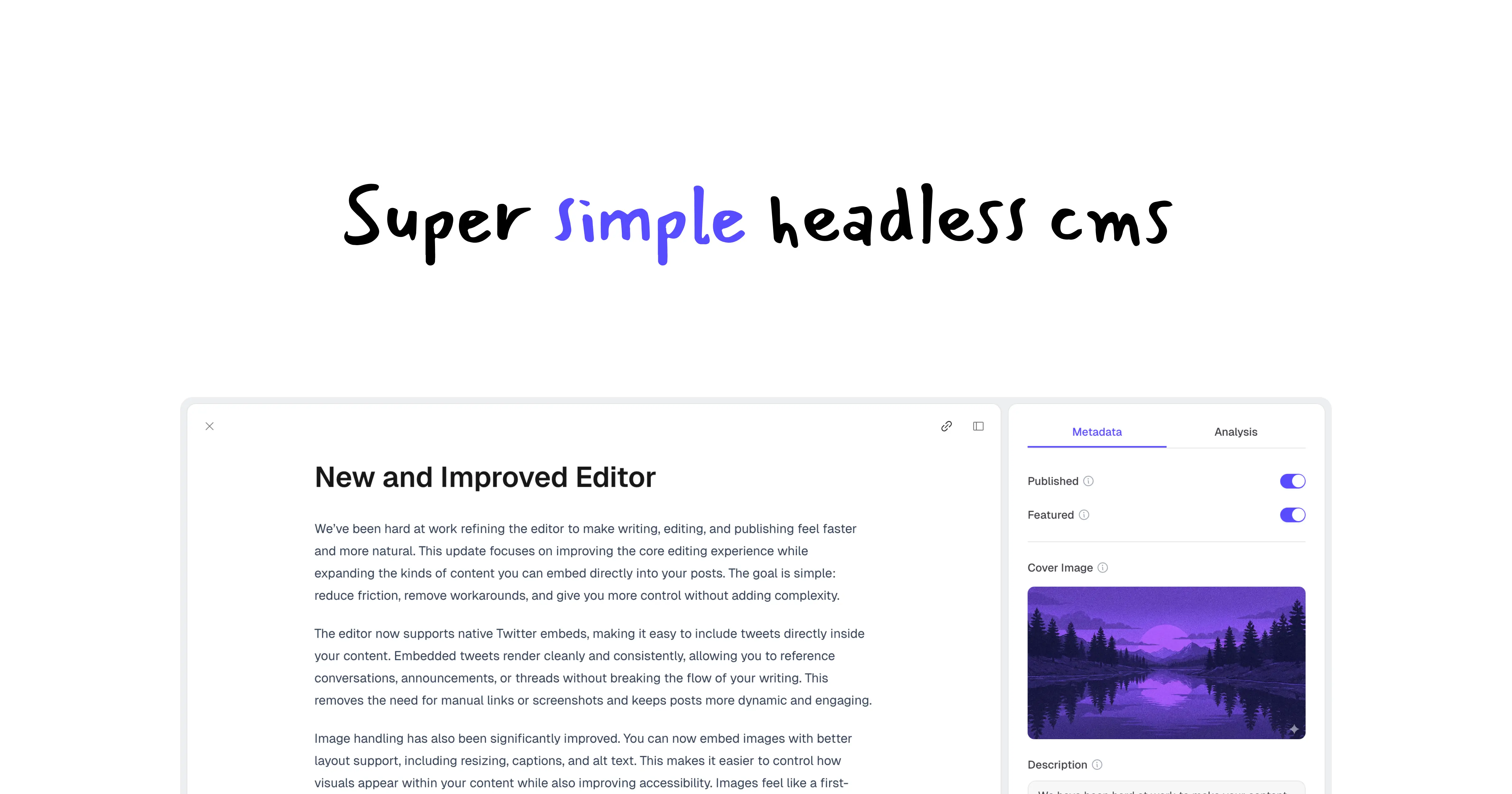
Marble is a super simple headless CMS designed for managing blogs, changelogs, and articles. It provides a clean interface for writing, uploading, and publishing content, along with a powerful API to fetch and display it on any website or app. - Simple Headless API: Pull content into any framework seamlessly. Works with Next.js, Astro, Nuxt, and more. - Media Management: Upload, organize, and manage images and videos in one place. Every asset is served from a global CDN for fast delivery. - Realtime Webhooks: Trigger external workflows instantly when your content changes. Integrate with your favorite tools. - Content Intelligence: Get real-time readability scores and optimization tips to improve your writing. - Unlimited Posts: No restrictions on the number of posts you can create. - Collaboration Tools: Share drafts, manage team members, and collaborate efficiently. - AI Readability Insights: Available on paid plans to help improve your content quality. Marble is a cloud-hosted service with a free tier and paid plans for advanced features. The platform is designed to be developer-friendly, with a focus on simplicity and ease of integration. While the core service is managed, the underlying technology stack is open-source, allowing for potential self-hosting in the future.

Content platform for AI-powered applications
Sanity is the leading Content Operating System built for the AI era, powering content operations for web, mobile, and agentic applications. It provides a flexible, scalable backend that integrates seamlessly with AI tools and workflows. - Content Lake: Unified content storage with real-time updates and versioning for structured and unstructured data. - Studio: Customizable content editing interface for teams of all sizes. - Agent API: Enables AI agents to interact with and manipulate content programmatically. - Content Agent: AI-powered assistant for content creation, editing, and optimization. - Media Library: Centralized asset management with AI-enhanced search and tagging. - Functions: Serverless compute for custom logic and integrations. - Live CDN: Global content delivery network for fast, reliable content access. - Content Releases: Streamlined workflows for publishing and version control. - MCP Server: Integration with Model Context Protocol for AI agent interoperability. - App SDK: Framework-agnostic tools to build content-driven applications. - Context: AI-native content modeling and context management for better agent interactions. Sanity offers a cloud-hosted SaaS solution with enterprise-grade security and compliance. The platform is designed for AI-first workflows, with built-in support for agentic applications and MCP integration. While primarily a managed service, Sanity provides extensive APIs and SDKs for custom deployments and integrations.

Open-source AI note-taker with local transcription
Prismical is a free, open-source AI note-taking companion designed for meetings, lectures, and voice notes. It transcribes audio in real-time, identifies speakers, and generates structured summaries with action items and key decisions—all without requiring bots to join your meetings. - Real-Time Transcription: Live speech-to-text with speaker identification powered by local models (Whisper) or cloud providers (OpenAI, Deepgram). - AI Summaries & Action Items: Automatically generates structured meeting notes with key decisions, action items, and follow-ups. - Voice Notes & Brain Dump: Capture thoughts by speaking or typing; AI organizes and formats notes for you. - Works Everywhere: Captures system audio from any app that plays sound (Zoom, Meet, Teams, Slack, etc.) without plugins or integrations. - Floating Window: Always-on-top window for live transcripts and action items without switching apps. - AI Integrations: Connect with ChatGPT, Claude, Gemini, and more via MCP for seamless note-taking and retrieval. - Cross-Platform Support: Available on Mac, Windows, with iOS and Android coming soon. Prismical is open-source and can be self-hosted. The project is built with modern web technologies and supports local AI models for privacy-conscious users. Documentation and setup guides are available on the official docs.

Headless blogging CMS with Notion-style editor
Zenblog is a headless CMS that combines a Notion-style editor with developer-friendly features like type-safe APIs, hosted media uploads, and framework-agnostic integration. Built for speed and simplicity, it eliminates complex configurations while providing a powerful yet intuitive writing experience. - Notion-Style Editor: Intuitive and powerful editor inspired by Notion for seamless content creation. - Hosted Media Management: Built-in image and video hosting, eliminating the need for external storage solutions like S3 or CDNs. - Type-Safe API Client: Provides a type-safe SDK and REST API for easy integration with any framework. - Zero Configuration Setup: Get started in minutes without configuring models, blogs, or posts. - Multi-Blog Support: Manage multiple blogs, tags, categories, and authors from a single dashboard. - Developer-First Approach: Framework-agnostic with examples for Next.js, Tailwind CSS, and TypeScript. - Privacy-Friendly: Full control over your data with no forced configurations or external dependencies. - Fast Performance: Optimized for speed with minimal setup required. Zenblog is a hosted SaaS solution and does not currently offer self-hosting options. The platform is designed for ease of use with no backend server requirements, making it ideal for developers seeking a hassle-free blogging solution. - Tech Stack: TypeScript, HTTP-based API, React-based editor. - Deployment: Fully managed cloud service with no installation or maintenance overhead. - Pricing: Free tier available; paid plans for advanced features and higher usage.
About Contentful
Contentful is a headless content management system (CMS) designed to help teams create, manage, and deliver content seamlessly across various digital channels. Built for both human editors and AI agents, it combines robust content infrastructure with advanced AI features like personalization and automation.
Key Features of Contentful
- Headless CMS: Decoupled architecture for flexible content delivery across web, mobile, and IoT devices.
- AI-Powered Tools: Includes AI Actions, AI Suggestions, and automations to streamline workflows and enhance content quality.
- Personalization Engine: Deliver tailored content experiences at scale with built-in personalization capabilities.
- Multi-Brand & Multi-Channel Support: Manage content for multiple brands and channels from a single platform.
- Media & Asset Management: Centralized control over digital assets with seamless integration across all channels.
- Editorial Experience: Collaborative tools for teams to work efficiently on content creation and management.
- Extensible Ecosystem: Marketplace with apps and integrations to extend platform functionality.
- Content Insights: Real-time analytics to measure content performance and optimize delivery.
Tech / Self-Hosting
Contentful is a fully managed cloud-based service with no self-hosting option. It offers enterprise-grade security, compliance with global standards (including GDPR), and scalable infrastructure. The platform is designed for high availability and performance, making it suitable for businesses of all sizes.